Christian Life

Balanced is Beautiful

Balanced

Have you ever met someone who has a pet topic? Whether it is their kids, their job, a particular sport– they just seem obsessed with this one thing and can hardly keep from talking about it.

We Christians can be like this, too. We should be passionate about Jesus Christ and His Word–that goes without saying, really–but sometimes we can become so passionate about a certain spiritual (and worthy) thing to the point where we are indifferent about all other topics. This can lead us to be very unbalanced as believers.

This is something I have noticed in others and also fight regularly myself. We become passionate about a certain topic (such as discernment, orphans, mission work, the unity of the church, etc…) to the point where we become very one dimensional as believers.

Of course, God uses our different passions to accomplish much for His kingdom. It is not wrong to be passionate about a particular subject. I am thankful for those who are passionate about discernment for they help us to stay on the straight and narrow and spot the falsehood abundant in the church today. I am thankful for those passionate about orphans and missions for they keep us aware of what’s going on and encourage us to make a difference with our prayers, our money, and even our time.

But my caution here is that we don’t become so enamored with one particular topic that we neglect all others completely. We can be wonderfully passionate about finding homes for orphans and still practice discernment. We can practice discernment and still show concern for missions. These things are not mutually exclusive. And yet so often we act like they are.

Of course, the biggest problem facing the church today is probably not even this, is it? As I am thinking about this, I recognize that the thing many people are most fascinated and passionate about is…themselves. I struggle with this, as well. We lose our balance because we are only concerned with our own affairs. We rarely think outside of ourselves and our own needs and when we do, we give ourselves a huge pat on the back and then go on our merry way.

And, yet, the Christian life is clearly to be full of personal growth in obedience and holiness (I Peter 3:10-16), concern for others (Philippians 2:3-4), concern for widows and orphans (James 1:27), separation from the world (James 1:27), a desire to discern truth (Hebrews 5:14), sharing the Gospel (Matthew 28:19-20), and unifying together as the body of Christ (Colossians 3:12-15)–to name just a few.

And that’s my point, exactly.

We must give efforts to all of these things. To all of these and to the rest of what scripture teaches. We never want to become spiritually unbalanced, only giving our attention to that which comes easiest or is the most appealing.

Not having the “gift of discernment” doesn’t give us the right to not practice discernment; not being comfortable with evangelizing doesn’t give us the right to not do it; being busy with our families doesn’t give us the right to be unconcerned with widows and orphans.

Being balanced is the key. Not letting ourselves get so caught up with one issue (or with ourselves) that we neglect the whole of scripture. Balanced is truly beautiful and is what we are called to be as believers–paying attention to all that scripture contains and not just our favorite topics and passages. It is in this way that we become well-rounded believers that bring honor to Christ and shine His marvelous light into the dark world.


A God-Centered Life

God-Centered

Have you ever stopped to think about what your motivation is for anything you do in life? Why do you take care of your kids? Why do you want to be financially well off? Why do you want to be kind to others?

And the question that begs to be asked is this:

Are we doing it for God or for ourselves?

Are we living a God-centered life or a self-centered life?

I am doing a Bible Study on Colossians right now (click here for this great resource) and I was really challenged by the author’s words in this week’s study. He first shared this about the fall of man that I never thought about before–

“The new creation is the result of Christ’s deliverance from the fall of Adam. In the Garden of Eden, Adam lived before God in a state of righteousness. However, he acted in disobedience, and the result of his sin was disastrous. His entire nature was transformed. He became a self-centered individual instead of God-centered. His sin also affected the entire human race. All men now bear the nature of Adam–sinfully depraved and spiritually separated from God.” p. 67* (italics mine)

I don’t think I ever thought about the fall in this way before.

So if along with our sin nature comes a self-centered life, this means that, after we are saved, we should be transformed from that self-centered, sinful creature into a new creation that is growing more like Christ and become more God-centered every day (2 Corinthians 5:17).

But is this what we are doing? Is this even something that we are being encouraged to do?

And let’s take it a step further: Even if we look like we are becoming more God-centered in our lives, is this actually true?

The author goes on to say–

“So often among Christians, character development takes on a self-centered orientation. We pursue it for our own benefit and self-improvement.” p. 70* (italics mine)

Oh my goodness. If that isn’t convicting, I am not sure what is. Oh, how often have I done this very thing? Claiming my desire is to be more like Christ but really simply desiring to have an easier/better/more fulfilling life.

This becomes very evident when we simply take a look at the Christian bestsellers on the book shelves (or on Amazon) today. There are books about how to have better relationships, better budgets, and better health. Books about how to fix our anxiety issues, our depression, our anger, our addictions. Most of these have one goal: To give us a better life.

But is this what the Christian life is all about? Is it a self-centered quest to have the best life we can have? And even if we say no to this question (because, obviously, we know from scripture that this is not our goal), are we living out what we say we believe?

Personally, I was really challenged by this. Even though I claim high and lofty spiritual goals, when I think of my desires in the light of biblical truth, I can see that they are tarnished with selfishness.

The problem is that, as sinners still stuck with our fleshly desires (I John 1:8), it is so hard to separate these two things. Of course we want to please the Lord. But it is natural to want to please ourselves. We wouldn’t be human if we wouldn’t want better lives. And so we have to sort through this messy dynamic.

And to complicate things further, even the most beautiful thing can be done for the wrong reason. Works of charity may be completed so that we receive personal glory. Supposed grace may just be a cover for our own desire to avoid conflict. Kind words may be a manipulative tool to get someone to do what we want. We want to kick our addiction, live within our means, or organize our homes to make our lives better and, often, glorifying God has nothing to do with it at all.

It’s just all so complicated.

And yet in Colossians 3:17, we can see that our motivation for everything we do–every word spoken and every action completed–should be based on our Lord Jesus–

And whatever you do in word or deed, do all in the name of the Lord Jesus, giving thanks to God the Father through Him.

In Colossians 3:23-24, Paul reiterates this–

And whatever you do, do it heartily, as to the Lord and not to men,  knowing that from the Lord you will receive the reward of the inheritance; for you serve the Lord Christ.

Scripture makes it clear that our life is to be God-centered. And, yet, all around us is a Christianity that is self-centered.

So how do we A) evaluate our motives? and B) change in this area?

These are challenging questions for us, since, as humans, I am not sure we can ever get 100% beyond being tainted by personal motivation. And, thankfully, God–in His great kindness and mercy–actually makes our lives so much better when we follow Him. Isn’t that kind of Him? There isn’t anything innately wrong with wanting a good life, a better marriage, or to kick a sinful habit. These are good things to want and the fact that we receive joy and happiness from these things is exactly what God intended.

The sin enters in when we only do what is right when it conveniences or benefits ourselves. In fact, as I was thinking about this, I realized that this may be the best test for our motivation–

Do I stop doing what is right when I don’t get the results I want?

If I try to be a submissive wife (or a loving husband) but my spouse doesn’t respond the way I want, do I decide that obedience to the Lord just doesn’t work and forget about it?

If I work on a big charity project at church and I watch all of the credit and glory go to someone else who didn’t do near as much work as I did, will it keep me from ever doing it again?

If I have forgiven someone who has offended me but the person keeps offending me–over and over again–do I eventually give up and hold a grudge or do I continue to respond in a biblical manner?

If I have given all of my energy to change a sinful habit in my life and I am not getting the results that I hoped for, do I continue in a path of obedience or do I cave in a fit of hopelessness?

These are just a few examples. We can come up with dozens more we face each day. Are we doing what is right because we want to please our Lord or are we doing what is right for ourselves? What is our motivation?

Living a God-centered life is no easy task. Reading this chapter made me realize just how self-centered I still am. And, honestly, this is one area that you can really only judge yourself. We really can never know the motivations of someone else, as they are locked away deep in our hearts and minds. Sometimes we even have a hard time understanding our own motives, don’t we? Past experiences, choices, abuses, neglects, and sins are powerful contaminators of our motives. These things can heighten our desire to protect ourselves, to look out for number one, and to prove ourselves.

But this is in complete opposition to scripture, where we find that we are to become God-centered in all our decisions (which also means becoming others-centered). (Mark 12:30; Philippians 2:8-9; Colossians 3:12-15).

And, once again, biblical Christianity crashes headlong into cultural Christianity. Biblical Christianity says live for Christ (Philippians 1:21), deny yourself and take up your cross (Matthew 16:24) and do what’s right (John 14:23; James 2:20) and cultural Christianity says “you deserve to be happy” and “God wants you to fulfill your dreams”.

So how in the world do we remove the indoctrination of a culture that is speaking the opposite of what we are to actually be living? There is truly only one anecdote and that is the Bible. The Word is truly like a mirror, revealing our innermost secrets and motivations and giving us the hope for change through the Holy Spirit.

God has not said “fix yourselves” and then left us on our own. Instead, He has given us His Word and His Spirit to help us rightly divide the Word, which will, slowly and surely, transform us more and more into His likeness.

And, yet, so many of us simply spend such little time studying God’s Word. We cannot grow in this area of pure motivation without being in the Word. It is simply impossible.

Life is hard. And evaluating our motivations for purity makes it even harder. Why am I doing what I am doing?  This is a critical question that we must ask ourselves if we are to live a holy and pure life that is centered on God.

* From Seeking Things Above by Steve Pettit

What No One Wants to Talk About

sshhh

On Sunday, as we left east Texas to start our long journey home, just a few hours away the unthinkable was happening: An unsuspecting country church congregation in a small Texas town gathered for worship and were gunned down by a madman with a vendetta.

Last night, when I was finally able to catch a bit of news coverage, I heard a reporter say this to a local man she was interviewing–

“There are those on the far left who say the blood of these people is on the hands of the Republicans because they haven’t changed the gun laws.”

His answer was perfect. He assured her that had we had stricter gun laws, the man would have probably gone on to kill more people. Gun laws won’t keep weapons out of the hands of terrorists and madmen, they will keep them out of the hands of law-abiding citizens who desire to protect themselves. And yet, this is always the cry in the wake of something like this–

Gun control! Gun control! Gun control!

But is this really going to solve anything? Or is it far deeper than simply keeping a weapon out of their hands?

Proverbs 4:23 tells us this–

Keep your heart with all diligence,
For out of it spring the issues of life.

Should we be at least considering if there is a connection between violent, occultic entertainment and evil actions?

The other day, as my husband pulled up next to a car at a local gas station, loud screamo music reverberated throughout the parking lot from its sound system. Evil, mind-numbing music. When he got home he expressed how that music must have some affect on its listeners, as it made his spirit feel angry just to listen to a few seconds of it.

And, all across this nation, people are filling their minds with this kind of music. Music that is filled with lyrics encouraging them to kill, to commit suicide, to shoot, and to commit all other types of evil.

And no one says a word.

Meanwhile, playing on TVs and in movie theaters across this nation are such evil things we could never have imagined. Dark, demonic pictures fill the minds of the masses.

And no one says a word.

Video games rated “M” (as if somehow that will keep impressionable children from playing them) are played–where the whole goal of the game is to shoot, to kill, to maim.

And no one says a word.

Even those who claim to be Christians enjoy these things. And if you dare to say a word, you are branded as the evil one.

I confess that I find myself perplexed beyond measure.

But please tell me this: If we can’t eat a steady diet of junk food and come away unscathed, why do we think we can fill our minds with horror, violence, and the occult and come away unscathed?

And why isn’t anyone talking about the dark, evil entertainment that fills the minds of so many of these shooters? Why isn’t anyone looking for that link?

It’s easy to answer that question, of course. It is called political correctness.

The other day, one of my daughters sent me Taylor Swift’s latest video because she was so appalled. In this dark, evil video, Swift–the innocent sweet 15 year old that hit the music scene not that long ago–appears to be singing about killing someone as she prances about, filling the minds of her audience with all kinds of disturbing images. But no matter how dark, how evil she has become, she is still praised, featured, and promoted by the media. (Perhaps that was the plan all along–to drag more naive, unthinking teens down a dark path while their parents do nothing to stop it.)

Things are so dreadfully wrong with the entertainment industry it is hard to comprehend.

And no one says a word.

Look– I am not implying that this is the only factor in any shooting. Nor am I even implying that it is a factor at all. What I am asking is why isn’t this ever considered? I am not implying that most people will crack under the mountain of evil entertainment they feed their minds. But is it worth considering that some minds will not withstand the pressure?

But no one will ask the questions. And so we are simply left with a hurting, mourning nation, one half crying for more gun control and the other half asking only to be able to defend ourselves in the onslaught of evil attacks that is starting to reign in this nation.

I know that this post will change nothing. It was really just a few thoughts about what is going on. But I do hope that if it changes anything, it will encourage you–as Christian parents and grandparents–to know what your teens are listening to and watching. That you will be proactive and intentional in what goes in their minds, instead of naively believing it won’t affect them. May we lead our families on a path that moves closer to Christ in these dark days. May we not ignore the power that worldly entertainment has in the lives of our own dear families. And may we be brave enough to stand alone in this fight, because–trust me–no one wants to fight this battle. This is one area where you will often stand alone. As Satan targets our kids and grandkids in this area, most will sit idly by. And if you dare to speak up, you become most unfavored and unpopular. So be prepared for this.

Oh, what an upside down world we live in. We can’t change what’s outside our own walls, but may we be tenacious in protecting and caring for those who are under our care and in our circles of influence.


Living in the Last Days (Part 2)

last days

Last time we took a look at I Timothy 3 and it’s timely counsel for us as we live in a culture that is speeding towards the last days. Today we are going to continue by looking at I Timothy 4. As Paul prepares for the end of his ministry, he is, in effect, passing the baton on to Timothy. What he tells Timothy applies to all of us, as well. Let’s take a look–

1.  We are to preach the Word. (v.2)

The mandate is to preach the Word. It is not to feed the poor or to meet felt needs or to help dig wells. While nothing is innately wrong with these things, our main priority must be to preach the Word. If this is lost, all is lost.

2.  We are to preach in season and out of season. (v.2)

MacArthur Study Bible has this to say about in season and out of season: “The faithful preacher must proclaim the Word when it is popular and/or convenient, and when it is not; when it seems suitable to do so, and when it seems not. The dictates of popular culture, tradition, reputations, acceptance, or esteem in the community (or the church) must never alter the true preacher’s commitment to proclaim God’s Word.”

I believe this applies to all of us laypeople, as well. We should be filled with a desire to share the Gospel and point people to the Word, being willing to sacrifice our comfort, convenience, and reputation. A difficult calling, to be sure. But when we remember what Jesus did for us, I am not sure how we can do any less.

3. God’s preacher or teacher is to use the Word to convince, rebuke, and exhort. This is to be done with great patience. (v. 2)

I charge you therefore before God and the Lord Jesus Christ, who will judge the living and the dead at[a] His appearing and His kingdom: Preach the word! Be ready in season and out of season. Convince, rebuke, exhort, with all longsuffering and teaching.

4. For the time will come that people will not endure sound doctrine. (v. 3)

Paul says not only will they not endure sound doctrine, but because of their own selfish desires, they will actually turn towards false teachers and fables and turn away from the truth. These two verses are playing out before our very eyes today! All across the world, people are falling prey to the bewitching of false doctrine, because of their own desires. They desire a religion that will provide abundant material blessings, make their dreams come true, heal their physical bodies, and make life easy. And there is no dearth of teachers to feed those itching ears.

For the time will come when they will not endure sound doctrine, but according to their own desires, because they have itching ears, they will heap up for themselves teachers; and they will turn their ears away from the truth, and be turned aside to fables.

5. Be watchful in all things. (v.5)

Many Christians today would have you believe it is intolerant and unkind to be watchful. And yet, we know that we must be. Satan seeks to devour us! We must be watchful!

6. Endure afflictions.  (v.5)

Afflictions are going to come. We are to endure through all of the normal storms of life, as well as through the persecution that will come (which is promised to all who desire to live a godly life in I Timothy 3:12).

7. Do the work of an evangelist. (v.5)

The word “evangelist” is used only two other times in the NT and it always refers to preaching the gospel to non-Christians. Witnessing should be an integral part of the fabric of our lives.

8. Fulfill your ministry. (v.5)

We are to fulfill whatever ministry God has given us.

But you be watchful in all things, endure afflictions, do the work of an evangelist, fulfill your ministry.

9. Like Paul, may we say at the end of our lives that we have fought the good fight, finished the race, and kept the faith. (v. 7)

If we take a moment and think about our lives, are we actually fighting the good fight? Or running a race? Sometimes we Christians get so caught up in our busy lives that we forget there is a spiritual battle raging around us. We forget that we are running a race and must intentionally work to keep the faith. These things don’t just happen. They must be done intentionally or we fall into a lazy, apathetic place from which it is hard to recover.

10. There is reward coming for those who loved the Lord and have served Him faithfully. (v.8)

Our reward is eternal. A good thing to remember when we feel battered by life’s storms and the world’s persecution.

For I am already being poured out as a drink offering, and the time of my departure is at hand. I have fought the good fight, I have finished the race, I have kept the faith. Finally, there is laid up for me the crown of righteousness, which the Lord, the righteous Judge, will give to me on that Day, and not to me only but also to all who have loved His appearing.

11. There is no sin in naming names. (v.10-16)

Some Christians will try to convince you that it is sinful to name the names of false teachers or even those who are straying from the faith, and yet, here, below, we see that Paul does just that. He avoids slander and gossip, but simply states the facts: “Demas has forsaken me, having loved this present world” and “Alexander the Coppersmith did me much harm…beware of him”

We can see from Paul’s example that it is not wrong to name names, but that we must do so carefully and without added unnecessary criticisms, personal attacks, and drama.

12. Paul had enemies, and we should expect no less. (v.10-16)

I think it is easy for us to raise Paul on a pedestal and think that he was so beloved that he never faced the heartbreak of betrayal, rejection, or abandonment. And, yet, in just a few short verses, we have a window into Paul’s experiences with others. Just as we all do, he had those who supported his ministry and those who desired to destroy it. He had those who were his friends and those who deserted the faith because of a love for the world. Doesn’t this sound so familiar? His experiences show us that this has been going on all through the ages and encourage us to keep our focus on the Lord, as we continue serving Him in a hostile world.

Be diligent to come to me quickly; 10 for Demas has forsaken me, having loved this present world, and has departed for Thessalonica—Crescens for Galatia, Titus for Dalmatia. 11 Only Luke is with me. Get Mark and bring him with you, for he is useful to me for ministry. 12 And Tychicus I have sent to Ephesus. 13 Bring the cloak that I left with Carpus at Troas when you come—and the books, especially the parchments. 14 Alexander the coppersmith did me much harm. May the Lord repay him according to his works. 15 You also must beware of him, for he has greatly resisted our words.16 At my first defense no one stood with me, but all forsook me. May it not be charged against them.

13. Our strength comes from the Lord and He will preserve and protect us until He calls us home (v.17-18)

When we think about the enemies we face in both the world and in the spiritual realm, it can be a bit daunting. Are there any more comforting verses to consider than these? Here we know that God will stand with us, strengthen us, deliver us, and preserve us, as we seek to glorify Him and share the Gospel. We are not alone!

But the Lord stood with me and strengthened me, so that the message might be preached fully through me, and that all the Gentiles might hear. Also I was delivered out of the mouth of the lion. 18 And the Lord will deliver me from every evil work and preserve me for His heavenly kingdom. To Him be glory forever and ever. Amen!

14. God uses many people for His purposes and most of them are not famous.

Paul finishes this epistle with greetings and tidbits about other servants of Christ. Many of these we know nothing about. The early church was made up of thousands of people who daily served the Lord in their villages and homes. May we follow the same example as the men and women listed below–faithful servants that Paul would greet in a letter if he was still on the earth today.

Greet Prisca and Aquila, and the household of Onesiphorus. 20 Erastus stayed in Corinth, but Trophimus I have left in Miletus sick.21 Do your utmost to come before winter.Eubulus greets you, as well as Pudens, Linus, Claudia, and all the brethren. Farewell

22 The Lord Jesus Christ[b] be with your spirit. Grace be with you. Amen

I hope that you have enjoyed these thoughts on 2 Timothy. There was just so much to reflect on as I read those two chapters that I just felt compelled to share it here with you. I hope that this has encouraged and challenged you–not only to ponder on what I wrote but also to dig deep into the Word for yourself.

As we approach these last days, it is our only anchor in this crazy world. I don’t know if Jesus will return today or if it will be another one hundred years. But what I do know is that we are hurling at top speed towards one-world religion, one-world government, and one-world economy. The end is coming. And these two chapters in 2 Timothy help us to know how to live in this unprecedented time.


 

Living in the Last Days (Part 1)

last days

So we might be living in the last days. Or we might not. There is no way to truly know. What I do feel safe in saying is that, if we aren’t experiencing the end times already, we are most certainly moving closer towards them each day. Some day soon I would like to write about how so many aspects of the last times foretold in the Bible are converging. It is really incredible and so confirming of scripture. But today is not that day.

A week or two ago, when we started reading our Bible Challenge passage for the week, chapters 3 & 4 of 2 Timothy, a friend texted me and said it sounds just like Paul was writing about our times right now. I couldn’t agree more! And so as we approach the last days, there is much gold to mine from the treasure of the Word, particularly in these two chapters. It helps us know what to expect and how to respond. There are some nuggets there to show us how to personally face our own last days, as well.

Paul wrote the letter of 2 Timothy as he pondered the nearness of his own death. He knew he wouldn’t be around much longer and so he wrote encouraging and challenging words for Timothy that were inspired by the Holy Spirit. If you haven’t read these chapters recently, I would encourage you to go do so now or after this post. They are pretty incredible.

I’d like to share some of what I have learned from chapter three of 2 Timothy today and then finish up with chapter four on Thursday. Please keep in mind that these are simply observations. I am no Bible scholar but I do believe that I am proof that you do not have to be a Bible scholar to read, study, learn about and benefit from the Bible. So here we go–

1. The last days will be perilous. (v.1)

But know this, that in the last days perilous times will come:

Perilous: full of danger and risk.

i.e. Not fun. Not full of chasing our dreams. Not wealth, health, and happiness. But danger. And risk.

2. Paul describes men and women in the last days and it reminds us so much of right now. (v. 2-5)

For men will be lovers of themselves, lovers of money, boasters, proud, blasphemers, disobedient to parents, unthankful, unholy, unloving, unforgiving, slanderers, without self-control, brutal, despisers of good, traitors, headstrong, haughty, lovers of pleasure rather than lovers of God, 

This sounds pretty familiar. But, of course, things could get a lot worse.

3. People will call themselves godly but they won’t really be godly. (v.5)

4. In contrast to the popular message of our day, Paul tells us that we are not to unify with people like this. (v.5)

having a form of godliness but denying its power. And from such people turn away!

5. Women are and always will be especially gullible to false teaching. (v.6)

For of this sort are those who creep into households and make captives of gullible women loaded down with sins, led away by various lusts,

Okay, I know women do not want to hear this, but, in many ways, we do tend to be more sensitive to spiritual things and this often puts us at a greater risk to be deceived. We must be so very careful. By the way, this is not a criticism of women. God purposefully designed us this way.

6. Many people learn about God, but they never study His Word with a submissive and obedient heart and this keeps them from the knowledge of the truth. (v.7)

always learning and never able to come to the knowledge of the truth.

7. Time and truth walk hand-in-hand (v.8-9)

Now as Jannes and Jambres resisted Moses, so do these also resist the truth: men of corrupt minds, disapproved concerning the faith; but they will progress no further, for their folly will be manifest to all, as theirs also was.

Eventually false teachers are found out. They can pretend to be biblical teachers for awhile, but time eventually sells them out. Paul uses the example of Jannes and Jambres resisting Moses to make his point. We can see this same dynamic with the likes of guys like Rob Bell and William Paul Young. They pretended to be Christians, but eventually time showed everyone that they were preaching a very different Gospel.

8. Paul’s lifestyle was in direct contrast to a worldly lifestyle. He praised Timothy for following his example. We, too, should follow his example. (v. 10-11)

9. Paul endured much persecution but also experienced the Lord’s deliverance in mighty ways! We serve a mighty God who can do mighty things! (v. 11)

But you have carefully followed my doctrine, manner of life, purpose, faith, longsuffering, love, perseverance, 11 persecutions, afflictions, which happened to me at Antioch, at Iconium, at Lystra—what persecutions I endured. And out of them all the Lord delivered me.

10. If we desire to live a godly life we will suffer persecution. (v. 12)

Yes, and all who desire to live godly in Christ Jesus will suffer persecution.

Not “might”; not “if”; not “could”, but WILL. We WILL suffer persecution. We may as well just expect it. In fact, if we know it’s coming, it should help us prepare to accept it with a spirit of grace, love, and forgiveness.

11. Evil men and imposters of the faith are going to get so much worse. The deception is not going to improve. (v. 13)

But evil men and impostors will grow worse and worse, deceiving and being deceived.

Again–we see this so clearly in these days, don’t we? False doctrine abounds more than ever before. The authority of God’s Word has been cast aside for the sake of experiences, false unity, and social justice. It is so incredibly tragic but it’s going to keep getting worse until the appearing of our Savior. Again, we need to expect it.

12. Our only source for truth is the Holy Scriptures. We must continue to study the Bible and hide it in our heart, for this is what will keep us strong in these last days!

But you must continue in the things which you have learned and been assured of, knowing from whom you have learned them, 15 and that from childhood you have known the Holy Scriptures, which are able to make you wise for salvation through faith which is in Christ Jesus.

13. Scripture is all we need to know God and to live a holy life that is pleasing to Him.

 All Scripture is given by inspiration of God, and is profitable for doctrine, for reproof, for correction, for instruction in righteousness, 17 that the man of God may be complete, thoroughly equipped for every good work.

Through the years, Satan has tried to eradicate, hide, bury, twist, destroy, mangle, convolute, minimize, and change the Word of God. He gets how powerful it is. He understands that the power for the Christian life is there. He knows that it is God’s very Word to the human race.

Unfortunately, humans–even many believers–don’t get this. They don’t understand that the Holy Scriptures are the only way to know God. They are what make us complete and thoroughly equipped for every good work. They are an amazing treasure!


There is much to learn in all of scripture, but I believe that 2 Timothy 3 & 4 is especially encouraging, challenging, and convicting for this time on earth. It is from this passage that we understand the world isn’t going to get better. We can see that it isn’t our job to bring God’s Kingdom to earth (a very popular message these days) but that we are to hold on to scripture tightly, while we preach the Word (ch. 4 will talk about that) in the midst of such dreadful wickedness and apostasy. We learn that we are to expect persecution– not material health, wealth, and fulfilled dreams.

These two chapters offer encouragement and challenges for us in this age–whether Jesus returns tomorrow or one hundred years from now. Keep looking up!


Weathering the Storms of Life

storm

Trials in life generally do not fit into our well-laid plans, do they? Along with wreaking havoc to our schedules and in our families, they also tend to fill us with uncertainty, doubt, frustration, and hopelessness.

But should this be our response? What part does faith actually play as we face real-life trials?

This past Sunday my brother, Pastor Dean, preached two sermons on weathering the storms of life. In listening to them I was challenged, encouraged, and convicted. Mostly convicted. Sometimes God brings something my way that affects me profoundly. This was one of those times.

The fact that Pastor Dean and his family are currently experiencing their own considerable trial gave these sermons a notable authenticity. These two sermons, given from his own search of the scriptures as they weather their storm, take us beyond the typical platitudes as he unpacks what the scriptures have to say about trials and our response to them.

And so for today’s post, I want to refer you to these two sermons by Pastor Dean. Be encouraged and uplifted–and perhaps also challenged and convicted–as you weather your own storms, whether they be small or large. This is for those experiencing small trials (like a car that won’t start) and large trials (like an unexpected health diagnosis) and everything in between. In other words, this is for all of us believers. I am confident that you will find these worth every minute of your time. I truly hope that many of you will take the time to listen to these.

Part 1:

WEATHERING THE STORMS OF LIFE

Part 2:

THE SIGNIFICANCE OF GOD’S SOVEREIGNTY IN THE STORMS OF LIFE

Click here if you’d like to listen to more sermons by Pastor Dean.

Learn to Discern: When You Need a Little Help

Learn to Discern (with blog name)

Sometimes we know that something is off with an author but we just can’t put our finger on it. Something is most definitely wrong…but what is it? What do we do?

I have been saying for years now–and not just in this series–that we must judge all we come across by the Word of God. Acts 17:11, I Thessalonians 5:20-21, and I John 4:1 make it clear that God expects us to do this. But often we don’t know the Word of God well enough ourselves and we need a little help to discern if that new teacher is someone we can trust or that latest trend is something we can join.

Someone asked me recently if I could share some of the trusted sites I use to help me to discern. As I prepared to reply, I realized that perhaps she isn’t the only one who would like to know where to go for help.

And so I’d like to list a few trusted sites and authors. But before I do this please keep these things in mind, even as you do your own research and come across others discernment sites–

  1. Continue to be a Berean, even with a trusted site or author. As we have seen over the past few years, teachers, authors, and websites are falling for false doctrine and joining with false teachers at record speed. It’s a little surreal, actually. All that to say: While the sites I have listed here have a great track record and I have been using them for years, keep your eyes and ears open and don’t trust blindly. The days of blind trust are over. (But perhaps there never really were any…? That’s probably how Christianity got to this place to begin with!)
  2. Some discernment sites can be rather unkind and harsh. While I don’t condone this kind of attitude and I generally try to avoid these sites, the tone of a post or article does not change whether something is true or not. Always look for truth. Whether it is cloaked in love or not doesn’t change whether or not it is true. I have tried not to recommend this kind of site, but as you do your own research you may find this kind of site. Let your guiding principle for a site be its clear examination of a teaching as compared to scripture.
  3. Avoid sites that are “witch hunts” or centered around personal attacks. While naming names is not a sin (we see Paul do this several times in scripture), it should not be done lightly. We are called to compare a teacher’s doctrine to scripture and to examine their lifestyle in the light of the Word. We are not called to tear them apart with abundant criticism and to create our own personal vendetta against them. Watch out for sites and authors that do this and avoid them completely.
  4. Keep learning the Bible more and more, so that it becomes natural to discern on your own. You will find out that as you do this, you will need these sites less and less. When you study the Bible with a spirit of submission and obedience to all it says (even the parts you don’t like!), you will find that you will be able to more quickly spot the deadly philosophies that are slithering into our homes and churches.
  5. Don’t let discernment become your main thing. As my pastor says, “Keep the main thing the main thing.” All too often, people get so caught up in research that they let their Bible study dwindle. Our power for the Christian life lies in knowing the Word. Discernment is not a bad thing, but if it overtakes your life and that becomes all you focus on, it has been used by Satan to distract you from what is most important. Be careful not to let that happen.

Okay, now that we have those guidelines in place, here are a few sites and authors that I have come to know and trust as I have learned to discern. Please do not take my word for it. Speakers and authors change constantly. So much so that I can’t possibly keep track. I will try to make changes here, as things come to my attention but if something looks like a red flag, I encourage you to follow it up–

WEBSITES–

Growing4Life Biblical Evaluations of Popular Teachers and Movements— I started this page in 2021 to aid my readers in discernment and have been continually adding to it. I hope it is a blessing to you!

Berean Research — This is a well-rounded site that has frequently help me to discern or confirm whether or not someone or something is false.

Herescope — This site has excellent articles. They are generally very long, but they are very well-written comparisons of modern day teachings to God’s Word. The site itself is very difficult to navigate and they don’t have a “search” button, but if you come across anything written by this site, be sure to read it.

Discernment Ministries, Inc. — This site, the parent site of Herescope, has some great resources, along with a monthly newsletter. It includes books and articles by Larry DeBruyn (mentioned up above with Lighthouse Trails) and Sarah Leslie (someone I have come to deeply respect).

Apprising Ministries — This site is made up of the archives of a man named Ken Silva, who did much helpful research before he died. You will find a lot of biblically grounded posts here regarding a lot of different topics.

CARM (Christian Apologetics and Research Ministry) — I have, thus far, found this site a safe place to go to for help in understanding doctrine, determining what false religions teach and why they are false, and factual examinations of false teachers.

The New Calvinists— This site is put out by E.S. Williams, who helps us see the grave biblical heresies in the teachings of the “New Calvinists” with a particular focus ono Piper, Keller, and Driscoll

Lighthouse Trails — This site is my first go-to. I appreciate their dedication to scripture and the kind tone with which they write. They have articles and books by several authors that I have come to deeply appreciate and trust, including Ray Yungen, Roger Oakland, Warren Smith, and Larry DeBruyn. These men have sacrificed their reputations to share some hard truths. I recommend reading any of their books. (2/28/18 author’s note: It has come to my attention that this ministry has determined to put out a book claiming that to believe in Calvinism is to believe in a false Gospel. I am deeply grieved by this for two reasons. First, scripture clearly teaches the doctrine of election. To deny it, is to deny God’s Word in its entirety. Election and free will work together in a way we can’t understand. Let’s just be humble enough to admit that. And, second, while they assure their readers that they are doing what “God wants them to do, after much prayer”, I would submit to you that Satan is using them to divide the body by their assertions that this is a false Gospel. It is one thing to argue from a viewpoint, acknowledging that we are all brothers and sisters in the Lord, and agree to disagree on this issue that no one can understand. It is quite another to claim from your soapbox that you have it all figured out and the other person is not only wrong, but heretical in believing as they do. I will keep them on this list for the time being, as their work has been absolutely invaluable in the field of discernment, but please do not use Lighthouse Trails for your doctrinal education. Their error in this issue proves them to be quite untrustworthy in the field of theology.)

(A note as of February 17, 2023: I have updated this page today and have removed several links that have been on here for many years. I have been dismayed to watch some of the sites and blogs I formerly recommended show signs of compromise or a proud, unloving spirit (and sometimes both!) and I can no longer recommend them. Please feel free to contact me if you have any particular question and I will do my best to try and find a trustworthy resource for you.)

If I think of any others, I will add them, but this should give you some helpful resources to get you started as you learn to discern! I hope that this list is a blessing to you as you strive to discern in this age of abundant heresies and unprecedented apostasy. I leave you with these words from 2 Timothy 3:13-15–

But evil men and impostors will grow worse and worse, deceiving and being deceived. 14 But you must continue in the things which you have learned and been assured of, knowing from whom you have learned them, 15 and that from childhood you have known the Holy Scriptures, which are able to make you wise for salvation through faith which is in Christ Jesus.

________________________

We Are All Teachers

female-213731_1280

Think back a moment to your school days. Do you have a few teachers that stand out? I sure do. My third grade teacher was an older woman named Mrs. Ulrich who loved anything Navajo. She would wear beautiful jewelry of shiny turquoise in its setting of sparkly silver every day. She had a reputation for being strict, but I loved her. And she loved her students. And then there was Mr. Nolt. He had to be one of the best teachers ever! He made learning so much fun for rambunctious and confused sixth graders. We forgot we needed to be “cool” when we were in his class. Over the years, I had others who really made an impact on me through the avenue of teaching.

But then there were those who had the opposite effect. I had some really terrible teachers. I won’t name them (you know…just in case) but they were either so boring I would fall asleep; or they were so mean, you never knew if you were going to do something wrong; or they were so liberal, they couldn’t teach one class without promoting their agenda. Actually, I remember a few debates with those teachers and I honestly believe it helped to grow me in my knowledge of the Word quite a bit!

All of us have had teachers. School teachers, music instrument teachers, Sunday School teachers, coaches. Even as adults, many of us still continue to learn under the guidance of a teacher.

As I was reading in 2 Timothy 2:2, I was reminded how important it is to teach the truth of the Word to others. Paul is specifically talking to Timothy in this letter, but–as with the rest of the letter–we know that what he says is for all of us.

This is what that verse says–

And the things that you have heard from me among many witnesses, commit these to faithful men who will be able to teach others also.

He is talking specifically about teaching sound doctrine to faithful men, who can then teach it to others, who will teach it to others–like the stone thrown in the pond creates ripples that move outward.

But, as I was thinking about this verse, I was also reminded of Deuteronomy 6:6-7–

And these words which I command you today shall be in your heart. You shall teach them diligently to your children, and shall talk of them when you sit in your house, when you walk by the way, when you lie down, and when you rise up.

As believers, we are responsible for teaching the truth to the next generation, as well as to others.

Now, I know that many of you would not view yourselves as teachers. But, while it is clear in scripture that some receive a special gift of teaching, it is also clear that all of us end up in some capacity of teacher throughout our lives.

So how do we do our best in passing on the truth to the next generation and to others around us–even if we don’t have the gift of teaching? As I think back over my own experience with teachers (and with my parents and grandparents), I have ten suggestions that–if put into place– would make all of us good teachers in any situation, but particularly in teaching others about God’s Word–

1. Don’t have an agenda. We need to teach what we are supposed to teach without any hidden agenda. How often have you had a teacher that has been so consumed by a certain topic, that many days’ lectures led right back to that pet topic? I remember one teacher (and he wasn’t teaching philosophy) that just kept coming back to how all religions lead to the top of the same mountain. We would debate this over and over again. This was something he felt he needed to teach, even though it was completely outside the scope of what he had been hired to teach.

But let’s apply this to biblical teaching for a moment. How important that we teach the unadulterated truth of the Bible without the interference of our own personal agenda or preferences. Not doing so leads to all kinds of problems. For example, if you only desire to teach on the love of God, you miss a chunk of the Gospel by not teaching about His hatred of sin. If we only want to teach about the good things in the Bible and never on how to discern false doctrine and false teachers, we put our students at great spiritual risk. Or if we have the agenda to be well-liked, we may only want to focus on the pleasant passages of comfort and peace. But then we miss the part about how we need to grow in holiness and purity. Of course, some teachers go the other direction and only focus on sin or God’s wrath or discernment. This all leads to very unbalanced teaching. People with personal agendas never make good teachers.

2. We must care so deeply about our subject that we can’t help but teach with confidence and courage. No matter what subject, no matter what the response of the students, we must approach our subject with boldness and passion in order to be a good teacher. This is especially challenging when it comes to teaching the Bible as it is not really the most popular thing to do these days and it requires a great amount of courage. But, in thinking back to my Christian college experience, I realize that the professors who made the most difference in my life were the ones who brought personal interest to their subject and who proclaimed truth with confidence and without apology. Those who mumbled or read from a text book during class or who didn’t care about their subject all that much made little–if any–impact in my life.

3. Don’t be afraid to admit you are wrong. Good teachers (and good parents) apologize. No one wants to be taught (or parented) by someone so arrogant they can never admit to any wrongdoing. Enough said.

4. Provide a safe place for them to ask questions and to share concerns. If a student feels like they are going to receive judgment from us every time they ask a question, we will create an atmosphere of fear. We must allow questions and concerns to flow freely, always directing them back to the authority of the Bible. What does the Bible teach about this? Helping our students to run all through the grid of the scriptures will be the first step in helping them to be healthy spiritually. Of course, school teachers don’t often have this option but it is still important that you create a safe place to ask questions, so that perhaps they may come to you later, outside of school, to look for answers to life’s biggest questions.

5. Make learning interesting. Oh, how important this is. I have to be honest– I never had a good history teacher and so, during all of my school years, I thought history was the most boring subject ever. And then I started teaching it to my children and everything changed. History is a fascinating subject but it was never presented to me in a very interesting manner. On the other hand, I had a wonderful professor named Prof Gordon for my business classes. I didn’t even really like the subject of business all that much, but he made it interesting.

Sitting at a desk listen to someone drone on and on about dates or methods or systems is one of the quickest way to kill the desire to learn in any student. What a responsibility we have to show that our subject is interesting and worth learning! When we teach the scriptures–which we all should do in some capacity–how important it is to communicate Hebrews 4:12–

For the word of God is living and powerful, and sharper than any two-edged sword, piercing even to the division of soul and spirit, and of joints and marrow, and is a discerner of the thoughts and intents of the heart.

It is not some dry, old book that doesn’t matter to us today. It is the powerful and life-changing Word of God! We must teach it with this in mind!

6. Be approachable. Oh, the power of a smile and kind words. Think back in your own experience a moment. What do you remember about the faces of your favorite teachers? What about their actions? I am sure that most of you will remember a kind and warm-hearted man or woman who smiled a lot. Someone who said positive words just as often–or perhaps more–than they said critical words.

7. Teach them to apply what they are learning in their own lives and how to teach what they are learning to others. The student of a good teacher doesn’t generally leave the classroom (or home) unchanged. They are filled with a zeal to apply what they have learned and to teach others.

8. Love your students. This probably should have been number one. Again, think back to your own experience–whether it be in the home, in church, or in school. Which teachers had the most impact? If we felt loved, we were open to be taught. If we felt like a bother or the teacher was constantly irritable, we became distracted wondering why and then speculating if we were the problem…

Feeling unloved and in the way completely changes the atmosphere for teaching.

9. Share yourself with them. Sometimes it is good to step outside what is just for class or Bible Study and share how your subject has made a difference in your life. This is especially crucial in teaching the Word. When we can show how we personally had to run a decision through the grid of the Bible or how we had to submit to the authority of God’s Word in a specific area of our life, we become more “human” in the eyes of our students. We show them that we are just like them–perhaps only a few steps ahead in the journey.

10. Set a good example. And, last– but certainly not least–is that we must live out what we are teaching. We can’t effectively teach what we don’t live. Kids and adults can spot a hypocrite in a second. And that is a sure fire way to destroy any biblical teaching ministry.


I hope I have given all of you some food for thought. While this post was geared to teachers of all subjects, my heart mostly lies with those of us–which should be all of us–who teach the Word of God. Whether we are a parent, grandparent, Sunday School teacher, Bible Study teacher, pastor, blogger, or teach the scriptures in any other capacity, may we put these things into practice so that we can have an effective teaching ministry and create a godly legacy that will live on for years and years after we are called to glory.


(By the way, I would love to hear about your experiences–either as a teacher or as a student. Comment below and let me know what I missed in encouraging us to be the best teachers we can be!)

Remembering the Reformation: Before the Beginning

Reformation

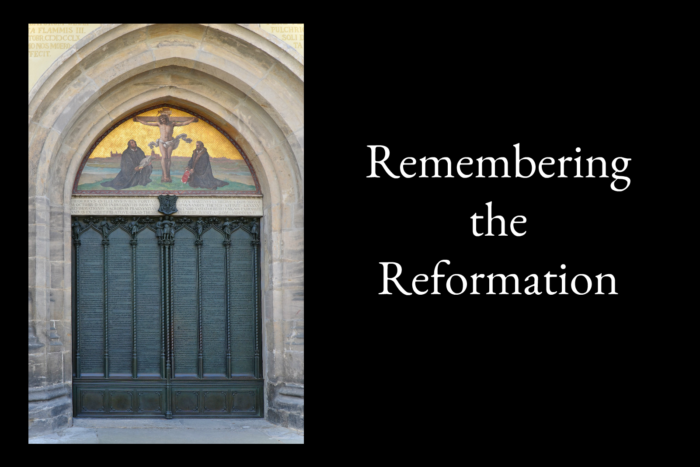
On October 31, 1517, Martin Luther allegedly nailed his 95 theses to the door of the Wittenberg church. I use the word “allegedly”, because there is actually some debate about exactly how it all happened. What we do know is that Martin Luther did clearly present 95 theses as a challenge before the Catholic church, which officially began the period of time we know of as the Reformation.

But what was going on in the true Church before the Reformation began? While God used the Reformation in a mighty way, what exactly was going on in the Church during the preceding Dark Ages? I’d like to give a {very} brief overview of church history before Martin Luther. This will help set the stage for the rest of this series.

During the rule of the Roman empire, we know that Christians were viewed unfavorably. In fact, they were dreadfully persecuted and even martyred under certain emperors. They were thrown to lions for sport while the bloodthirsty Romans looked on; tied in bags with serpents and thrown into the sea; lit as torches for Nero’s parties, along with many other inconceivable tortures. But, surprisingly, during this time, the Church grew. Instead of the persecution functioning as a deterrent to keep the church from growing, it worked in the opposite way. People were attracted to a faith that kept a soul at peace during even the most horribly unthinkable circumstances.

And so it comes as no surprise that Satan came up with a Plan B: If you can’t beat them, then join them to eradicate and extinguish from within. The Roman Emperor, Constantine the Great, would be the instrument he would use to do this. It was under Constantine’s reign that, in the year of 313, Christianity was decriminalized. Eventually it would become the official state religion.

But was this true Christianity? A look at historical facts will reveal that it wasn’t. First, we will find that Constantine himself gave no proof of being a Christian. He continued on in his pagan practices and lifestyle. It would appear that he made this move to Christianity for political reasons only. And, second, you will find that Catholicism has an uncanny and unsettling resemblance to pagan religion of old. And so we can be certain that even from its inception, this state religion called “Christianity” was actually a deadly mingling of paganism and Christianity that became an accepted–but deceptively false– religion that was simply not (and still isn’t) biblical Christianity. This can easily be proven by comparing its dogmas and doctrines to scripture (click here for more information). If you want to know how this all came about, you will find this short video to be a well-researched explanation—Know Your Enemy: Roman Catholicism.

It is extremely important that we come to a study of the Reformation with the knowledge that the Roman Catholic system is a false, satanic system. This gives us the background we need in order to do an accurate study of church history.

(Please keep in mind that I am judging the system of Catholicism and not any individual’s salvation. God, in His grace and mercy, may save someone who is caught up in that false system. I do believe that a true believer in the Catholic church who studies the Bible will eventually recognize the discrepancies and choose to leave).

From the point where Constantine validates this false Christianity, we find a church that becomes all-powerful in the lives of its parishioners—demanding things from them in life, as well as falsely teaching that they can control what happens to them after death. Many of Martin Luther’s 95 theses are specifically targeted towards the unbiblical teachings of purgatory and indulgences. We also find during this time the persecution of true Christians. In fact, we see the beginning of papal persecution, in earnest, around the 11th century. Foxe’s Book of Martyrs puts it like this:

Disregarding the maxims and the spirit of the gospel, the papal church, arming herself with the power of the sword, vexed the church of God and wasted it for several centuries, a period most appropriately termed in history, the “dark ages.” *

It started with the Waldensians and went on to include other pockets of true believers throughout the next several centuries, including many martyrs during that terrible time known as the Spanish Inquisition. (It would later include the persecution of the Huguenots in France and the Anabaptists in Germany.) This persecution included familiar names from this time such as John Wycliff and Jan Hus, as well as countless unknown names.

These records and other historical accounts of these groups and individuals makes it clear that, while Catholicism (which was false from its inception) dominated and controlled the lives of the general population, there were always those who sought the Truth. There were always those who fought against the false system. True Christianity did not disappear during the Dark Ages.

The common thread that drew all of these forerunners of the Reformation together was a commitment to the authority, inspiration, and inerrancy of the whole Word of God in its totality. This same thread runs through all of the Reformation, throughout all of Church history, and continues to be the same common thread that ties those of us together who desire to stay true to biblical faith in a world (and church) that has seemingly gone mad.

And so there is a brief– and hopelessly incomplete–history of the Church before the Reformation. It is my hope that this study will give you a deeper appreciation for the Word of God and the critical place it has played in all of Church history. It is also my desire that it will cause you to reflect on the pivotal place the Bible continues to play in this day and age, in the mainstream church and within our own churches.

We can see that Satan has tried all through the ages, and in many different ways, to twist, manipulate, and destroy God’s Word. We know this is because it, alone, is our revelation from God in this Church age. It is our only anchor for true faith and sound doctrine. We can also see that it is the Word that drew (and continues to draw) people back to true and pure faith. Keep this in mind as we continue our study.

Next time I will endeavor to give a general outline of the Reformation’s most important events.


Please note: I had a suspicion when I set out to do this series on the Reformation that my outline for posts could change. I will make the changes accordingly on the introduction page, so that each post can be clicked on from there.


*Foxe, John. Fox’s Book of Martyrs Or A History of the Lives, Sufferings, and Triumphant Deaths of the Primitive Protestant Martyrs (Kindle Locations 998-1000). Public Domain Books. Kindle Edition.

Resources:

Long Before Luther: Where was the Gospel Before the Reformation? By Nathan Busenitz

The Fire that Fueled the Reformation by Nathan Busenitz

Know Your Enemy: Roman Catholicism by the Fuel Project

What Is the Origin of Roman Catholicism @GotQuestions.org

How Was the Gospel Preserved Throughout the Middle Ages? @GotQuestions.org

Fox’s Book of Martyrs by John Foxe (free for Kindle!)

CARM: Attaining Salvation in Roman Catholicism by Matt Slick

Constantine the Great and Christianity @Wikipedia

A Lop-Sided Faith

lop-sided

The other day someone shared an article with me. They were disturbed by the post’s point and wondered what my opinion was. The blog post was a call to share in brokenness and dysfunction together. To look for the little bright spots in the state the writer found herself in, rather than sharing that there is a possibility and great potential to fix the situation, by applying the Word of God and through the power of the Holy Spirit.

If that seems vague, it is because it is intentionally so. I have no interest in throwing this blogger under the bus, so to speak. I just see this as another post that is encouraging Christians in a lop-sided faith.

Have you, too, noticed the propensity of this? The “Christians” of today want a faith that makes them feel less guilty about their sin. They want an encouraging, build-me-up kind of faith. They don’t really want to deals with their sins (or the sinful self-wills of their children). They have no interest in the hard work it takes to grow in holiness and purity. Since it is much easier–at least in the short-term–to stay in that bad place, it is quite comforting to have someone tell you that it is okay to be there.

Of course, there is a fine line we walk here, though. Since we are all sinful and we all do struggle, an encouraging word is such a blessing! It is so comforting to know we aren’t alone in our struggles. So I am not suggesting that we don’t post and share these things. No, that is not it at all.

What I am concerned about is that we share only these things.

The Christian faith is one of building up but it is also one of holiness. It is one of encouragement but it is also one of self-examination. It is one of growing–through words that build up and words that confront sin.

If you find yourself only drawn to posts that comfort and build you up, may I encourage you to also read and look for posts that challenge you to grow and take you out of your comfort zone and into the scriptures?

While there are an abundance of verses that comfort and build us up, there are just as many verses that challenge and confront our sin. We must be so careful to keep a balanced view of the Bible and of our faith.

Balanced writers will share their struggles but they will also offer challenging words from the Bible to confront their own sin, as well as yours. Bible-centered writing will view all of life through the lens of scripture, rather than through the broken and dirty lens of our culture. It is my hope that this is what you will find here at Growing 4 Life and–if it is not–that you will let me know. I want to encourage and to challenge you. I hope to do both. Because this is what the Bible does for us.

The Bible is the perfect Word of God–offering us both God’s love and forgiveness in our sinful, broken state and yet challenging us to grow holier and purer with each passing moment. It calls us to love but it also calls us to truth. It calls us to be kind but it also calls us to discern. It speaks of God’s amazing grace while still calling us to moral purity. It gives us hope for eternity, while challenging us to run the race of life well in the here and now of a fallen world.

It is my hope that you will find all of this here, as well. Not in perfection, of course, since I am not perfect, but in a way that shows that I love the Word of God so much that I build by life –and this blog–upon it.

And it is my hope that I will encourage you to do the same–to build your life upon the whole Word of God and not just the passages and verses that make you feel better. It is in this way that we have a whole and sound faith to see us through all of the storms of life. It is in this way that we grow more holy and pure. And it is in this way that we have eyes opened to the false doctrine that is all around us, even within our own churches.

Let’s keep the whole counsel of God’s Word as we move forth in our Christian life, instead of falling prey to the lop-sided faith that is so prevalent today.


Scroll to Top