Christian Life

Do I Need a Special Experience in Order to Know God?

Experience

There is an atmosphere of mystery within the church these days. As if we must somehow reach a higher spiritual plane through a special experience in order to reach God in a deeper way and receive His special blessing. This is taught in Charismatic circles, where they teach that one must speak in tongues and receive a separate baptism of the Holy Spirit in order to be truly spiritual. It’s taught in the New Apostolic Reformation, where they teach that apostles are God’s especially “anointed”. And it’s taught in Keswick theology and ministries such as Eric Ludy’s program at Ellerslie*, where mystical means are used to move us towards a sinless life here on earth (according to them). This is also the main premise of the contemplative prayer movement and the monastic teachings such as the “silence”, lectio divina, and the labyrinth. All of these things supposedly take us to a place where we will truly experience God.

So this begs the question: Do I need some kind of special experience in order to know God?

Of course, we must go to scripture to answer this question. One of the best places to answer this is I John 2, verses 18-20–

Little children, it is the last hour; and as you have heard that the[c] Antichrist is coming, even now many antichrists have come, by which we know that it is the last hour. 19 They went out from us, but they were not of us; for if they had been of us, they would have continued with us; but they went out that they might be made manifest, that none of them were of us.

20 But you have an anointing from the Holy One, and you know all things.[d] 21 I have not written to you because you do not know the truth, but because you know it, and that no lie is of the truth.

According to this passage, we are assured of four very important things–

First, that there are going to be many antichrists before the actual Antichrist comes on the scene. Just because someone mentions the name of Jesus does not mean they are talking about the same Jesus you are. We Christians have gotten into a very lazy habit of assuming that any mention of God or Jesus or prayer means that someone is a genuine believer in Christianity but this just isn’t the case. Paul tells us clearly that Satan will masquerade as an angel of light (2 Corinthians 11:14). We must remember this and test the spirits (I John 4:1).

Second, we have all been anointed by the Holy One. Under the New Covenant, all believers are anointed by the Holy Spirit. There is nothing in scripture that would lead us to believe that we need a second, special anointing.

Third, as believers, we know all things. There is no secret knowledge that we must somehow obtain by using contemplative prayer, listening for special messages from God, or receiving some special, extra dose of God’s presence. In contrast, scripture says here that we already know all things. All we need to know is in God’s Word. If it’s not in His Word, then it we don’t need to know it.

And, fourth, we know the truth. We know the truth by studying the Word. John 17:17 confirms this–

Sanctify them by Your truth. Your word is truth.

To understand the timelessness of this book, we need to look back at just why John was writing this epistle to an unknown group of people. John MacArthur writes this in his introduction of I John

These false teachers advocated new ideas which eventually became known as “Gnosticism” (from the Gr. word “knowledge”). After the Pauline battle for freedom from the law, Gnosticism was the most dangerous heresy that threatened the early church during the first 3 centuries. Most likely, John was combating the beginnings of this virulent heresy that threatened to destroy the fundamentals of the faith and the churches.

Gnosticism, influenced by such philosophers as Plato, advocated a dualism asserting that matter was inherently evil and spirit was good. As a result of this presupposition, these false teachers, although attributing some form of deity to Christ, denied his true humanity to preserve Him from evil. It also claimed elevated knowledge, a higher truth known only to those in on the deep things. Only the initiated had the mystical knowledge of truth that was higher even than the Scripture.

What does this sound like? Sarah Young with her messages from God that are outside of scripture? Beth Moore’s visions that yield special knowledge? Countless others claim to have special knowledge that comes from God to them personally. Secret knowledge that yields a special relationship.

If we go back to the garden, we can see that Satan used a similar ploy–

 Then the serpent said to the woman, “You will not surely die. For God knows that in the day you eat of it your eyes will be opened, and you will be like God, knowing good and evil.” (Genesis 3:4)

“Listen to me and I will give you special knowledge,” he whispers. The only difference between then and now is that he wasn’t masquerading as God back then. But it is the same message.

Gnosticism is dangerous because it takes the focus off of Christ’s finished work on the cross and the Bible–which is our only trustworthy source for knowing the full story of God, who He is, and what He has done for us. And, instead, subjective experiences, feelings, and emotions become the focus.

From what John wrote in his epistle, we can see that this has been going on for ages. It ebbs and flows but it has always been a danger to Christianity. But perhaps never so much as in these last days when we can see it all working towards a one-world religion that must bypass Jesus Christ and His work on the cross.

At some point, we must move our eyes from our own personal experience, even as Bible-believing Christians, and get a glimpse of the bigger picture. History has so much to teach us.

John combated Gnosticism, just as we are combating it. There is nothing new under the sun. Let’s heed the words of scripture and realize that God has given us all we need. There is no special knowledge out there that we need to somehow attain. No special experience that is going to make us closer to God. The cross did the work! Praise the Lord, it was finished there!

When we are saved, our response to this is simple. Jesus makes it clear: If you love Me, keep My commandments. (John 14:15).

Of course, simple isn’t always pleasant and sometimes Jesus’s commandments are burdensome to a heart that loves the world and wants to be loved by the world. So as those who claim Christ find following His commandments distasteful, a vacuum of desire for closeness without self-denial opens wide its mouth. And guess what enters in? Special experiences that deceive us into believing we can be close to God without submission and without obedience.

Look, we can’t change the direction this is going. It’s just not possible. But we can be informed, so that we can be on the look-out for ourselves, our families, and for those that God has placed in our path who genuinely want to know the truth. My prayer is that this post will lead a few of you to search for the truth as we read it in scripture. This view is certainly not popular (how’s that for an understatement?!) but it is biblical. And that’s why I write.

If this has disturbed you or you don’t agree, may I encourage you to do your own digging? Do so with a humble spirit, open mind, and a heart that honestly desires to know the truth and is willing to obey that truth. Pray and ask God to show you His truth about these matters and He will. I have seen God answer this prayer on many occasions. He is so faithful. Our God is faithful. Praise His name!

Therefore know that the Lord your God, He is God, the faithful God who keeps covenant and mercy for a thousand generations with those who love Him and keep His commandments;
Deuteronomy 7:9


*Eric Ludy and Ellerslie carefully conceal their mystical leanings and rather bizarre teachings quite well. You will not find them in their marketing materials or on their website. My daughter experienced this firsthand and, after sitting under their teaching for just a few short weeks, made the choice to leave. This happened almost ten years ago now, so perhaps they have changed. If you are interested in his ministry, please do your homework. Here is a post that echoes our concerns with this place.


Technology Is Like a Razor Blade

manipulation-smartphone-2507499_1920

Razor Blades work great to remove paint from glass. They have other very helpful applications. But they are also dangerous and must be handled extremely carefully.

It sounds like technology.

The other evening I watched a group of teen-aged girls come in from the frigid cold to the warm indoors. The first thing each one of them did–without exception–was to stand for a few minutes at their phones, posting photos from their adventure outside. And then their phones were put away and they started talking.

But this incident reminded me of just how much technology has changed our lives.

That group of girls can’t remember a world without texting and social media. They can’t remember a time you couldn’t FaceTime or Skype someone who lives far away or follow your favorite movie star’s personal life.

But I remember. And the changes are staggering if you really stop and think about it.

But just like that razor blade, the changes are not all bad. There are amazing things that make our lives so much better. I have two daughters that live in a different state than me. Technology makes this so much more bearable. They can send me photos, text me at any time, and we can FaceTime. It makes them feel so much closer. When I lived away from my parents they got an occasional letter and a weekly {very expensive} phone call. This was all we had. There are so many other good things. We can listen to podcasts of godly preachers at the push of a button. We can find free or almost free copies of Christian classics written by godly men long ago. We can use social media to talk about our faith and to point people to God’s Word. And so, of course, we must be grateful for the good things.

But just like that razor blade, technology has an edge. And it will bite. It must be handled very carefully or it can be very dangerous. What are some of the biggest dangers that we must watch out for? Here are a few that I think are worthy of your consideration for yourself or your children–

1. It drives us to be consumed with ourselves. Social Media is designed to glorify self. Look at me! See what I’ve done…see my amazing family…see how I have succeeded…see how cool I am. We twitter our important opinions and expect people to take note. It tends to be a big promoter of SELF. Now don’t hear me saying that posting photos and opinions is sinful. It isn’t. These things can be wonderful tools for family far away to stay in touch with us or a way in which we can point people to Christ. It is our attitude that determines if it is sinful not the act itself.

2. It divides families. When I was growing up, we had one TV. We had to watch the same thing or not watch TV. Now everyone can go their separate ways. Parents are in the family room watching one TV, while their teenager is on their tablet in another room binge-watching a Netflix show, another one is playing video games online, and a daughter is snap-chatting with her friends. They are never together. And the TV is rarely off.

3. It is the greatest thief of family bonding time. Parents have grabbed onto technology as the escape they need from their children. And so, instead of communicating with them and talking about important, eternal things during the hours they have with them in the car, in restaurants, and even at home, they hand them an iPad so that they will shut up and let them alone. This may be the greatest tragedy of all because these kids grow up without having any solid relationship with their parents. In a world of over-worked parents, the iPad has become the tool that is killing their family bit by bit. Of course, giving a child an iPad at a restaurant occasionally or on the a long car ride to Grandma’s isn’t sinful. But if it is habitual, it will harm your family.

4. It promotes gossip. We know far too much about everybody and we like to talk about it. Did you see what so-and-so posted? Did you hear about this person? Or what that person said? Social Media turns us all into busy-bodies if we aren’t extremely careful. While it can be a valuable tool to keep us informed on the people we love, we must be vigilant in taking our thoughts captive in how we think about that information.

5. It has altered our attention spans. In a world driven by photos and two-minute videos, we find it harder and harder to concentrate.  Watching and looking require much less thinking than reading or listening. As we spend less and less time reading and concentrating it becomes harder and harder to do so. It is only with great intention that we can change this. It has become an almost natural thing for young people to hate reading. And this is a grave tragedy. A grave tragedy indeed.


These are just a few dangers. There are so many more. The Christian life can never be one of status quo. We are not called to just let life happen while we apathetically stand by. We are called to make intentional choices that move us towards holy living and becoming more like Christ. We do this by examining every single thing through the grid of God’s Word. We do this by scrutinizing the fruit of every thing that comes along. And in doing this, it not only helps us to avoid sin, but it also helps us to keep ourselves from experiencing the worst fruits of those things that can bring such good to our lives but also have potential to cause unbelievable damage.

We cannot sit idly by as our kids are gobbled up by their smart phones. We cannot allow the TV to bring its messages into our homes 24/7. We must be proactive in controlling technology or it will control us.

So how do we change this? What are some practical ways?

A few things I would suggest are this–

1. Don’t turn the TV on at dinnertime. Whether you live by yourself, there are just the two of you, or you have a houseful of kids, let mealtime be a time of discussion or reflection.

2. As a rule, keep iPads, DVD playeres, and headphones out of the car. Exceptions can be made for long trips but, other than that, intentionally use this time to talk about the things of the Lord, to listen to uplifting music together (try some hymns!), or to just play games and have fun together!

3. Put boundaries around the use of phones, video games, TV use, etc. that are doable (and not extreme). Whether it’s for your kids or yourself, going about change in this manner will make it doable and bring small positive changes instead of making it feel impossible.

4. Live intentionally. We must stop letting life happen to us and be more intentional about where we want to go. Year after year passes by without any change at all, if we don’t intentionally work at it. My pastor often quotes something his mom used to say to him: “If you always do what you always did, you will always get what you always got.” Yes! This is so true!

5. Live balanced. When my kids were teenagers they had a friend who wasn’t allowed to have any junk food. When she came to my house, she would eat and eat and eat any sugar she could find here. I’ve watched the same thing happen with a couple of girls who weren’t allowed to ever watch TV. They would come to our house and just stare at the TV, unmoving. This is a good lesson that teaches us that removing something that isn’t sinful in and of itself can cause our kids to become obsessed with it. It is often wiser to teach our kids how to use it beneficially and balanced than just eliminating it. This goes for us without kids, as well. We must live balanced lives. We can spend time on social media, but we shouldn’t live there. We can check our smartphones, but we shouldn’t be obsessed with them. It sounds silly to write but I have seen quite a few older people obsessively scrolling through their phones. This is not just a younger generation thing.


I hope this helps. I hope it helps us recognize the dangers of technology and also gives us some ideas on how to go about making positive changes in our lives as well as in the lives of our families. Mostly, I hope it reminds us all that this wonderful thing called “technology” is sharp as a razor blade and it will cut us if we aren’t careful.


Flip-Flopped Unity

hands-1939895_1920

Sometimes the word “unity” scares us Bible-believing Christians just a bit. We know that we are to have unity with other believers but there is also a form of unity that is both heretical and unbiblical which is growing at a mind-boggling rate and this alarms us–and rightly so.

So what does unity mean from a biblical perspective?

My husband taught on this in Sunday School yesterday and as we discussed the biblical perspective it made me realize just how backwards we are when it comes to this thing called “unity” (but more about that later).

Philippians 2:1-4 gives us good insight into what unity looks like in the church–

Therefore if there is any consolation in Christ, if any comfort of love, if any fellowship of the Spirit, if any affection and mercy, fulfill my joy by being like-minded, having the same love, being of one accord, of one mind. Let nothing be done through selfish ambition or conceit, but in lowliness of mind let each esteem others better than himself. Let each of you look out not only for his own interests, but also for the interests of others.

From these verses we can see that believers can and should be unified because we are like-minded–having the same purpose of loving and serving Christ. Unity does not mean we all have the same personalities and opinions. And this is where humility comes in. Humility serves as the oil that keeps the engine of the church humming smoothly. When it works, it is amazing.

But so often selfish agendas interfere. And suddenly the gears are clicking and grinding. The oils of humility and selflessness are missing and without it, unity can never work.

And this is where we are so backwards.

We get all uptight about things that are not biblical but affect us personally. And we are completely apathetic about heresy entering the church that {we think} doesn’t affect us personally. Therefore we will be quick to compromise on big, spiritual issues that compromise biblical doctrine but we are not so passionate about unity when it is messing with our own agendas–our agenda for money, for relationships, for paint colors, restaurant choices. Have you ever thought about the ridiculous things we get upset about?

And yet so many of us don’t even care if God’s Word is being compromised. Interesting since this is the one time we should choose not to unify (Romans 16:17-18; 2 Peter 3:17-18; I John 4:1-6; Matthew 7:15-20; Titus 1:9)

Let’s bring this down to a practical level. Think about the last time you were upset or angry. Was it about you? Or was it about God or His Word?

I know what the answer is for me. And I am not proud of it.

You see, true unity is being like-minded in our purpose to live out our Christian faith according to the Word of God with submission and obedience. When this happens, the things of life that don’t matter fall away. Suddenly, the insignificant things of life aren’t worth arguing about.

All of this is greatly helped by taking time to study our Bible. For it is through this that we will find that the things we must divide over and stand for–no matter the cost–show themselves ever more clearly as we, simultaneously, begin to understand that we must allow the unimportant things to fall away.

Unity is important in our homes and our churches, where we work out our faith and learn to be selfless and to back down from our strongly held but insignificant opinions. Unity is important in our work places where we can shine as bright lights of unselfish and thoughtful individuals–a stark contrast to the “stand up for my rights” and “no one is going to push me around” crowd that mostly exists at work.

True strength lies in not pushing our opinions on others and in doing so, we naturally become part of unifying any group around us. And then when we do find the need to stand for a biblical truth, people will be much more likely to listen to us because they have come to respect and like us. Now there are exceptions to this (some people are uninterested and even hostile towards biblical truth no matter who shares it) and it doesn’t always work like this, but it certainly does help.

Unity is a tough thing to work through in our current age. While, on one hand, we are being told to cave on all doctrinal issues, we find that, on the other hand, we are being told to look out for number one. This leads people–including us Christians–to capitulate on all types of important doctrines but to stand for the ridiculous things that won’t matter one bit in eternity.

I propose that we flip-flop this and that we begin defending the doctrines that dare not be compromised and we start capitulating to our own personal agendas. If we all would actually put this into practice, I do believe we would see an incredible change in our churches. Of course, it won’t happen, but it is nice to dream… And, while we can’t change everyone, we can change ourselves. Let this change begin with us.


Why Should I Read the Bible in 2018?

BibleStudy

As a believer, we know that we should read the Bible. We feel guilty when we don’t read the Bible. And we vaguely know that there are some benefits to reading it. And so we often start out strong in the new year in our Bible reading. This will be the year, we say with hesitant confidence. It is my hope that this post will encourage you to make sure this really will be the year that you stick with it. That you make Bible reading/study as much a part of your day as eating.

Why? Well, I am glad you asked!

So why should we read the Bible in 2018? Or anytime, for that matter? Here are six reasons (seven if you count the most important one at the end of this post!)–

1. The Bible is God’s Word divinely given to us. Experiences and feelings can lie to us. They are utterly unreliable. But the Bible–God’s inerrant, inspired Word never lies.We can count on it being the same yesterday, today, and forever. We know that what the Word teaches us about God is true. And we have no doubt when we read the Word that it is God speaking to us. Since we know that Satan comes as an angel of light, counterfeiting God whenever he can (2 Corinthians 11:14), there is really no way to know who is really speaking any “message from God” that is claimed outside of scripture. Only the Bible is trustworthy.

2. The Word will change us and make us more like Christ. Over Christmas, I had the opportunity to talk with my brother (Pastor Dean) at length about the new paradigm of Christians discarding scripture and replacing it with personal experience. There is a tendency to always believe any supernatural experience is from God (when in all actuality there is no way to truly know that it is from God) and so these become much more exciting than the hard work of growing as a believer. Experiences are easier and make us feel better. There is no conviction or rebuke in an experience, is there? But if we genuinely want to become more like Christ and mature as a believer, we must be reading and studying our Bibles. There is just no other way. No experience is going to grow us in the fruits of the Spirit. While our personal experiences can encourage us to change, it is the Bible that leads us into true, selfless, and lasting change that honors God and makes us useful for His Kingdom.

3. Immersing ourselves in God’s Word helps us to discern and to do so with a proper attitude. Discernment is important, whether it be our entertainment, the signs of the times, or regarding what is going on inside of our church. We will be able to discern so much better by being in the Word and understanding God’s heart about these matters. But studying scripture will also keep our attitude in check. We will be kind and loving with people who don’t have the same convictions. We will show humility and gentleness. We are called to discern, but so many claim to have the gift of discernment and yet are full of pride and without love. Staying in scripture will ensure that we discern well and that we do it with the right heart.

4. Being in the Word improves our relationships by revealing our selfishness. Sometimes we are discouraged because we are struggling in our relationships. Our natural tendency is to blame others. But when we start reading the Bible, we begin to understand that so many of the problems begin with us. Scripture is like a mirror that magnifies our selfish hearts. And when we can see just how selfish we are, we can work with the Lord to start eliminating it. This will naturally improve all of our relationships. It can’t help but improve them. Selfishness destroys relationships and sacrificial love and self-denial builds them.

5. Studying the Bible helps to give us the answers we need for our kids, for those we are witnessing to, and for other believers who have questions. Oftentimes, fear will keep us from having the hard conversations. We are afraid we won’t have the answers and will look foolish in front of our kids, co-workers, or others. And so we don’t witness and we don’t talk about doctrine. But there is a remedy to this fear! When we start to seriously study the Word, we start to understand the themes and doctrines within its pages. Sharing them becomes a natural thing instead of a fearful thing.

6. The Bible is a trustworthy, immutable, and pertinent guidebook for life. It gives us perspective and clarity regarding our priorities, moving to the background the temporal things that so overwhelm us and bringing the eternal things to the forefront. It lights our way when darkness threatens to undue us.

So there are six reasons to read your Bible in 2018! But do you know the greatest reason of all? We are to read the Word out of obedience and our great love for God. He gave us the Bible and we are to read it with a submissive, humble, and obedient heart–even when we don’t feel like it. We can make time for so many other things. We can find time to watch TV, to work on our favorite hobby, to go to the gym, or to read other books. Let’s make 2018 the year we find time to read our Bibles!


The law of the Lord is perfect,[c]
    reviving the soul;
the testimony of the Lord is sure,
    making wise the simple;
the precepts of the Lord are right,
    rejoicing the heart;
the commandment of the Lord is pure,
    enlightening the eyes;
the fear of the Lord is clean,
    enduring forever;
the rules[d] of the Lord are true,
    and righteous altogether.
10 More to be desired are they than gold,
    even much fine gold;
sweeter also than honey
    and drippings of the honeycomb.
11 Moreover, by them is your servant warned;
    in keeping them there is great reward.

Psalm 19:7-11

P.S. If you don’t have a Bible Reading Plan in place yet this year, it’s not too late to join the G4L Challenge. Find more information here.

Enjoying the Ride

16067224582_d443cd1985_b

The other night we decided we would spend the evening looking at some Christmas lights. After paying $15 to drive through a display that was considerably short of impressive, we decided to drive across the county to check out another one that came highly recommended.

The thing I haven’t told you is that there were seven of us so in order for us to all drive together in the same car, two people would have to sit in the rarely used backseat. I really thought we’d have more fun if we went together so I offered to sit there. After all, my car was made to “seat 7”. My son-in-law offered to sit there, as well, and so we both climbed into the back. This was our first clue that it was going to be tight.

We weren’t back there more than 30 seconds before we realized that the backseat was definitely not meant for adults. With the two of us sitting a bit sideways and with our knees to our chests, we all set off on our adventure.

The first part of the evening wasn’t too bad. After about 15 minutes we stopped for dinner. And then another 15 minutes after that we drove through the first display. But the last ride–the one across the county– ended up taking over 30 minutes (maybe closer to 45). This is when it started to stretch my patience just a bit. We were going on a back country road and I started to feel a bit carsick. And then the other dynamic was that no one listened to us. We’d try to join the conversation but we were back so far, we were generally ignored because it was so hard to hear us.

About halfway through that drive I was starting to get annoyed. My bad knee was starting to hurt, I was extremely uncomfortable, and the carsickness was really starting to get to me. And it was around that time that it hit me: I can choose to focus on the negative or I can enjoy the ride. After all, here I was, with two of our kids and their families, having a good time together. What a blessing! I recognized that I had so much to be thankful for, even if I was temporarily squished into a seat that was meant for children. And, thankfully, our son-in-law has a good sense of humor and made the ride in the back much more enjoyable than if I would have been back there alone.

Ironically, when we finally arrived, we found out to our dismay that the display was in front of us. As we parked the car in preparation for the light show, we realized that we wouldn’t even have a good view to watch. We just had to laugh.

And that was my Friday night.

But I couldn’t help thinking about this in relation to all of life (of course!)

So often we are on a ride we don’t enjoy and we can’t get off. We can’t change it, we can’t fix it, we can’t stop it. We just have to ride through it. But the one thing we can choose is what attitude we are going to have as we take our undesired ride. We can choose to be joyful or we can choose to complain. We can choose to rely and lean on the Lord or we can choose to focus on our own feelings and despair. Keep in mind that we are going to have to take the ride either way. It’s non-negotiable. Having a negative attitude isn’t going to change anything or make anything better (in fact, it will make it worse), while having a joyful attitude not only makes us more pleasant to be around, it is also a dramatic testimony of God’s grace, mercy, and love that is provided to His children during the tough times.

This is a hard lesson for many of us to learn. I feel like I am writing to myself here, quite honestly. I struggle so with this. We have come to have certain expectations in life. We want life to be convenient and comfortable and easy. And so when the road turns a little bumpy and we are stuck in the backseat, we can tend to grow a little discontent and grumpy. But that isn’t going to help anyone–especially ourselves. And, most importantly, it reveals that we don’t really trust God’s plan for our lives. It truly is an affront to God’s Sovereignty, if you think about it.

Isn’t it amazing what you can be reminded of on a ride through the country?


Romans 8:28-30

And we know that for those who love God all things work together for good,[h] for those who are called according to his purpose. 29 For those whom he foreknew he also predestined to be conformed to the image of his Son, in order that he might be the firstborn among many brothers. 30 And those whom he predestined he also called, and those whom he called he also justified, and those whom he justified he also glorified.

Isaiah 45:9

Woe to him who strives with him who formed him,
    a pot among earthen pots!
Does the clay say to him who forms it, ‘What are you making?’
    or ‘Your work has no handles’?

Daniel 4:34-35

At the end of the days I, Nebuchadnezzar, lifted my eyes to heaven, and my reason returned to me, and I blessed the Most High, and praised and honored him who lives forever,

for his dominion is an everlasting dominion,
    and his kingdom endures from generation to generation;
35 all the inhabitants of the earth are accounted as nothing,
    and he does according to his will among the host of heaven
    and among the inhabitants of the earth;
and none can stay his hand
    or say to him, “What have you done?”


Serving All, All the Time

Serving All

This is the time of year that we focus on giving. Much of the giving is focused on children. We fill shoe boxes and purchase toys to give to local charities. It is rewarding to watch our children’s excitement as they walk with us through the store and help to pick out toys and toothbrushes and socks for children across the world or in their own neighborhood. It is truly a wonderful opportunity to touch the world with the love of Christ.

Giving to children is so special. There is something especially delightful about it. And Christmastime is such a fun time to give. There are so many different opportunities available that it doesn’t take much work for us to be part of something greater than ourselves. Perhaps we should use this time of year as a catalyst for change– a change that yields a life that intentionally gives and serves all year long.

There are some things to consider as we evaluate our lifestyle of service.

Children are wonderful, but there are so many elderly people who have no family to visit them. They sit, sad and lonely, throughout the year, wondering if anybody cares. Do they have the same value as a child? We would answer of course because we know that is the “right” answer but do we live it out by our actions?

And do we give all year long or do we only serve and give during this one little window of time during the year? Are we practicing a life of service all year long or do we live a life of self-absorption that disappears for a short time at Christmastime?

Time goes so fast. We will be back to our normal routine again before we know it. This holiday season seems a good time to consider our patterns of giving and serving.

Many people have set examples for me in this area of serving others throughout the year, but one example that made an impact on me was something my mother-in-law did when I was a young mother. She would take my kids along with her to the local nursing home to visit a few of the elderly from our church. As a pastor’s wife, it was a way she could bring a little sunshine and joy to their lives. At the time, I didn’t realize just what a service of love this was. Most older people love kids. As I watched her set this good example and as I grew braver and more mature, I hesitantly decided to try it myself. I say “braver”, because my greatest fear was that I wouldn’t know what to say.

So one day I gathered my children and we set off in our minivan. How do you talk to an elderly person that you don’t really know? But what I found was that, especially with kids along, there is rarely an awkward moment. I figured out how to ask lots of questions and we would learn so much about the past. (The incredible upside of this is that so many of these older people have so much to teach us. If we will just take the time, we can learn so much.)

But this post is not just about giving of ourselves to elderly people. Are we serving and encouraging our pastors, and other church members such as the single parents, the downcast and depressed, the sick and weary, and those who are struggling financially? These should all be on our radar throughout the whole year.

There are many ways we can encourage, serve, and build them up. We can do this by sending a card or an email. We can do this by babysitting; providing meals, if needed; by just sitting and talking after church instead of rushing out the door. And, of course, we can do this by praying for them. There are many more ways we can love and serve others.

One of the things I try to do is to think about what I would want someone to do for me if I were in their situation. And you know what? Sometimes I am the one who needs encouraged. Sometimes I need to be the recipient of the love and service of my church family. I have been there, too. And this may be one of the best things about being part of a church family–the love and care we take of each other. Learning to receive gracefully and gratefully is a topic for another post.

As I write this, I can see how I have failed in this area of serving others in such a big way. I can be so blind. I often find myself so caught up in my own agenda that I lose sight of those who need to be encouraged, built up, and supported.

But scripture continues to prod me (and hopefully you, too!) into a holier and more obedient life that is filled with love for others. I Peter 4:10-11 exhorts us to serve one another–

As each has received a gift, use it to serve one another, as good stewards of God’s varied grace: 11 whoever speaks, as one who speaks oracles of God; whoever serves, as one who serves by the strength that God supplies—in order that in everything God may be glorified through Jesus Christ. To him belong glory and dominion forever and ever. Amen.

I John 4:7-8 exhorts us to love one another–

Beloved, let us love one another, for love is from God, and whoever loves has been born of God and knows God. Anyone who does not love does not know God, because God is love.

And I Thessalonians 5:11 exhorts us to encourage one another–

Therefore encourage one another and build one another up, just as you are doing.

These passages are particularly referring to the Church. This is our first priority–serving other Christian brothers and sisters, loving and taking care of each other in a way that unifies the church and causes the world to step back and wonder what we have that they don’t have.

Scripture will not let us go. It continues to draw us to a more mature faith, showing us how we fail and where we need to grow. Christmas season is a great time to evaluate our life of service.

May we broaden our horizons and see that needs abound across all classes, races, and ages of people. May we never miss an opportunity to share the Gospel as we give to those that don’t know Christ. And may we be especially sensitive to the needs of our Christian brothers and sisters both here and across the world as we faithfully serve and give throughout the whole year!


Four Ways to Love Our Men

people-2561053_1920

I awoke yesterday to hear that Matt Lauer had been fired. Now, I knew he was extremely left-leaning and a typical reporter, but, as newscasters go, I did think he seemed like a nice guy.

As I tried to wrap my brain around the latest casualty of the sexual harassment and abuse accusations, I felt sad. There have been several over the past few months and, while not surprising, they are just…sad. I know as much about these guys and their accusers as I do about the peanut head bug (yes, a real insect) that lives in the Amazon Rainforest (i.e. nothing), so I have no idea what the truth really is and I will refrain from sharing any opinions on such tragic situations. But perhaps these accusations can raise a conversation that we Christian women should probably have.

Let’s think for a moment about men.

Men love sex.

Sure, there are exceptions, but as a rule, most men were created by God to love sex. As young men, they can hardly go a few minutes without thinking about it. This obsession might diminish slightly as they grow older but their love for it remains. Men love sex.

And Hollywood and marketers use this love for sex to achieve ratings and sales. Anywhere you turn, sex is being sold. It doesn’t matter if it’s a war movie or a commercial for deodorant, sex is often what’s for sale. It is appalling.

On our TV screens, fornication and naked bodies abound. Crude and dirty jokes are the norm. And many–even Christians– just watch, with nary a thought to turn it off. Radios croon out lyrics encouraging premarital sex, cheating, and all other varieties of sexual sins and it is justified by the excuse that it’s only the tune they like–they are not listening to the words. (Impossible, by the way, since your subconscious mind hears everything.)

The internet is loaded with pornography that is hard to escape. Even a simple search on a site we consider safe will sometimes bring naked images to our screen.

And this push to sell sex has reached us in personal ways we never imagined. Co-workers show cleavage, church ladies wear short skirts. Even at homecoming dances, our teenagers wear the latest styles that leave little to the imagination–torturous for the young men accompanying them.

Men cannot escape the constant battle and efforts of this culture to remove the purity of their minds. There is nowhere they can turn. Even in church this battle is fought, as even the sanctuary is no longer a sacred place where a man can get away from women who are dressed immodestly.

I think we can see that Satan has hijacked sex. Literally. He has mangled and destroyed it, warped it and corrupted it until it has become something Christians don’t even want to talk about. But sex is a beautiful gift from God the Father. He designed it specifically for a married couple. And when used in this way God is not only pleased but He is also glorified.

And so we can see that there are two utterly opposing views–the world’s view of sex and God’s view of sex. And Christian men are often caught in the cross-hairs of these two viewpoints–knowing the view they should have, but constantly being pulled to the world’s side of things wherever they go.

So while a man is absolutely and completely responsible for his own sexual purity, I do want to raise the conversation that there are four things we women can do to help our Christian brothers as they fight this tough battle of purity in their own lives–

1. As girls and women, we can dress modestly. As parents, we can require our daughters to do the same, explaining that this is a way we can show Christian love to the boys and men around us. We can make sure that we and our daughters are clothed in such a way that it doesn’t lead a man to think sexual thoughts.

2. As moms, we must keep our young and teen-aged boys away from sexually impure entertainment and work hard to protect them from online pornography. We can and should help our husbands in this area as much as we are able to, as well. This may well be one of the most challenging and important jobs we will ever take on.

3. As women who love the men in our lives, we can pray for them. Pray hard, that God would protect them as they walk through a world that is obsessed with sex at almost every turn.

4. And as wives, we must be sure to love our husbands in all ways, including in the bedroom. God designed sex to be beautiful and wonderful in its biblical context. If our husbands don’t feel loved in this way we leave them open to temptation.


Life is often ugly and messy. This is one of those things we don’t even like to talk about. But sometimes things just need to be said. Again–let me be clear–men are 100% responsible for their thoughts and actions. They will be accountable to God for what they think and what they do. But I hope, as Christian women, we can come alongside our Christian brothers in love and support as they fight to stay pure in a culture fixated on sex.


Every Life

father-1633655_1920

Last weekend, my husband and I traveled to see our daughter’s college soccer team play for a National title. They won the first game easily and as we sat watching the warm-ups for the championship game, my husband leaned over and made his prediction of the outcome. He thought our girls could easily beat this other team. They weren’t as skilled and their bench wasn’t as deep. But there were two things that he didn’t see–first, this team really wanted to win and second, he didn’t realize the skill and tenacity of #7. As the game started we could see a fight was on. As the final minutes of regular game time wore down, the score remained 0-0.

As we headed into the first ten minute overtime, the play continued to go back and forth and remain scoreless. It was now sudden death. The first team to score was going to win this championship. With only 1:40 to go, there was a foul and we were given a direct kick. We held our breath as one of our seniors stepped up to take it. She kicked the ball and we watched it sail over the heads of the defenders and then over the head of the goalie to land perfectly in the corner of the goal. (It was actually a very dramatic and pretty awesome way to win such an important game!) The crowd roared and the team ran together and cheered and jumped and hugged. The game was over and we had won because of one kick. What a night for this senior! I am sure she will never forget it.

Don’t you just love when you have moments like this? The perfect kick or hit or shot. The musical piece or dramatic act that is played just right. The phone calls offering the perfect job or the accepted bid for your perfect house or even better yet– the good results of a health test; the rare moments when the whole family is together, having fun, and getting along. The moments of everything working out perfectly. These are beautiful, awesome moments that fill us with joy and inspire us to keep going.

And then there are the other moments…

That same day, after the game, kind ladies prepared a meal for the soccer families. The setup was in a class room, so it wasn’t ideal. But they worked with what they had and did it well. We went through the line and then sat down to eat. Suddenly, we heard a loud crash. We saw one of the hard-working ladies grab some paper towels and bend over to the floor.  As we left the room, we realized that she had knocked down the five gallon container of punch that had sat a bit insecurely on its makeshift surface. My heart went out to her as she and several other ladies mopped up the mess as best they could with school paper towels. I felt bad for her because I’ve been there. Often.

These are the moments we don’t love as much. Embarrassing moments; sad moments; angry moments. The moments we knock something over, or break something; the moments we find out a diagnosis we didn’t expect; or get the call to the boss’s office or the notice from the bank. Spouses walk away from marriages, kids make bad choices, and death comes knocking at the most unexpected times. These are the moments that make us feel insecure, unloved, unhappy, and, sometimes, hopeless.

You may think it naive of me to lump all of the bad moments together. Some are so much worse than others. But my point is this: they are all bad on some level. We don’t have any interest in living them over. Ever.

And every life is made up of ordinary moments interspersed with extra-special, wonderful moments and the frustrating or dreadful bad moments. And this is just how it is. There isn’t anything we can do about it. It just IS.

But so often there seems to be this goal to only live in the wonderful. Doesn’t it seem as if so many of us are constantly searching to live on the happy plane of the extra-special moments? And this is such an unrealistic expectation. I am not sure if it came from movies or romance novels or preachers that don’t preach from the Word, but many of us seem to have an expectation that our lives should be filled with special moments all the time. That to live just an ordinary life is somehow not enough. Some even go a step further and say that to experience bad moments means we are disobedient in how we are living our Christian lives. Of course, we know there is zero biblical basis for this belief and yet some people actually believe this.

But life–thankfully–is made up mostly of the ordinary for most of us. Our ordinaries change often, but somehow we adjust and grow comfortable with our new normals.

Every life experiences the good and the bad, the ups and the downs, the wonderful days and the really hard days and a whole lot of ordinary days. We love the wonderful days. They are pretty awesome. But they can never be sustained. Sometimes they are far and few between. And we really don’t like the hard days. They are long and dark and can go on for weeks. But ordinary–that place where there are no big woes or worries; the place where we often find ourselves discontent–that place is truly an often unnoticed but remarkable blessing.

And so as we reflect on our year and think about Thanksgiving this week, it may be good to be intentional about not setting our expectations so high that we find ourselves in a constant state of discontent. But, instead, may we find ourselves grateful for the excitement and beauty of the good moments; may we acknowledge God’s Sovereignty and be looking to learn and grow from the bad moments; and may we enjoy and be grateful for the peace and beauty of the ordinary days that make up most of our lives.


Freezing Out Fear

freezing

The other evening, as my family discussed the recent terrible church shooting, my father-in-law shook his head.

“Can you imagine discussing something like this twenty years ago??” he asked incredulously.

No, we can’t. Because we wouldn’t have. Oh, bad things happened and there have always been evil men and women. But this. This is just beyond anything we could have imagined.

And then someone else mentioned how frequent these things are becoming. The shock is almost wearing off because these types of events are becoming monthly–sometimes weekly.

And this can breed fear in some of us, making us wonder–when will it be us? Or someone close to us?

Or it could be something else that makes us fearful; some other anxiety that is stealing our peace and joy. There are innumerable causes for fear in our lives.

For some of us, this fear can turn into a life full of anxiety and worry, turning our happy smiles into frowns of concern. Fear is a mighty master, controlling our lives with an iron fist.

Of course, much of this comes from not taking Matthew 6:35-34 very seriously. As I have battled my own fears about a variety of things, these verses keep coming to mind–

Therefore I say to you, do not worry about your life, what you will eat or what you will drink; nor about your body, what you will put on. Is not life more than food and the body more than clothing? 26 Look at the birds of the air, for they neither sow nor reap nor gather into barns; yet your heavenly Father feeds them. Are you not of more value than they? 27 Which of you by worrying can add one cubit to his stature?

28 “So why do you worry about clothing? Consider the lilies of the field, how they grow: they neither toil nor spin; 29 and yet I say to you that even Solomon in all his glory was not arrayed like one of these. 30 Now if God so clothes the grass of the field, which today is, and tomorrow is thrown into the oven, will He not much more clothe you, O you of little faith?

31 “Therefore do not worry, saying, ‘What shall we eat?’ or ‘What shall we drink?’ or ‘What shall we wear?’ 32 For after all these things the Gentiles seek. For your heavenly Father knows that you need all these things. 33 But seek first the kingdom of God and His righteousness, and all these things shall be added to you. 34 Therefore do not worry about tomorrow, for tomorrow will worry about its own things. Sufficient for the day is its own trouble.

But how do we freeze out the fear that threatens to undo us? What can we do to help eradicate the sins of worry and anxiety from our lives?

I believe one of the most underrated things we can do to help us overcome fear is to cultivate a heart of gratitude. We learn this from Philippians 4:6-7–

Be anxious for nothing, but in everything by prayer and supplication, with thanksgiving, let your requests be made known to God; and the peace of God, which surpasses all understanding, will guard your hearts and minds through Christ Jesus.

Do you see that little phrase in there?

With thanksgiving.

How often do we practice this as we face our fears and anxieties? Do we come to God with a thankful heart or is gratitude crowded out by the fear that threatens to overwhelm us?

Because you can’t really have both. You can’t be fearful and thankful at the same time. They are mutually exclusive.

Have you ever thought about that before?

And so this week of Thanksgiving, I want to encourage you (and me, too!) to give our hearts and minds to developing a spirit of gratitude. To truly live out Philippians 4 and to be be anxious for nothing, but instead making our requests be known to God with a spirit of thanksgiving. And that is when fear will be frozen out and the peace of God, which surpasses all understanding, will guard our hearts and minds.


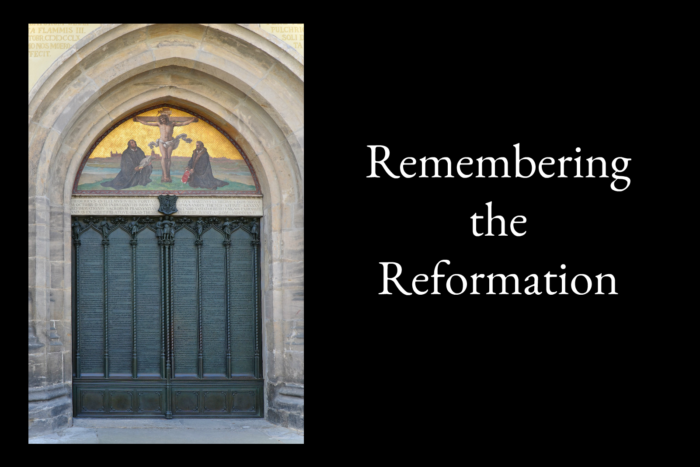
Remembering the Reformation: What’s It Have To Do With Today?

Reformation

In honor of the 500th anniversary of the Reformation, I have dedicated about three posts to remembering just what happened during that time. My plan was to delve a little deeper into it and expand–until I recognized a couple of things. First, most of my readers were generally uninterested in reading about the Reformation and so I was doing a ton of research and work for only a few. Which is fine, if not for the second thing I recognized: There are many good people who already did the research and wrote about it. And so, for those of you who are interested, I am going to provide some great places to go to learn more.

But before I do, I want to clarify why I was writing on the Reformation to begin with. My main purpose in writing this series is because the church in 2017 has walked far away from what took place 500 years ago. During the time of the Reformation, Five Solas were developed that took the church back to biblical theology and principles. They were–

Sola Scriptura(Scripture Alone)
Sola Gratia (Grace Alone)
Sola Fide (Faith Alone)
Solus Christus (Christ Alone)
Soli Deo Gloria (To God Alone Be Glory)

(You can read a little more about these Five Solas here.)

In practice, the modern day church has left many of these Solas covered in dust behind them. For example, in its efforts to toss tradition and be modern, the church is uniting with religions that require works for salvation and in its efforts to gratify a congregation that is obsessed with feelings, they are encouraging the people to believe that their personal experiences are the valid and authoritative words of God. And, yet, we can see that if we understand these Five Solas, so much of the confusion in the church today is clarified. It serves us well to reflect on church history as we navigate the current church waters. I found this wonderful article entitled Ten Reasons Why The Reformation is Not Over by Josh Buice over at Delivered by Grace that expounds this thought further. Here are ten reasons why he believes the Reformation isn’t over (and I agree!)–

  1. The Roman Catholic Church has not repented of their perversion of the gospel of Jesus Christ.
  2. Preaching is not, in many evangelical circles, the central mark of the local church.
  3. The present state of the evangelical church is filled with a love for pragmatism and a distaste for robust theology.
  4. The holiness of God is barely referenced much less understood among many evangelical churches.
  5. Worship has become man-centered as opposed to God-centered.
  6. Baptism and the Lord’s Supper are often trivialized and minimized.
  7. Church discipline is a missing mark in most evangelical churches in our present day.
  8. Evangelism has been replaced by gimmickry and superficial methods that seek immediate results as opposed to genuine conversion.
  9. Holy living has been replaced by a loose antinomian approach to redeeming the culture.
  10. Church membership has become a shadow of indulgences — one’s ticket to heaven in many evangelical churches.

*pragmatism is doing what works (as opposed to what’s right)
*antinomianism is the belief that Christians are released by grace from the obligation of observing the moral law

(Read the rest of this article here.)

And so we can see that the Reformation will never be over. As long as sinners are at the helm of the church, there will be deception, chicanery, and corruption. While we should never expect a perfect church, we can and should stand and fight for the truth, as it is necessary. The Five Solas can help us understand exactly what is going on and where the church is going wrong. A study of the Reformation is very worth your time and I highly recommend it!

Here are the resources I promised (it is by no means an an exhaustive list, but it will get you started)–

Resources

Luther and the Reformation Series (YouTube series by R.C. Sproul)

Church History Lectures (YouTube series by Ryan Reeves)

The Reformers (Book containing short readable biographies; edited by Chad Stewart)

The Reformation (Book by T.M. Lindsay)

The Reformation: How a Monk and a Mallet Changed the World (Book by Stephen Nichols)

Reformation Hardware: The Truth Behind Church History’s Greatest Revival (Podcast by Nathan Busenitz)

Celebrating the 500 Years of the Reformation (Video by Nathan Busenitz)

Five Reformation Questions (Video Lecture by Nathan Busenitz)

Misunderstanding the Five Solas (Blog series by Josh Buice)

A List of False Teachings in the Roman Catholic Church (Article at CARM)

The Sufficiency of Scripture (Part 1) (Article by Gary Gilley)

The Sufficiency of Scripture (Part 2) (Article by Gary Gilley)


*Please note that I have not read or listened to all of these. Please, as always, be a Berean and compare all you hear and read to the Bible.


Scroll to Top