Sin

Lessons from Esther

queen-esther

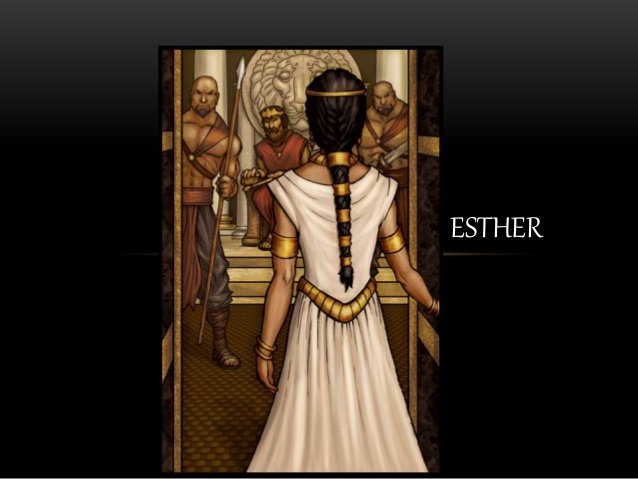
After reading the prophets, I have to admit that I breathed a big sigh of relief to get to Esther. I have loved this story since I was a child. With this time through, I found it very helpful to see where it fits in chronologically. I did not realize that this story takes place while the Jews are still exiled in Babylon. I guess I just never really thought about the details of the story before.

As I was reading this time around, I was amazed at the practical lessons that we can take away from what appears on the surface to be just another story of God’s miraculous work in saving the lives of the Jews–

1.   Sometimes God uses beautiful and powerful people. We tend to place a lot of emphasis on the fact that God uses the weak and the broken. We sit in our mundane lives filled with financial pressures and family struggles and we enviously watch the lifestyles of the rich and famous, clinging to 2 Corinthians 12:9 and comforting ourselves with the promise that God uses normal people like us to accomplish His will. And He sure does. But Esther shows us that, sometimes, God uses beautiful people like Esther to accomplish His will, too. She, of all of the young women chosen to present to the king, is the one he prefers. God raised her to a place of great power and position and, through this providential placement, saved the Jews. God can use anyone. There are no limitations.

2.  You are where you are for such a time as this. When Mordecai presents the terrible plot to kill the Jews to Esther, he asks her to go to the king. She hesitates, knowing that he could command her execution on the spot (aren’t you glad you don’t live in that kind of world??). Mordecai then reminds her that just because she is in the King’s palace doesn’t mean she will escape death. And then he gives Esther a final and compelling reason: “And who knows whether you have not come to the kingdom for such a time as this?”

Since we know the end of the story, we know that she was put in the kingdom for just that reason. Just as we all are exactly where God wants us to be. We were born at the specific time and place God planned for us. There are no accidents with God. He knew that you and I would be in this world right now–a world that is pushing globalism and one-world everything. A world that is heating up in the Middle East. A world that is dark and lost and needs Jesus Christ–the real Jesus Christ of the Bible– not the fake, feel-good version so many claim to follow. What are you doing for God? What is the eternal reason you are where you are right now?

3.  Keeping ourselves as our top priority hinders our work for the Lord. After Mordecai presents his argument as to why Esther needs to go to the king and beg for the lives of her fellow Jews, she agrees. She asks him and all of the Jews in Susa to fast for her and then says she will fast, as well, in preparation for the fearful duty of speaking to the king. She concludes with this statement: If I perish, I perish.

Esther was willing to put her own safety and well-being aside in her efforts to save the Jews. How convicting is this for us? We don’t even want to give up our comfort and convenience to do good. We don’t go to church for reasons like soccer games or needing more sleep. We don’t visit our elderly neighbors or grandparents because it makes us uncomfortable or we find it boring. We don’t speak up when God’s name is cursed because we are fearful for our reputations. Why is this? Because we are our top priority. Our comfort, our convenience, our desires, our success, our health, our pride– these are the things that often keep us from doing the right thing. Saying no to self and submitting to God’s will is a constant battle but one we can never stop fighting. Esther sets a great example for us.

4. Planning is best. Some of us — we know who we are– are the ones in this world who speak before we think. Instead of thinking and planning, we emphatically present our half-baked ideas in our efforts to fix things. Esther shows us a better way. Instead of going to the king and stating her case with tears and anger, she asks him to come to a banquet, along with Haman; carefully planning her presentation to the king. I have to be honest, reading that this time around, convicted me. She was so deliberate and so tactful in how she went about it. That does not tend to be how I present things. I want to be more like her when I have an urgent situation that needs to be remedied, don’t you?

5. When you live a life of sin, your whole family pays. Haman was a wicked man. His pride and desire for power cost him not only his life, but the lives of his ten sons. I wonder if sometimes we forget about the cost that is involved for our kids when we practice sin? When we can’t make our marriages work, it isn’t just us who pay. When we cheat or lie or steal, our kids are watching. Our pride, our complaining spirits, our grudges–all of these hurt those around us. Sin is not a solitary exercise, is it? Instead it encompasses everyone in our circle of influence, raining down consequences on those we love.

6. God can turn what looks to us like inescapable tragedy into triumph. Instead of the Jews’ enemies being able to eradicate them, the tables were miraculously turned and the Jews were able to rid themselves of many of their enemies through the king’s edict. Verse 1 of chapter nine says that “the Jews gained mastery over those who hated them.” Think about how dreadful things looked for them only a few days before– there was much weeping and mourning about their certain doom. And yet, only a short time later, there they were– the victors! Of course, it doesn’t always happen this way, but we certainly do need to remember that anything is possible with God! The same God that saved the Jews in the book of Esther is the God we serve today. He has not changed. What a comforting thought!


And so concludes my lessons in Esther. I am sure there are more lessons there to be learned in this short book. Do you have any to share?

Today is October 1– and that means that we are now in the month that we start the New Testament! If you are still with me in the Bible Challenge, we can now say that we have made it almost 3/4 of the way through! Let’s keep going. Only a few months to go :)


Picking Your Path

download21

Weddings and funerals often make us think, don’t they? They tend to take our focus off of the temporal for a brief time and move our thoughts to the eternal. One thing I have really been thinking about with all of the weddings this past year is the fact that we all need to deliberately make a choice about what our lives are going to look like. When we grow up and leave home permanently we purposefully step towards the unknown and move away from the familiar.

If you are blessed with a wonderful family, leaving home can be hard. And yet you know that the bright future of your dreams isn’t possible without stepping out into the unknown and choosing the path, in this case, of marriage.

When we choose to get married, we are purposely choosing to leave our family homes (or our bachelor apartments) and live with someone else. Yes, there are risks and it is scary but we leave completely and start a new life.

If we would get married but still live in our childhood home, while our spouse lived elsewhere, it would raise many questions, wouldn’t it? Even when we, as adults, are forced to go back to our childhood homes for a brief period of time, we usually view it as a temporary setback. It is not viewed as our final destiny, but instead as a safe place to land during a difficult time.

As we wind up our reading of the kings of Israel in the Old Testament, I find myself thinking about the allegiance of these kings. If you have been keeping track –in your head or on paper– of which kings were evil and which were good, you will see that the majority were evil. No surprise there, as most men do choose the path of wickedness. You will also have noticed that some of the kings were sort of good, but chose not to serve God completely. And then you will notice that there are just a handful that served God whole-heartedly, removing the high places and re-establishing the temple practices.

When we look over all that was written about these kings, in particular, we can see that their works and success were directly correlated to their allegiance. If they served God, they were blessed. If they didn’t, they weren’t.

So back to my example of leaving home…

When we choose to get married, we must leave home. We can’t choose both paths. We cannot stay on our old path and get on the new path. It is physically impossible.

Why then, do we think we can choose the path of Christ, and yet stay on the path of the world?

This has been such a puzzle for me–these Christians that try to put one foot on the path towards Christ, while leaving most of their bodies on the path to destruction. The problem with this is that these paths are diametrically opposed and move further and further apart. Eventually, you can’t do the split that this requires and you have to pick a side.

If you are a believer, have you turned your back on the world? Have you denied yourself and decided to follow Jesus whole-heartedly?

We can see the destruction that occurred with the kings when they tried to live a life of compromise. And living a life of compromise at home would cause great problems, as well. Can you imagine your spouse telling you that they are headed to their parents each week for a sleep-over? Of course not. When we leave our homes to get married, we leave. To not do so is not normal.

So, why then, do we think we can live a life of compromise as believers? It goes against all that is not only written in the Bible but even against all that is logical. And yet many men of intellect inform us that we can– and some even tell us that we should–live a life of worldliness. They tell us we can be on both paths at the same time. That worldliness and holiness are not mutually exclusive.

But who are you going to listen to? Men who pretend to know what they are talking about or the Bible, which is very clear on this subject?

I can certainly understand the temptation to listen to the voice that is telling us what we want to hear. It is what so often gets us into trouble. One of the best things we can do is to hear the hard stuff from the Bible and then act on it in obedience.

I have absolutely no idea, as you read this, if you claim to be a believer. I do not know if you are straddling the fence right now or not. I have no way of knowing if you have pledged your allegiance to Christ but are living a life of great compromise, living for yourself instead of for the One who died for you.

What I do know is that to compromise is easy. To not compromise is hard. The only way to avoid it is to be consistently and purposefully living each day to serve God. This is why we are told to examine our lives regularly–

Examine yourselves as to whether you are in the faith. Test yourselves. Do you not know yourselves, that Jesus Christ is in you?—unless indeed you are disqualified. 2 Corinthians 13:5

Now for the really good news!

Sometimes, when we first trust Christ, we look back on our old lives with real longing. We think we are missing out on all of the fun and we long for the world. But this doesn’t last! The truth of the matter is that as we move towards holiness, we became much less enamored with the world. Just keep putting one step in front of the other towards the light and soon you won’t even miss the world.


The Thing Anger Never Accomplishes

disinterestedwoman_600x450

Anger is just one of those things we justify, isn’t it? We can come up with so many different reasons why we should be “allowed” to be angry. Such as–

Someone said something unkind

Our spouse didn’t meet our expectations

Someone isn’t giving us something we want

Our co-worker isn’t carrying their load

Our kids are too noisy or too defiant or too annoying

The line is soooooo long

We are cut off on the highway

Our phone quit working

We spilled coffee on our laptop

The dog chewed a hole in the carpet

There are over a million reasons that we Christians will use to rationalize our angry outbursts or our seething, simmering, cold silences.

As in —pretend they aren’t sinful. Pretend they aren’t our fault. Pretend that we aren’t to blame for our anger. We convince ourselves that it is someone else’s fault. It is certainly not ours.

When we do this, we do feel better, don’t we? At least on the surface. This requires no repentance. No work on our part to change. No guilt.

The past few weeks we have been reading in Proverbs in our Bible Challenge. There is so much wisdom in this book of the Bible that I have found myself liberally highlighting many of the verses there. But the verses on anger may have been especially appropriate for me with this read-through. Let me tell you why–

Recently, I have fallen prey to this dangerous anger game. I would be irritated or frustrated and instead of taking responsibility, found it easier just to blame it on someone else. Even as I write, I find myself a little reluctant to take full responsibility for my anger. After all, she did this…or he said that

And then my Sunday School teacher said something the other week that stopped me in my tracks. (Thank you, Morris!)–

Your anger will never accomplish anything for God’s righteous purposes.

I felt like he was speaking directly to me (and–if I’m honest– maybe to my husband, too!) We have had an interesting last few months. Interesting seems a good word, since I don’t want to complain. Most of what is happening is really good–some of what is happening is not so good, but, through it all, we are very aware that we are so blessed. But what all of these changes have led to is a whole lot of stress and intensity of feelings that is a bit outside our norm as a family.

My teacher’s words struck a chord deep within as I realized that I had been trying to use anger (it’s cold, punishing silence and the occasional unkind outbursts) to try to make things the way I want them to be. Or to fix something. Or to make someone feel guilty. Or to change someone’s mind.

There are many reasons to be angry and to act on that anger– but none of them are for God’s glory.

Anger can be a very effective tool. But there is always a way that we could do it better and more effectively. Anger is never the best way. Sure, we may be able to make our kids obey us by screaming at them, but if we train them to only respond when our voice reaches a certain pitch, then they will continue in that same pattern with their own kids. How much wiser to keep our voices low and demand obedience immediately, with consistent consequences to follow.

And let me make something very clear– I am not saying that we did this right. I am here saying we didn’t do this right. Anger has always been a struggle for us in our family. We can see the fruits of it in our kids’ lives and we are sending them off into the world to fight their own battles with this sin. We could have done such a better job in this area. Oh, we never threw plates or shouted obscenities, but we did let many angry words fly over the years and for that I have great regret.

Especially when I think of it in light of the words of my teacher.

I remember someone talking about angry words years ago and comparing them to toothpaste– once they are squeezed out of the tube, you cannot put them back in. Our kids don’t forget the mean, hateful things we say in the heat of an argument or temper tantrum. Neither do our spouses and other family members. Self-control–that fruit of the Spirit listed in Galatians 5:22-23–is very much in need when it comes to this sin of anger. For even if we are angry, we need to think first and confess before we act on it.

If we are human, we will have to admit that anger is as natural a feeling as being happy or sad. We humans, without exception, hate our plans being thwarted. Sure, some of us get worked up much more easily than others, but we all have our limit. We all have our threshold of when enough is enough. How that looks is different for all of us. Some of us are screamers. Some of us grow icy cold and quiet. Anger is a sin in both cases, although screamers tend to have more pieces to pick up after it’s all over. Some withhold conversation or physical touch in order to punish, others may yell and curse– or even occasionally throw something –but both reactions are sinful reactions.

There are a few sins that have become extremely accepted by the church — to the point that we rarely even discuss them anymore. I believe anger is one of them.

I have no idea today if you have fought this battle, are fighting this battle, or aren’t even convicted about this. You know where I’m at. I need prayer. These next few months promise to be so happy and exciting, but also stressful and demanding and, yes, even a little sad. I want to rise to the occasion and be a good testimony– I don’t want to flounder in my own wants and desires, demanding my own way. I want to remember that anger never accomplishes God’s righteous purposes!

I hope that you feel the same way. Here are some verses to get us started on our way to battling this sin.

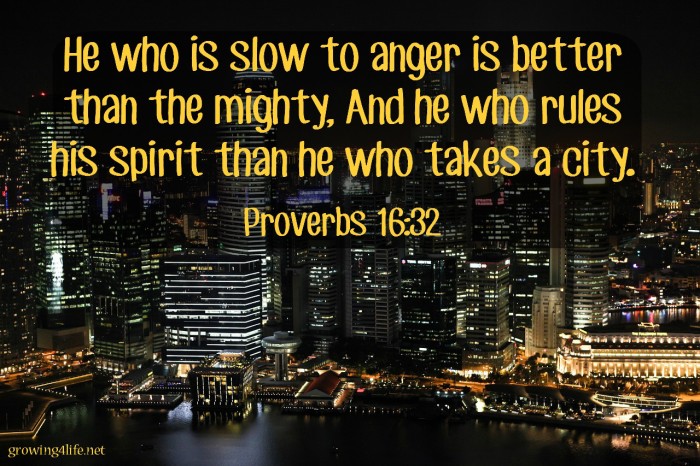
Proverbs 16:32
Ephesians 4:26
Ephesians 4:31
Ephesians 6:4
Colossians 3:8
I Timothy 2:8
James 1:19
Galatians 5:16-26
Matthew 5:22

Proverbs1632

Sex is Not a Four-Letter Word

Song of Solomon

Disclaimer: This post is really for my fellow Christian women. Men will probably not get this post, although it may help them to understand their wives a bit if they take the time to read it.

Sex Trafficking/Slavery.

Transgender/Trans-sexual.

Sexual Abuse and Molestation.

Pornography.

Affairs.

Prostitution.

The Gay Agenda.

If we have been saved by the blood of Christ, we view the above words as sinful or evil. Some of the words are viewed as evil even by the world. This is because God’s Word (and our consciences) inform us that all of the above are sexual behaviors that lie outside of God’s perfect will for sexuality. All are warped and broken ways that man has tainted sexuality. It would appear that Satan has given some of his greatest effort to destroying sex as God designed it.

So it’s Thursday, the day that I generally write about what we are currently reading in our Bible Challenge. I almost chickened out and was seriously considering ignoring the Song of Solomon completely. It was very tempting. I don’t even really “get” that book (comparing love to  clusters of henna blossoms and teeth to recently shorn sheep isn’t my style!) But there it was–this book that talks about verdant beds and breasts like towers. In the Bible. Our guide book for life has a whole book about the pure and holy beauty of physical intimacy between a husband and a wife.

Many of us are very uncomfortable even mentioning the word “sex”.  Satan has corrupted and perverted it almost beyond recognition. Because of this, it has destroyed countless lives and families. If we grew up in a Christian home, this word may have been ignored completely. Many families just pretend that it doesn’t exist at all. And, even worse yet, I have heard of some women who were told by their mothers or other older women that sex is just a duty and nothing more, something to be endured.

Sex is a little tricky for Christians, isn’t it? It’s one of the only things I know of that is a sin in one set of circumstances (sex between two unmarried people ) and beautiful and glorious in a different set of circumstances (sex between two married people).

While I don’t really understand every verse of Song of Solomon, I do take away from reading this book that God considers sex between two married people to be something pure and holy and wonderful.

As women, in particular, I think we have to be careful not to mix the feelings we have about our pasts (sexual sin or abuse) with our married sex life now. This can be difficult and there is no easy way to heal from something like this. But women can heal from this. I have heard the testimonies of several women who have struggled through the guilt of their pasts. There is hope!

I also believe that we have to be so careful not to let the debauchery of prime-time TV or the perverted remarks and jokes we hear in a steady stream all around us to taint our view of sex the way God created it to be. We have become a weirdly over-sexed nation– as if that is the only thing that matters in a relationship. And most of us are either laughing and going along with the world’s perversions of sex or we are putting our heads into the sand and pretending it’s not happening.

Some of you may be reading this and thinking: What is she talking about? My view of sex is perfectly healthy.

If that’s the case, I am so happy for you.

But I believe that it’s very likely that there are many, many Christian women who have been broken or taught lies about this word and they view sex as something to be endured or even avoided.

I am certainly no sex therapist but I can tell you one thing with absolute certainty: We will never be able to fully enjoy sex with our spouse until our view of sex is a biblical one.

Sex is not a dirty word. Instead, it is something that has been destroyed and broken almost irreparably by Satan and the world. It’s time for Christians to declare the truth about sex. We need to stop being so embarrassed about something that God created as a special gift for husbands and wives. The shame only comes when we step outside God’s design. There is no shame to be found in sex between a man and his wife. Yes, it should be a private thing, but it’s not shameful.

So that’s what I learned this week! I have a feeling next week’s post may seem a little boring compared to this one– if there even is a Thursday post next week since our son’s wedding is next Saturday! Wow, that came fast!

Have a great day. Hope I didn’t make you blush. :)

The Many Faces of Pride

PRIDE

I’ve had a really rough week. You don’t need details, but suffice it to say that I came face to face with my loathsome, prideful self yet once again.

Does that ever happen to you? Or am I the only one? You think you are doing pretty well in this Christianity thing and then something happens that you didn’t see coming or someone doesn’t meet your expectations and you react. And that’s when you realize that you still have so far to go. While it can be really painful, I am so thankful for these times, for they remind me of why I need a Savior so incredibly much and they help me to grow more like Christ.

Pride is an insidious, deadly sin. It gobbles up our peace and joy so quickly. It destroys most everything in its wake. Or, at the very least, keeps any relationship from being the best it could be.

Humility is the opposite of pride. Christ was humble, even to death on a cross, and humility is what He requires of us. First and foremost, humility is necessary for us to understand our need for a Savior. But, after our initial conversion, it is also so key in staying in a right relationship with God. It is absolutely critical for healthy family relationships. Humility helps us to be a better co-worker, a better child, a better spouse, a better parent. We are happier when we are humble. We bless others when we are humble. We experience much greater peace when we are humble.

When we think of pride, we often think of the kind that David exhibited in I Chronicles 21 (and 2 Samuel 24). David took a census. This was apparently an act of pride that cost him (and the whole nation of Israel) dearly. We can’t know for sure, but according to my Bible study notes, David’s act of taking this census could have angered God for a number of reasons. Perhaps because David was trying to gratify his pride in the great strength of his army and military power. Or he was putting more trust in his forces than in his God. Maybe this was showing that he was taking credit for the many victories of Israel. Whatever his reason, we know that God was angry, as we read in the passage.

And our pride often looks like David’s in our own day-to-day living. We take credit for something; we want the glory; we draw attention to our accomplishments and awards and accolades.

But let’s just say that we don’t really struggle with this type of thing. Maybe we hate attention and would never boast about ourselves. We would never count our successes and victories and put them out there for all the world to see. Is there still the possibility that pride could still be an issue for us, if boasting and taking censuses isn’t our style?

Of course, the answer to this is a resounding YES.

So what are some ways that pride hides out in the dark corners of our minds and hearts? I have been really thinking about this topic of humility this week. Knowing that in order for my relationships to work right, I need to be humble. In searching some of my favorite authors on this topic, I came across a $2.99 Kindle book called Sermons on Humility by Charles Spurgeon. I have not finished it, but in the first few pages he shares several different ways pride exhibits itself in even the most “humble” of us. I will follow each one with a few practical, modern-day examples —

There is the pride of the heretic, who will utter false doctrines, because he thinks his own judgment to be better than the word of God, never content to sit like a child to believe what he is told, he is a disputant but not a disciple. He will insist upon it that his own reason is to be the well-spring of his own beliefs, and he will receive nothing beyond his own reach.

This is immediately what I think of when I think of the Christians who claim that homosexuality isn’t a sin, that unity is more important than truth, or that the world evolved. They have the pride of the heretic–relying on their own intellect or on the intellect of other men instead of on the Word of God. The other person that comes to mind is the one who says there are many ways to heaven or that there is no hell. They, too, are holding their own thinking in higher merit than the Word of God.

There is next the pride of the Papist, who attaches merit to his own works, and hopes to will heaven as the reward of his own doings.

While they may not brag or boast about this, many think they are good people, quietly assuming that their good deeds outweigh their bad ones and this will be what gets them into heaven. Even many, many Christians (or shall I say people who identify with the religion of Christianity) believe they are going to heaven based on their own merit. This is pride. This is the kind that keeps our eyes blinded to our need for a Savior.

Next there is the pride of the curious. The man who is not content with simplicities, but must pry into mysteries. He would if he could climb to the Eternal Throne, and read between those folded leaves and break the seven seals of the mysterious book of destiny. You know well our apostle has many things in his writings which are hard to be understood, yet he uttered them because of the Spirit, and you never meet with any attempt in the apostle’s writing as you do in the preaching of some ministers, as you do in the conversation of some professors, to reconcile predestination with free will. He was quite content to preach to men as free agents, and exhort them to repent, quite willing to speak of God as working in us to will and do of his good pleasure, while we also work out our own salvation with fear and trembling. Paul was never curious to find out where the lines of truth met, he was perfectly content to take his doctrine from his Master’s spirit, and leave the old wives fables and endless genealogies and disputings, and questionings, to those who had no better guests to entertain.

I included this whole section here because it goes so very well with my post from Monday. I agree with Spurgeon whole-heartedly– it is prideful to think we have to understand the things we can’t understand. Yes, the ungodly will call you stupid and unintellectual when you take this approach (mostly because of their own personal pride). They don’t know God the way we do if we are saved. They don’t understand that submitting to His sovereignty is an incredible blessing. That some questions can go unanswered because the ones that really matter have already been answered. They can’t get it. Their eyes can’t see.

Again, there is the pride of the persecutor; the man who is not content with his own notions, but would hunt to death another, the pride which suggests that I am infallible, and that if any man should differ from me, the stake and the rack would be the due deserts of so great a sin, against so great a person as myself.

We may not want to see someone physically harmed when they don’t agree with us, but how many broken families and split churches fall under this type of pride? Millions? Trillions? This is perhaps the most tempting one for “godly Christians”. We think we are right. We believe that our opinion is best. We believe we are infallible. But if it’s not within the pages of scripture, is it actually something worth a broken relationship?

Is any special piece of furniture or bank account worth the fracturing of a family upon a parent’s death?

Is any decision of our adult children worth the tense and strained relationship that comes when we keep insisting they are doing the wrong thing or making the wrong choice?

Is any opinion of mine worth holding on to if it’s causing stress and constant argument in my marriage?

Is my hurt pride over what I heard that someone said about me worth a broken friendship?

NO, a thousand times NO. The answer to all of these questions is NO.

And so, so many of us fall prey to this deadly sin, leaving a trail of broken hearts and strained relationships. I don’t want to do this. I want my marriage more than I want to be right. I want a right relationship with my kids more than I want to be right. I want to be a good testimony more than I want to be right.

Keep in mind I am not talking about biblical truth here. Of course, we have to stand strong and fight for the truth held within the pages of scripture. I might add here that even these biblical debates can and should only be done with great gentleness and kindness. But most of us are not arguing over biblical doctrine (a few more of us should be! We seem to not find that important, while inane, silly things get us so riled up!), instead, we are debating and arguing over issues which have no biblical mandate. No right or wrong. I am talking about the silly, stupid stuff we won’t bend on. The stuff that isn’t worth it.

Life is hard. Relationships take work. And no relationship works well without at least one party practicing humility. Joy and peace elude us without humility. Unanswerable questions haunt us without it.

And so we start with us. Today. The only place we can start. And we take our desire to be right, our yearning for glory, and our prideful thoughts about how good we are and hand them all to the Lord, asking Him to humble us and to become more like Him.

Often crying and screaming inside our heads as we endure the emotional pain of the process.


Spurgeon, Charles (2014-09-28). Twelve Sermons on Humility; Titus Books. Kindle Edition.


False Advertising

advertising

The sign said that EVERYTHING in the store was 50% off! I wouldn’t really call myself an avid shopper, but a sign like that in a store filled with lovely clothing in a hundred spring colors was like a personal invitation.

My mom was with me and we had a few minutes to spare. And so we started filling our arms with clothing to try on–colorful summer dresses, mostly, and a couple of cute shirts. We carried our loads to the dressing room.

As is pretty typical, I came out of the dressing room with one thing. But the one thing I found I really liked. It was the perfect addition to my summer wardrobe. I took it to the cash register and waited for several minutes since, apparently, the only person taking sales at the register was also the person who answered the phone.

Finally, she hung up the phone and rang up my purchase. She named the total and I was taken aback. I was certainly not willing to pay that amount for any shirt– no matter how cute.

I immediately asked about the signs that were placed all over the store.

Well, guess what? Some things were excluded. Like my shirt.

Of course it was.

All the new spring items were not on sale.

What?? Where in the world did it say that on the sign?

I told her I did not want the shirt, after all, and walked away. On our way out of the store, we stopped by a sign to read the fine print. It was SO SMALL that we couldn’t even read it. Seriously. It was so small that I didn’t even see it there when we looked at the signs originally. I have never seen fine print that small.

I don’t really think I will shop at that store again anytime soon. I understand that stores need to use exclusions and fine print. But to do it in such a way as this store did was to mislead and really be dishonest. At least make the fine print legible.

I suppose that what this store did regarding what they have to sell is what Satan does with what he has to sell.

False Advertising.

Promising something that you can’t deliver.

Yep, that is exactly Satan’s style.

He promises us joy and peace if we follow our hearts.

But it’s not there.

He promises us a great life if we focus on our needs and wants at the cost of everyone else.

But it doesn’t happen.

He promises us an awesome time when we drink and use drugs, stare at pornographic images, or gamble away our paychecks.

And, sure, their may be a thrill for a brief minute or two, but he doesn’t show you the sorrow and heartbreak that goes with it. You never hear the word addiction or betrayal or loser when he is trying to win you to the other side, do you?

He promises us purpose and fulfillment if we just stand up for our rights.

But it doesn’t happen.

He promises us happy, carefree kids if we never say no to them.

But this is definitely false advertising. Happy kids are kids that have boundaries.

He promises us happiness if we just have that house we want, look like a model, or if our kid is a soccer star.

But it doesn’t come. Because that’s not what makes us happy. Not permanently.

Satan beckons us all with these lies. But we never read the fine print. This fine print can be read in the history books and literature of yesteryear. It can be read in the lives of our family members and the lives of those who live in our community. If we take some time and see the outcome of ungodly decisions, it isn’t hard to see the lack of wisdom in them.

You know, Jesus says in Luke 17:33 that “Whoever seeks to preserve his life will lose it, but whoever loses his life will keep it.”

The further along I walk down the path of life, the deeper understanding I have this verse. The truth of the matter is that, after we are saved and have come into a right relationship with God, we can only experience true peace and pure joy through daily self-sacrifice and self-denial. I am much more at peace and so much more joyful, when I am practicing the fruits of the spirit (Galatians 5:22-23) than when I am trying to fulfill my own selfish desires. And, yet, that battle rages within me constantly. Even though I know the truth.

Oh, some of our worldly choices may lead to temporary happiness and bliss, but it never lasts. We will never be perfectly content until we root that contentment in Jesus. And, honestly, it is impossible to stay in that place entirely until we reach heaven. We are human, after all. Even Paul had trouble with fighting his flesh (Romans 7:15-20).

So this life is a battle. But it is a battle worth fighting! Selfish choices and decisions lead to destruction. Godly, wise decisions lead to a joyful life. We are given the freedom to make a choice. Which one will you make?

I will leave you with the words of one of my favorite Psalms–

Blessed is the man[a]
    who walks not in the counsel of the wicked,
nor stands in the way of sinners,
    nor sits in the seat of scoffers;
but his delight is in the law[b] of the Lord,
    and on his law he meditates day and night.

He is like a tree
    planted by streams of water
that yields its fruit in its season,
    and its leaf does not wither.
In all that he does, he prospers.
The wicked are not so,
    but are like chaff that the wind drives away.

Therefore the wicked will not stand in the judgment,
    nor sinners in the congregation of the righteous;
for the Lord knows the way of the righteous,
    but the way of the wicked will perish.

(Psalm 1)

The Win (and what to do until then)

the win

Isn’t it interesting how schools cycle through their glory years? One year the guys’ basketball team or girls’ soccer team is undefeated and there is enthusiastic school spirit supporting them. And then a season or two later all the glory has ended. Key players or a coach moves on and the dynamics change and suddenly they aren’t the team on top anymore.

The same dynamic plagues most professional sports teams, as well. I am a Philadelphia Phillies fan–no matter if they win or lose. But right now it is bad. Let’s just say that we aren’t watching a lot of baseball this year. It’s just not near as much fun as when they were really doing well and headed to the World Series.

And we are left with one conclusion–

Winning is glorious and losing is not.

A lot of the stories of King David are tales of victory over enemies. Just yesterday, we read of how the Ammonites asked the Syrians to fight with them and after being soundly defeated, we read that the Syrians were afraid “to save the Ammonites anymore” (2 Samuel 10:19). I guess I would have been, too. David had a reputation of being victorious. But King David doesn’t win every battle. We will soon read of his battle with lust that he loses in a big way (2 Samuel 11).  And let’s not forget that just a few years earlier he was fighting for his life as he was chased down by Saul. He eventually became King, but it certainly wasn’t without grief and struggle.

This is what makes life so hard. We win some and we lose some. But some battles are so much more important than others. And what are we to do when we feel like we are losing such critical battles? The battles for–

Our country

Our churches

Our freedom

The hearts of our kids

Our marriages


We are losing some of these battles pretty soundly right now. Have you read the news lately?

But we know that we win the war. That is worth repeating: We are going to win this war between good and evil.

We can’t lose sight of this. No, God does not promise us that our kids will be saved or that our spouse will stick around. He doesn’t promise that our churches will preach sound doctrine or that our country will return to its Christian roots. But what we do know– without a shadow of a doubt– is that God will reign victorious in the end. Every knee will bow to the King and every tongue will confess that Jesus Christ is Lord (Isaiah 45:23; Philippians 2:10-11).

When we consider this very important truth, we naturally come to the conclusion that the only thing that really matters is whether or not those around us are going to confess Jesus Christ as Lord before it’s too late.

So often, we worry so much about the outward stuff that indicates serious problems– the bad grades, the drug and alcohol abuse, the debt and materialism, the false doctrines, the laws, the liberalism. And we try to fix things. We try to fix our kids and spouses. We try to fix our churches and our government.

But is anything truly fixed without a changed heart? A child can change behavior without ever changing his heart. A government can make laws that are more compatible with our beliefs, but will that really solve our country’s problem?

I don’t think so. Because the reason we are having such deep, heart-breaking issues– both in our families and beyond– is that people believe in a lie. They have chosen to reject the Word of God and they believe the lies of the world. They believe these lies of the devil–

–That their purpose and fulfillment is what matters (which leads to self-centered, self-absorbed individuals only out for themselves)

–That their kids’ happiness reigns supreme (which leads to spoiled brats who think the world revolves around them and want the world but are not willing to work for it)

–They believe unity is more important than biblical integrity and that loves trumps holiness (which leads to a shallow, fake religion pretending to be Christianity)

–They believe that the Bible is just partly true. That it has errors. They believe that God just got the ball rolling and then put the creation of the world into the hands of some kind of evolutionary process (placing doubt on The Bible removes the foundation for true Christianity)

–They believe that you get to heaven for doing good things. That they simply need the good to outweigh the bad (this is a insidious and very old lie — that your righteous works will win your salvation)

–They believe that God would never want them to be unhappy (this leads our faith to become me-centered rather than centered on the almighty God of the universe)

–They believe that man is basically good and that sins are simply diseases and disorders (the sinfulness of man is a key component of true Christianity and cannot be overlooked without forfeiting biblical salvation completely)

–They believe that their happiness will be found here on this earth (but Jesus said “blessed are you when you are persecuted, for your reward will be in heaven”. See Matthew 5:11-12)


I challenge you to talk to someone that calls him or herself a “Christian” but doesn’t live like it. Somewhere in their thinking is a lie (or two or three) that they are believing.

It is impossible to fight the battle for someone’s soul if they are believing lies. We have to start at the beginning. And that beginning is the Word of God. For that is where we find the truth. This means that we need to know it and study it and understand it ourselves.

And so while we wait for The Win, let’s fight the battle for the truth–God’s Truth. Let’s fight for the hearts of our kids, for our marriages and families. Let’s fight for it in our churches and in our country. Do it sweetly and kindly and gently. But let’s never, ever forget that we are in a war.

And never forget– we win!


Is Magic That Big of a Deal?

ball-625908_1280

I could feel my little-girl heart beating fast inside my chest. My hand slowly reached out to hold onto the little piece that was supposed to move ever so slowly on the Ouija Board in front of us and give us the answers to our most important questions. My two friends’ hands were also on the piece. We waited expectantly.

Somewhere way down deep inside me, this felt absolutely wrong. Yes, I was young but I knew, without a shadow of a doubt, that this was not something I should be fooling around with. After just one question, I made up some reason why I couldn’t keep playing and we left the evil game behind and went outside to play.

That moment is forever etched in my mind. I knew that this was no game. And I knew that I was playing with danger. My spirit was so vexed within me, I almost felt like I couldn’t breathe. I needed to get away from that game. I don’t remember details but I remember that feeling!

I thought of that memory the other day when I was reading about Saul. In our 2015 Bible Reading Challenge this past week, we read about Saul’s death and David being crowned King of Judah. In the midst of all of that, we are reading many of the Psalms. They are like a breath of cool, crisp air in the midst of all of the action and drama we are reading, giving much needed encouragement and refreshing the spirit.

But when I read about Saul’s death the other day in the I Chronicles passage, something really hit me. His death is recorded this way–

(I Chronicles 10:13-14) So Saul died for his breach of faith. He broke faith with the Lord in that he did not keep the command of the Lord, and also consulted a medium, seeking guidance. 14 He did not seek guidance from the Lord. Therefore the Lord put him to death and turned the kingdom over to David the son of Jesse.

Saul died for disobedience and lack of faith. But he also died for seeking guidance from a medium.

We know from other passages that God abhors sorcery and witchcraft. It is abundantly clear in scripture. Here are a few passages that make this clear–

Deuteronomy 18:9-12
Isaiah 8:19-20
2 Chronicles 33:6
Acts 19:19
Galatians 5:19-21
Revelation 21:8

So if Saul died partly for his use of sorcery and we see clearly that anyone who practices sorcery will not inherit the Kingdom of God, then I can’t help but wonder if our lackadaisical attitude towards witchcraft and sorcery as believers is a problem?

We seem to just accept this as innocent and fun entertainment.

But is it?

What should our attitude be towards books and movies that are driven by magic and spells? What about Ouija Boards, tarot cards, and horoscopes? Are these things just light-hearted fun or are they dangerous tools? Should anything having to do with sorcery be in our homes?

I’m just asking.

Here’s the thing–

I know that so many of you draw the line at having actual magical items in your homes, but really leave your guard down when it comes to entertainment. For some reason, many of us Christians, while we believe it’s wrong to actually participate in something we know God hates, we think it’s okay to read it or watch it. I don’t really get this, but I do recognize that Harry Potter books sit on the shelves of many believers. Some own every Twilight movie. And they may even record The Medium. In each of these series, the whole plot is driven by magic and the supernatural in a very entertaining way–they focus on an unknown world that so intrigues us all.

We love a good fantasy, don’t we?

A place where we can get lost and escape for a little while and these books, movies, and shows do just that for us.

I named three of the most popular (or at least used to be…they have been replaced now by new shows and trends as I update this post), but I know there are many other examples of this kind of entertainment in so many of our home libraries. Even most Disney are rife with magic and spells. And what about Narnia? Or the Hobbit? Do we get to choose what kind of magic God approves of? And, if so, how do we discern the difference? Where do we find this difference between the types of magic in the Bible? (We don’t because it’s not there.)

We tend to be very “frog-like” in this area of entertainment. And Hollywood takes great advantage of this, throwing in a little black magic  (or sex or bad language, etc.) and increasing it ever so gradually and so subtly that what starts out as “not that bad” ends up very wicked.  And this has led us to the point that we actually have Christians reading, watching, and endorsing things like Harry Potter and Twilight (and The Bachelor and Shades of Gray and all other kinds of wicked things).

I have to confess that I am completely and utterly befuddled by this.

But, listen, I am not going to tell you what you can and cannot watch. That is certainly not my place. I recognize that we are all at a different place of conviction and spiritual maturity. But can I at least ask you this–

If we are trying to live a life that pleases God and we know with complete certainty that He hates sorcery, should we at least consider the appropriateness of having entertainment that glorifies these things in our lives and the lives of our children?

It is my belief that Satan has used the human propensity for entertainment to wield many believers almost ineffective for the cause of Christ. We have put our swords of truth down (the Word of God) and have instead found ourselves wrapped up in the goings-on of pretend worlds. We find ourselves powerless and hungry for supernatural experiences that will prove to us that we aren’t as powerless as we feel.

May I encourage you to pick up your Swords and use them? May I encourage you to clean house of all that you know God hates–and not just things full of magic and witchcraft, but all of the other stuff, too?

I  believe that it is impossible to live the full and blessed Christian life that Christ offers until we are willing to give up our ungodly entertainment.

Would you at least consider praying about this?

(Updated: April 14, 2025)


Which Is It?

hand-453220_1920

One of the things I have been really struggling with this second time through the Old Testament is the ease with which God seems to kill off anyone that offends Him. Yesterday, I read of the men from the Levite town, Beth Shemesh, who committed the very presumptuous sin of looking into the Ark of the Lord (I Samuel 6). Because of this, they were struck by God and killed. Just like that.

What?? Is this the same God whom we sing about, lauding His grace and mercy?

As I discussed this with my brother, Pastor Dean, he said something very profound. In fact, so profound, that I believe until we fully grasp a biblical view on this, we are going to really struggle with our concept of God.

We either believe–

People are good and God is evil.

OR

God is good and people are evil.

We can’t have it both ways. If we believe people are basically good then what we see God do in the Old Testament seems harsh and cruel…and evil. But when we come to the understanding that we are born with utterly wicked hearts and are entirely dead in our sins and that God is perfectly Just, perfectly Righteous, and perfectly Holy, then what happens in the Old Testament starts to make more sense.

It really is impossible to believe that both God and people are good. Because if that is so, then we really have a problem–for how could a good God strike down intrinsically good people who simply made mistakes?

Even as I write this, I recognize the distaste that wells up inside most of us at this thought of people being born with zero righteousness. Even as Christians, this doesn’t sit well with us. Surely, we have some good to bring to the bargaining table? And yet scripture is clear–

“There is none righteous, no, not one;
There is none who understands;
There is none who seeks after God.
They have all turned aside;
They have together become unprofitable;
There is none who does good, no, not one.” (Romans 3:10b-12)

This intrinsic wickedness that is taught in scripture is just such a hard concept to accept with our Western, human rights thinking. I think many of us, even as Christians, drag our feet in fully admitting man’s sinful state.

But when we come to the understanding that God is good and we are not, then what we are reading starts to make so much more sense. A holy, just God cannot tolerate a unholy people. And so when the Israelites were prideful and disobedient, they paid dearly–many times with their lives. But we also see– over and over again–God’s generous mercy and grace when the people are humble and obedient.

Let’s fast forward a bit. When Jesus Christ died on the cross as a sacrifice for sins and then rose three days later, we moved into the age of grace–this wonderful time where God does not generally strike men down for their sins and disobedience.

But does that make our pride and arrogance any more tolerable? Or our disobedience any less offensive?

Certainly not.

We are totally dead in our sins until we receive God’s free gift of salvation through Jesus Christ. Once we receive this new life, our rock-hard hearts are softened, our desires changed, and we naturally take steps to live a humble, obedient life.

Is God’s plan of redemption starting to make so much more sense now?

This also helps us to understand why people are moving away from the scriptures as the basis of their faith and why so many choose to believe only parts of the Bible and not the whole. If we are honest, some of what we read in scripture is really hard stuff. We don’t like it. And we can’t wrap our brains around it. And, most importantly, it places demands on us that many of us find distasteful and unpleasant. “Fire insurance” is what most people are after– the call for self-sacrifice, humility, and obedience is certainly not a welcome part of the plan.

But choosing only to believe the happy parts and the blessings of scripture do not make the hard, difficult truths any less true, does it?

I would say that until we can recognize that all men are born sinners and without merit– no exceptions and no levels– we cannot fully grasp the fulness of our salvation. Reading the Old Testament is helping me to understand just how much God hates sin. It is giving me a much deeper appreciation that God, in His marvelous grace and infinite mercy, has given us a great gift in salvation and that through Jesus Christ alone can I be reconciled to God.

Because God is good and I am not.

Sure, I still have a few unanswered questions. But they are eclipsed by the wonderful insight and knowledge of God I am gaining as I read. I sure do hope that you are experiencing the same thing. If not, then just continue reading, praying each time before you start. God is so faithful. He will speak through His Word to a willing and humble heart. Not every moment. Not every day. Sometimes we read because it is the right thing to do. But you will be so surprised and delighted at the end of the year just how much you have learned!

Isaiah 55:11 So shall My word be that goes forth from My mouth; It shall not return to Me void, But it shall accomplish what I please, And it shall prosper in the thing for which I sent it. 


In the Storm

Boat-In-A-Storm_art

I thought I knew what I was going to write today. And someday soon I will probably write it. But I can’t today. Today I am just too overwhelmed by the grief and sorrow of this world.

Sometimes we can forget about it.

Sometimes.

I enjoyed a wonderful Easter with my family. I feel so blessed. But over the course of the last week or two, several really painful situations have come to my attention. Some of the suffering people I know personally and others are Christian brothers and sisters in different states or even across the world. But they all have one thing in common–they are currently tasting the heart-wrenching, bitter reality of a fallen world.

It all seems so pointless.

And yet–

There is the cross.

I know so many think we Christians are just ridiculous. We are living in a dream world, grasping for comfort where none is to be found. Putting our hope in a man who was nothing more than a prophet, at best, or mentally unstable, at worst.

But you and I know differently, don’t we? Our eyes have been opened, our blinders removed, and we know that there is genuine forgiveness and blessed hope to be found in Jesus.

In our suffering moments, we cling tenaciously to this, trying desperately to keep hold.

And, thankfully, after our walk through that dark, dark tunnel of grief, we can often see the hand of God, working in our lives and growing us to be more like Jesus.

But this thought really doesn’t bring much comfort as we take our own journey through grief– I recognize that even as I write it.

It just helps all the blackness to not seem so pointless.

All of us have black moments. But some seem to have more than others, don’t they? Take, for instance, that first wife of Samson’s (Judges 14-15). Have you ever thought about just how tragic her life was? Just because an Israelite took a fancy to her. She is not alone. Many people seem to be born for tragedy. Like our brothers and sisters in other lands who are persecuted unmercifully for the cause of Christ.

I wish I had all the answers. I wish I knew how to comfort someone who is walking through such terrible darkness. And I wish I knew how to not feel so deeply.

But I keep going back to the same thing– HOPE is found in Jesus and what He did for us at the cross. True, genuine hope is only found there. Hope for now and hope for the future. Hope in the blackness.

How do people survive in this world without it? This is why some are willing to die for their faith. Because they recognize that true hope is only found there.

I was talking with my girls the other day about the hopelessness with which some of their co-workers live their lives. They talk about divorce before even getting married, figuring that the relationship will end sooner or later. They can’t imagine how my girls could trust their boyfriend and husband to remain faithful to them. Or how it is possible to have any fun in life at all without getting drunk and escaping reality as their source of entertainment.

What they don’t realize is the great hope that lies within my girls because of Jesus Christ. Only because of Christ.

Because on that day so long ago, He hung on a tree, bearing our sins, taking our sin and shame upon His shoulders, and then rose again –victorious over death!

True joy and peace can only be found in recognizing this, repenting of our sins, and submitting to this truth.

And, so, in this broken, fallen world, we can only point people to this hope. Other than that, we are truly hopeless and travel from one broken, cursed moment to the next, with a brief respite sometimes given in between where we simply try to forget. Forget that we will soon be mired in grief once again.

I’m sorry.

I’m not trying to be so depressing. But I just feel so sad and scattered in my thoughts. Trying to sort my way through the deep grief and questions I am feeling this morning. Trying to piece it all together with the gospel. And I keep coming to the same conclusion–

Our hope isn’t here.

It’s not in this world, or the things of this world. But, instead, rests fully in Jesus Christ and His promises to us, written in His Word.

Life is hard. Sometimes really hard. But we have a Savior. We have a Hope. Let’s cling, unwaveringly, to this as we are tossed about on the sea of life. It’s the only thing we have.


Scroll to Top