Christian Life

Why How We Live Is So Important

tabernacleNite

Many times, as believers, we really struggle with this concept of holiness. If we are truly saved, it is something we know is required of us and so we work and strive to be more “holy”. But do we truly understand why?

I think that is a question with several answers, but one was just made very clear to me by our scripture reading this past week.

As you read the detailed description of the tabernacle, did your eyes glaze over? I have to confess that as I read all of the specifics about the Tabernacle, I found it hard to stay focused on what I was reading. In this day and age of “soundbite” information, such detail can be hard for us to read.

So why did God place so many details about the Tabernacle in His Word? That was the question my youngest daughter and I found ourselves discussing the other day.

If God gave 50+ chapters in the Old Testament to let us know His exact requirements for the place His Spirit would reside with the children of Israel in the wilderness, then it must be important. As we discussed this question, it dawned on me that it could have something to do with helping us to understand just how holy is the place His Spirit demands as a sanctuary. It gives us some insight into just how holy and awesome God is!

Now, jump with me, if you will, to the New Testament. Suddenly, personal holiness takes on a whole new meaning–

Or do you not know that your body is the temple of the Holy Spirit who is in you, whom you have from God, and you are not your own? (I Corinthians 6:19)

 That good thing which was committed to you, keep by the Holy Spirit who dwells in us. (2 Timothy 1:14)

For there are three that bear witness in heaven: the Father, the Word, and the Holy Spirit; and these three are one.(I John 4:7)

If, now, in this church age, we have become the place in which the Holy Spirit dwells, then our sin takes on a whole new light, doesn’t it? It becomes even more offensive and not something to brush off lightly, as we are so apt to do.

I would often ask my kids if they would take Jesus to that movie or listen to that radio station if Jesus were sitting in the car with them as they were growing up. But God is with them at all times. God, the Holy Spirit, is with them. With me. With you. At all times. We have a responsibility to live a holy and pure life so that we are a fitting place for the Holy Spirit to dwell.

If God gave all of that detail in the Old Testament showing us what He required (and it’s clear that the sacrifice of Jesus did eliminate all of the ritual and blood sacrifices of old — just read Hebrews 9) and if we read all of the specifics of gold and silver and bronze, of the colors of blue and purple and scarlet, the carvings of orange and almond blossoms, we have to understand that God demands the best.

Not perfection. Perfection isn’t an option in this sinful world. But the best, purest, most holy me I can be. Because if I believe what the Bible says then I understand that when I became a believer, His Spirit came to dwell within me.

Doesn’t that make us view even the smallest choices with much greater care? And even our “smallest” sins with much greater remorse? Doesn’t daily confession and the idea of repentance make much more sense with this insight? We not only represent a Holy God, but His Spirit dwells within us!

In this day and age of casual living, we tend to view God as our buddy and friend (and we are called His friends in John 15:14) but may we learn from our Old Testament reading that God is also holy and awesome and omnipotent. This hasn’t changed just because of Jesus’s sacrifice on the cross. And a Holy God demands a holy dwelling place. Let us not forget!


Please Note: I am presenting the insight and understanding that I am learning as we read through the Bible with each Thursday post, but may I encourage you to please do your own study using good resources to gain insight and grow in the Lord. I am doing my best to give biblical, solid food for thought as we read through the Bible, but I would be the first to admit that I am no theologian!




Our Undoing

il_570xN.678163307_f7bv

Many of us cannot fathom how Fifty Shades of Gray is accepted as normal entertainment, not only by the world, but also for many in the church. We just can’t understand.

I’ve been thinking about this a lot over the last few days. Why is something so obviously wrong embraced so eagerly by people who call themselves Christians?

I think I may have the answer.

Somewhere in the not-too-distant past, Christians decided that what we entertain ourselves with just doesn’t matter. It is considered completely separate from the rest of our spiritual lives.

I remember a conversation I had with my daughter a few years ago. She was trying hard to process the fact that so many Christians who live otherwise godly lives spend so much time watching shows and movies that are filled with all of the things that God hates and somehow have no conviction about this. And she finally suggested that perhaps entertainment is the one big blind spot in the lives of most Christians today.

I think she may be on to something there. For what other explanation could there possibly be to explain how Christians would fill their minds with such filth and call it okay?

Sure, Fifty Shades of Gray is a little out there for most of us reading this blog, but do you honestly think God hates S&M any more than He hates adultery and fornication? Or the glorification of theft and illicit drugs? Really? Or what about homosexuality? Or sorcery? Or crude and profane language? Or violence for no reason? The God of the Bible hates all sin. And yet most Christians will put any or all of the above before their eyes on a regular basis and call it okay.

Actually, we might wonder why there is such a to-do about Fifty Shades. We watch just about everything else and call it okay, don’t we?

I am so excited that so many of you have joined the Bible Challenge this year. I love hearing all that you are learning in God’s Word. We know that His Word never returns void (Isaiah 55:11). And I am sure you are finding out, like me, that Hebrews 4:12 is true.

But I do have a concern as we continue on in our challenge.

Imagine with me, if you will, an elderly lady knitting a beautiful sweater. She is carefully crafting it for her only granddaughter and it is in an intricate design of flowers and hearts. She has spent hours and hours on it.

The curious thing is that after she has knitted for a few hours, she spends the next few hours undoing all that she has done. Not because there is anything wrong in her work, but because she just loves to undo her knitting as much as she loves to knit.

Sound strange and completely unrealistic?

Of course it does. No person in their right mind undoes so much hard work. And, yet, I propose that many of us do just that by how we entertain ourselves.

Why do we believe that we can watch, read, and listen to anything we feel like and yet think we will grow by leaps and bounds towards the Lord? Unless we use very careful discernment, we are going to undo every good thing that has come from our Bible reading and study.

Look, I am not going to give you a list of acceptable entertainment. This is not about a list of rules but, instead, about a heart that wants to please the Father in all we do (I Corinthians 10:31).

And I just want to shout out a warning to any of you who are giving effort to reading and studying your Bibles (in any way, not just through the G4L Bible Challenge)–

If you leave your Bible and then go fill your mind with ungodly music, movies, tv shows, or books, don’t expect this to be a year of great growth. The Christian life is about learning God’s Word and biblical truth but it’s also very much about living a holy, pure life before God. Both are required for a life that would glorify God. Giving our time to learning God’s Word and then filling our minds with ungodly entertainment could be likened to the elderly lady with the sweater. It’s the undoing of so much of the good work being wrought in our lives through God’s Word.

Grace and Introspection

Parting of the Red Sea

Sometimes we approach the stories we read in the Bible with a bit of arrogance, don’t we?

“Well, I would have never done that!”

or

“I can’t believe anyone could have acted {or reacted} like that!”

If you are reading along in the Bible Challenge, we have arrived in one of the most exciting books of the Bible–

Exodus.

In this book we witness God’s power through many different miracles, we see His care and protection for His people, and we read of God’s faithfulness and sinful man’s faithlessness.

It’s the faithless stories that drive me a little crazy. One of these is told in Exodus 14:10-12. Here’s what it says–

And when Pharaoh drew near, the children of Israel lifted their eyes, and behold, the Egyptians marched after them. So they were very afraid, and the children of Israel cried out to the Lord. 11 Then they said to Moses, “Because there were no graves in Egypt, have you taken us away to die in the wilderness? Why have you so dealt with us, to bring us up out of Egypt? 12 Is this not the word that we told you in Egypt, saying, ‘Let us alone that we may serve the Egyptians’? For it would have been better for us to serve the Egyptians than that we should die in the wilderness.”

My initial reaction when reading this was to condemn the Israelites harshly. For goodness’ sake, they had just lived through the ten plagues where they had witnessed miracle after miracle. They had seen the lives of their firstborn children and livestock spared, while the firstborn sons and livestock of the Egyptians were killed on one dark, dark night. There was only one explanation for how they could even be beside the Red Sea at that very moment and that explanation was God. God had worked miraculously to bring them to this point. They had seen it with their very own eyes!

And yet they doubted.

How could that be?

But then I remember times in my life when I do the same thing. Oh, it may not be in such dramatic fashion. I’ve never had the waters part for me or food fall down from heaven, but I’ve seen the hand of God work in mighty and wondrous ways– ways that defy circumstances and could never be called coincidental. And then, after all that, the impossible scenario comes along and I throw up my hands with questions and doubts, all the while wondering if God really does care for me.

One thing I have learned over the years is that when we are in our lowest, most hopeless place is when we see God work in the most incredible ways.

If we can do it ourselves and fix it ourselves and, through our own effort, solve our own problems then we have no need for God.

But when we reach that hopeless place–when we are smack dab against the Sea with nowhere to run and the enemy is headed towards us at breakneck speed-that’s when God shows His power!

Sure, we can criticize the Israelites’ reaction as they sat in that terribly hopeless place, but I am pretty sure we would have done the same thing. After all, we do do the same thing.

As we read through the Bible and even as we interact with other believers, let’s remember to do so with humility, love, and much grace. We don’t know how we would act in any circumstance, but one thing we can be sure of is that we are sinners, just like everyone else. And that fact alone should keep us humble and full of grace. And let’s keep our eyes open, because our God is still working in our most hopeless situations!


About Love

I Corinthians 1313

When I was a kid, life was a lot different. I can remember when Dad brought home our first microwave, our first VCR, and our first Video Game Console. I remember the Christmas as a young married woman when I received my first CD player. I was so excited! I didn’t know it at the time, but just like life had changed so drastically with the development of machines in the late 1800s, so would life change again in the late 1900s with the development of the computer.

One of those changes — a seemingly very minor one — is that instead of buying the whole album of our favorite artist to get the song we love, we can now just buy that one song. This option means we don’t have to buy the songs we don’t like. But I wonder if it doesn’t also mean that we miss a few we would really like?

Sometimes I think we approach love a little like that. We want to just experience the easy, good parts of love. Let me explain–

If we are a parent, the easy, fun parts are the hugs & kisses, the snuggling up at night and the “I love yous” and the proud moments when you get to say “I’m that kid’s parent!”

If we are a spouse, some of the good parts are when we are in complete harmony in purpose, holding hands and talking, looking across a room and knowing exactly what the other person is thinking.

If we are a son or a daughter, the good parts are the cool ways your parents take care of you even as an adult, or the friendship that has grown deeper with your older parents.

If we are a friend, the easy part is the connection we feel, the support we know we have, no matter what befalls us.

These are some of the best things about love. The joy that comes from interpersonal relationships.

But I wonder if, with the advent of all of this technology, we have become a little unrealistic in our expectations of love, thinking we can just pick the good times. Trying to hang on to “perfect”– just getting the pleasant experiences and bypassing the unpleasant ones.

It doesn’t take long to figure out that sometimes there are far more unpleasant ones than pleasant ones. We are all sinful human beings and life is hard–

As parents, we need to discipline and provide consequences for sinful behavior. We need to have hard conversations. We need to endure a few “I hate you!”s and quite a few seemingly hopeless moments that just aren’t any fun at all and certainly not easy. But that is love.

As spouses, we don’t always jive, we disagree, and we have periods of crazy, busy times where we hardly see each other. We argue, we fight, we lay in bed not talking. But this is just the hard part of love.

As adult children, we see our parents growing weaker, they need us to do things for them that they used to be able to do for themselves, we take them to dr appts, or do their finances, or change their diaper. But we remember how hard it must have been to raise us, and we do it because we genuinely love them with all our heart.

As friends, we disagree– sometimes on major things, our kids may fight or not get along, or we may move far away from each other, but if true love abounds, the friendship remains, because that is what true love does.

I just wonder if we have become so used to pulling only the good things and avoiding the bad things, that we have not experienced love in its fullest, most satisfying way. For when we walk away (physically or emotionally) from a tough situation, we are in essence saying that we don’t want the hard stuff.

Now, please don’t take this to the extreme. There are a few very legitimate reasons to walk away from certain relationships, at least for a time. But this is not the norm. Most relationships are broken because they just weren’t easy or fun anymore.

Many of those who walk away go on to start a new relationship that sours faster than the first one.

But true love accepts the bad stuff along with the good stuff. Rejection isn’t even an option. Divorce or abandonment aren’t even a passing thought in our brain. True love means commitment and work but, oh, the rewards are tremendous.

I have no idea if you are struggling in a relationship today. Many of us are. Don’t give in to the thoughts that tell you to quit and move on. Keep loving. Keep doing what’s right. Do what you can do and then pray. Hard. We can’t change the other person, but we can surely do all that we possibly can to salvage the troubling relationships in our lives.

 And now abide faith, hope, love, these three; but the greatest of these is love. (I Corinthians 13:13)


A Picture of Repentance

PA Welcome

So let’s say you and I live in Indiana. You are without a car and license but have an urgent need to get to California. I am your best friend and am out of a job right now, so you ask me to drive you there.

Okay, so that probably wouldn’t happen, but stick with me, would you?

We get in my car and start off on our adventure. You aren’t paying attention to the road signs as we talk with one another. An hour or two later you grow drowsy and fall asleep. When you wake up a few hours later, you see a big sign that says “Welcome to Pennsylvania”.

What?? You are quickly wide awake. You ask me what in the world are you doing? with some panic in your voice. I look at the sign and then look at you. I calmly acknowledge that I am definitely not going in the right direction.

What do you want me to do at this point? How would I acknowledge that I am serious about the grave error that I have committed against you?

Would I simply stop the car and tell you how very sorry I was? Or perhaps go buy you a nice dinner?

Obviously, I would turn around and start going the right direction.

So, here’s the thing– why exactly aren’t we taught that this is the natural response of someone who truly believes in God for His free gift of salvation through Jesus Christ? We have committed a grave sin against God and yet many of us say we’re sorry but then keep living the same life we have always lived, never changing direction and continually abusing the grace of a loving, holy God. Could that possibly mean that we haven’t repented at all? It is something very serious to ponder.

So why don’t we view a decision to follow Christ with this in mind?

Probably because Satan has weaved a fantastic lie that is extremely appealing to all of us in our human form– we can be saved (and skip hell) by just saying a quick prayer, letting Jesus know we believe that He died for us. But that’s just not true.

Yes, I said it. It’s not true. Nowhere in scripture is there indication that this is true. True salvation is always followed by some form of fruit. You cannot read the Bible without understanding this very important fact. (Matthew 7:16; I John 2:3-6; Galatians 5:19-26)

Remember my favorite saying?? It’s about direction; not perfection. When we are saved, we turn around and start heading a different direction– one that goes against the crowd. Oh, sometimes we mess up and get turned around briefly, but, generally, we are going towards God and away from the world. The very nature of salvation demands this change in direction. It’s not something you can choose or have to choose. It just is, according to God’s Word.

Now, lest you think I am teaching a works-based salvation, I certainly am not. There is nothing you or I could do to merit salvation. Ever. We have broken God’s laws– no matter how little we have sinned and that sin demands justice. Jesus died to pay the price for our sin. When we get that– I mean really get that— then repentance isn’t a “have to” but a “want to”.  The change in direction is as natural as breathing. It’s just what you do if you are a true disciple.

Don’t let the lie of easy believism steal your soul or the souls of those you love. If someone claims to know Christ but has never shown any fruit whatsoever, talk to them. Don’t tell them they are going to hell– since you are not the judge and that method won’t be effective, anyway. But it’s ok to share your concerns. In fact, if a bus were heading towards your loved one, wouldn’t you shout a warning? I would say the same holds true if we are fearing eternal damnation for them.

Look, I know we are worried about what people think. I struggle with that, too. We don’t want to be “over the top” and we don’t want to annoy anyone. We don’t want to be called the “Jesus freak” or ruin our reputation at work or in the family. But I have to wonder– wouldn’t that mean that we are more concerned about ourselves than we are about the person who is in danger of eternal hell fire?

It is certainly something to think about, isn’t it?


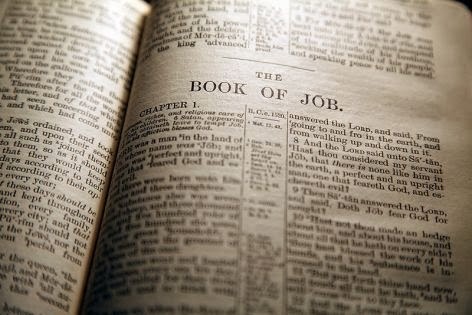
Seven Things to Learn from Job

job3

If you are still reading the Bible Challenge, you are now in the book of Job. We are reading together as a family and if I may be honest, we had a conversation yesterday about the difficulty of reading this book. It is not really a narrative (aside from the first couple of chapters) and the style makes it hard to read. So I wanted to encourage you to keep going. And I was thinking about some lessons we can learn from this book, despite its flowery, hard-to-understand language–

1. God may allow trials in our lives to prove (or test) our faithfulness. At first, it’s tempting to wonder why God would let Satan torture Job is such a manner, isn’t it? And, yet, God had confidence in Job’s response to his trials and, through it all, Job’s understanding of God was deepened considerably.

2. There is a whole drama playing out which we cannot see or hear. Satan hasn’t stopped torturing and tempting believers and there is a spiritual battle that we are always fighting! Paul even talks about it in Ephesians 6, encouraging us to keep all pieces of armor firmly in place so we can stand and fight effectively!

3. God may use the trials in our lives to encourage others.  I was thinking about the fact that here we are — in the year 2015– reading the true story of Job. Many Christians are comforted and gain great insight into their own difficult trials through this book. Job’s experience was not in vain.

4. Trials show us our true friends. Job’s friends certainly seemed judgmental and unkind. They did come to sit with him for seven days (Job 2:13) which I am sure was a cultural (but pretty cool) thing to do. So that’s good. But when they open their mouths, instead of comforting him, they accuse Job of great sin and tell him he needs to repent. His friends were short-sighted and arrogant, weren’t they? They had no idea the drama that was playing out above their heads. But if Job had sinned (which he didn’t) true friends don’t respond this way in a trial, do they? And, honestly, many of our trials are a direct result of a sinful choice or action. And it does need to be addressed. But it’s so much about timing and the great love with which we would choose to share such information that shows if we are a true friend. Job’s friends just didn’t seem all that loving to me. Like Job didn’t have enough problems without having to defend himself to his “friends”.

5. The book of Job shows us how not to respond to someone going through a trial. This piggy-backs off of number 3, so I won’t say anything else about his friends. But we also have his unsupportive wife (Job 2:9) who gives a great example of what not to do. For she tells Job to “curse God and die.” Doesn’t seem to be a great thing to say to someone who has lost everything.

6. Don’t judge too quickly. I can tend to judge Job’s wife pretty harshly for her words and wonder how a wife could be so unsupportive–until I remember that she had suffered terrible, terrible losses as well. She lost all of her children and her total way of life. In a day. There isn’t mention of grandchildren here but if all of the children were adults, there is even that possibility. Her pain must have been unbearable. And then her husband gets deathly sick on top of it all. I don’t know about you, but trials and tribulations and stressful times cause me to say things I don’t mean. I hope that these lone recorded words of Job’s wife just indicate a bad day. I think, given her situation, we should give her the benefit of the doubt and not be too hard on her. I think this is a good lesson to think about in our own here and now. People always do things or say thing for a reason. I have said many a foolish thing before thinking and hope for great grace in those situations. I desire to extend that same grace to those around me.

7. We need to keep reading, even when we don’t get it. Some of you by now are probably contemplating giving up reading through the Bible. You just didn’t realize it would be this hard. You may even be thinking it’s rather uninteresting. Please don’t give up. Remember the Bible Study Trap I wrote about? Go re-read this post if you don’t remember what it says. It’s important. We are reading to know more about God, not to entertain ourselves. And don’t underestimate the power of prayer. Pray for insight and keep going. I promise you that you will be glad you did!

This is certainly not an exhaustive list of things to be learned from the book of Job but just a few things I thought of as I have been reading. Have a great day and keep reading!


Unfinished Houses

IMG_3010rev

As we traveled through the Ukrainian countryside, I took in the scenery with amazement. For there, dotting the countryside in great numbers, were unfinished houses. Some of these brick structures were only half-built, but most looked almost finished, slowly fading in the Ukrainian sunlight as they waited for owners to fill them with life.

When I expressed my wonderment at this unusual sight– for there were many of these houses, not just a few– whoever I asked just shrugged their shoulders and said that the owners ran out of money. Apparently, after the Soviet Union broke apart, these bricks and other building supplies were available at deeply discounted prices and so lots of people started building these beautiful homes. But a functioning house is much more than the lumber and bricks of its shell. And so funds ran out and the owners walked away.

Because they did not count the cost.

I was reminded of this incident a few weeks ago in our Sunday School class. We are doing the Radical series by David Platt and he was talking about Christianity as Jesus defines it in the Bible.  It is very different from the cultural Christianity that demands nothing– that requires no sacrifice– that only needs a prayer to declare oneself as officially in the Lamb’s Book of Life. He used the following quote by John Stott. Actually, this is a bigger portion than he used, but it’s all so good, I wasn’t sure what to eliminate–

Jesus never concealed the fact that his religion included a demand as well as an offer. Indeed, the demand was as total as the offer was free. If he offered men his salvation, he also demanded their submission. He gave no encouragement whatever to thoughtless applicants for discipleship. He brought no pressure to bear on any inquirer. He sent irresponsible enthusiasts away empty. Luke tells of three men who either volunteered, or were invited, to follow Jesus; but no one passed the Lord’s test. The rich young ruler, too, moral, earnest and attractive, who wanted eternal life on his own terms, went away sorrowful, with his riches intact but with neither life nor Christ as his possession…The Christian landscape is strewn with the wreckage of derelict, half built towers—the ruins of those who began to build and were unable to finish. For thousands of people still ignore Christ’s warning and undertake to follow him without first pausing to reflect on the cost of doing so. The result is the great scandal of Christendom today, so called “nominal Christianity.” In countries to which Christian civilization has spread, large numbers of people have covered themselves with a decent, but thin, veneer of Christianity. They have allowed themselves to become somewhat involved, enough to be respectable but not enough to be uncomfortable. Their religion is a great, soft cushion. It protects them from the hard unpleasantness of life, while changing its place and shape to suit their convenience. No wonder the cynics speak of hypocrites in the church and dismiss religion as escapism…The message of Jesus was very different. He never lowered his standards or modified his conditions to make his call more readily acceptable. He asked his first disciples, and he has asked every disciple since, to give him their thoughtful and total commitment. Nothing less than this will do”
John R.W. Stott, Basic Christianity

I guess the deeper my relationship grows with Jesus Christ, the more I realize that much of what passes today as Christianity isn’t really true Christianity. This is such an unpopular message. And I can understand why! Because true Christianity costs us something. Yes, it’s a free gift, but it costs everything. But when our hearts are changed by the power of the Holy Spirit, our lives are transformed. This isn’t a begrudging obedience to God’s laws — a list of do’s and don’t’s that plague us and keep us from having any fun.

Instead our stone hearts start beating with love for the Father and following His will not only becomes a pleasure, but our main priority.

This brand of Christianity sounds so foreign to most of us. Even as I write, I realize this. And I wonder– what does this mean for all of us in this day and age? How does this kind of Christianity look in a Western culture where indulgence and comfort reign supreme?

All I know is that I am not walking away from an unfinished house. I will keep working and building until I die or my Lord returns. Yes, it’s hard. And yes, there is sacrifice required. Great sacrifice. There is turning away from the world, being unpopular with people, doing what’s right at all costs. It means we love and forgive even when we don’t feel like it. It means we stand alone if we have to. And that our time and resources are no longer our own. This does not sound all that appealing, does it? But when we read in the New Testament, we can’t help but conclude that this is what it’s all about.This is what Jesus demands of His disciples.

And, honestly, the costs for us are really nothing compared to so many of our Christian brothers and sisters. I can’t help but think of them as they give up homes, loved ones, and even their lives for the sake of Christ. I can’t help but wonder how comfortable, indulged America would respond in the same situation. Oh, may we be found faithful if (or shall I say when?) that happens to us!

If you have started your house of faith but are ready to walk away, please don’t. If the enemy of your soul is throwing arrows and you are just so tired, hang in there. Open your Bible and read Ephesians 6, put on your armor, and beg the Lord for strength to keep going. Let’s keep our eyes focused on eternity instead of the here and now. And, remember, God’s great power is shown best through our great weakness. You aren’t alone. Don’t give up. Keep building.


Why didn’t I ever see this before?

31118_000_016_02

I can’t imagine why I never noticed this before. I have read the story of Joseph and his brothers many times. And yet, I had never considered this one thing.

You see, I have always viewed this story from Joseph’s point of view. I have thought of how it would feel to be him—lonely, despised, framed, imprisoned. I have admired and respected his strong stand for God as he suffered many persecutions and rightly so.

But I missed one really important point. Until today.

When Joseph’s brothers traveled to Egypt for food they were completely unaware that their brother would be the one giving them food. But we know as we read the story how it ends. And today I realized that God took something completely evil and not only rewarded Joseph but rewarded the evil-doers! God used the brothers’ gross sin against Joseph and actually turned it into something good not only for Joseph but for the brothers, as well.

I just never thought about that before.

I mean we often trust God to use the evil, hurtful things against us for good, but I guess I never thought about the fact that God can take something I did that was sinful to bring about something good for me.

Doesn’t this give us a different perspective about our past?

I guess as I think about this, it does make sense. For some of us have had the same thing happen to us—

-Out of sexual immorality came a beautiful child.

-Out of a broken marriage or a stay in jail came eternal salvation.

-Out of a rebellious youth, where we chose to marry an unbeliever, God drew us to Himself and rescued both for His glory.

We have seen these occur. And we see how God plucks some (not all) from the mire and mess they have made and blesses them.

I don’t know the hearts of the brothers. We know by some of their conversation that selling Joseph has weighed very heavily on their hearts for a very long time. It would seem that they are extremely sorry about what they did. (Genesis 42:21-24)

And so could it be that God will not choose to bless us until we come to a point of repentance, where we admit our guilt?

And, once again, we come upon that word humility. If there is anything I have learned through my Old Testament readings it is how much God hates pride!

And so, let us remember that God can use even our most wicked sin and turn it into something good for us. But, first, we need to have a heart of repentance and humility.

Now, the following is specifically for my Bible Challenge readers–

I hope that you are sticking with me on the Bible Reading Challenge. By now, it may be getting rough. You have read things that don’t make any sense and you are struggling. Or life has happened and you are behind a couple of (or more) days. I want to encourage you to keep going! You will be so glad you did! I promise you this. I also want to encourage you to focus more on what you do understand and the lessons you are learning from these stories than on what you don’t understand. You won’t understand everything but that’s okay. Just keep reading. Remember we are reading to know and understand God better–it’s not about us or our enjoyment of what we are reading! It may be helpful for you to read (or re-read) the most common Bible Study Trap, at this point.

Thighs are jiggly in the real world

overweight-woman-exercising

I saw a video on Facebook the other day that showed real women exercising. Their bodies weren’t perfect, their thighs jiggled, most had a little tummy, and they broke a real sweat. They looked like they were having a great time. It was a commercial put out by a foreign athletic company for the same reason that the Dove soap commercial came out a few years ago with Jamie Lee Curtis–to present the truth about women. And it was beautiful.

Sometimes I get so weary of trying to be perfect, don’t you? We are constantly barraged by photos on our computers, tablets, and smartphones that tell us we do not measure up. We’re not skinny enough, our houses aren’t beautiful enough, our kids aren’t perfect enough. There is always this elusive, impossible standard that hangs over our heads.

That standard didn’t really exist even 25 years ago. It was just starting to affect us. Now it can control us if we aren’t careful. A big problem in our pinterest-facebook-instagram world is the standards and expectations we set for ourselves because of the pictures we see.

It reminds me of a blog I landed on a few weeks ago. It was a young mom’s home and she had taken some holiday pictures of it that were gorgeous! She obviously has an eye for decorating and design. But even as I scrolled down through, I felt inadequate.

Now, don’t get me wrong– I don’t think there is anything necessarily wrong with posting beautiful pictures. Our world is a much more creative place now that the online world is filled with blogs and Pinterest. But, oh, how careful we need to be as we surf the online world.

Life is so much more than the pictures you see on social media. It’s full of jiggles and cellulite. It’s full of dirt and messes. It’s okay if our houses don’t look like they belong on a blog post. It’s okay if we have a little tummy pooch. Who in the world ever gave us the impression that’s it’s not? And why do we listen to them?

This post is not about losing weight or enjoying interior design but, instead, about trying to be someone we are not because of pictures we see. It’s about young, healthy moms who think they are overweight because they don’t look like the single girl they graduated with ten years ago. It’s about being discontent with our body shapes and our possessions. It’s a vicious cycle, isn’t it?

And if we get into that cycle of discontentment, all gratitude is gone. And without gratitude, we lose sight of our many blessings — a critical part of a healthy relationship with God.

We need to be careful of the subtle call of discontentment and view it for what it is and then take necessary steps to change it. Because life is just too short to try to be something we aren’t. Let’s instead live lives of joy and gratitude and turn to God’s Word for our standards of living. Because, in the end, the fruits of the spirit and a godly life will be so much more important than any external change we may have made.

I Timothy 4:8 For bodily exercise profits a little, but godliness is profitable for all things, having promise of the life that now is and of that which is to come.


Why Waiting Is Sometimes the Best Option

swiffer

I think I may have done the same thing. It’s hard to know, isn’t it? But if my husband would have been promised heirs as numerous as the dust and I very obviously couldn’t have children, I may have tried to fix it, too. Because that’s what we humans do. We try to fix uncomfortable, inconvenient, unpleasant situations.

Only sometimes –many times– it backfires.

I couldn’t help but think of this as I read Genesis 16. If you are doing the Bible Challenge this year, you will have recently read (or will soon read) about Sarai giving her maid, Hagar, to Abram to bear children for her.  In a culture like theirs we can’t conceive of giving our husband another woman, but that was a different time and place and Sarai was obviously desperate for a baby. So instead of waiting, she took matters into her own hands. As we read on, we see that her decision to do that not only caused heartache for her and her family, but caused strife and anguish for generations to come. She took matters into her own hands and many, many people suffered –and continue to suffer–because of it. For Ishmael is considered to be the ancestor of the Arab nation and this seems to be the birthplace of the historical strife between them and the Jews.

It is easy for me to sit back and point a finger at Sarai. How could she be so hasty and foolish to think she could fix a problem that only God could fix? And, yet, how often I am guilty of the same thing.

I have been known to rush in and try to “fix” my husband and my kids on many occasions. I have tried to fix situations at church and in my extended family. These efforts are usually not helpful and I have been slowly learning to back away and pray instead.

Of course, sometimes, God would lead us to confront someone (Matthew 1815-17) or to pull them from the fire (Jude 1:22-23) but this should only be done with much humility and after much prayer. There is a place for thinking outside of the box to solve problems and giving our energy to changing our own bad habits but human efforts should never be done impulsively or out of desperation. They should never take precedence over God’s will. And we should never, ever try to change someone else’s bad habits unless they ask for our help. Because I have learned that this is a completely fruitless and utterly hopeless task.

Of course, this is so easy to write about but much harder to put in place. For example–

The other day, I found myself growing extremely frustrated that once again my floor was filled with muddy footprints. I found myself in a bit of a panic, as Bible Study was going to be taking place in my home shortly and my family seemed to have no care about this, but continued to walk across my clean floor with their wet boots on. And so I took matters into my own hands and started yelling. Yeah, like that’s going to fix it. In my experience, yelling has never fixed anything. So why do I keep doing it?

Thankfully, this pathetic effort at trying to fix something in my life in the wrong way only humbled me and reminded me of my great sinfulness. I was absolutely mortified to be yelling at my family just before my friends walked in my house. And instead of fixing the situation, I had just made it worse.

Which is what usually happens when I try to fix something without praying and considering the ramifications beforehand.

And this was just a wrong response to a muddy floor– a tiny blip in the timeline of my life with no long-lasting consequences. I can’t imagine how Sarai must have felt after she tried to take matters in her own hands. A lifetime of strife would follow and she was to blame. Taking matters into our own hands can have minor consequences or they can have major ones, but there are always consequences.

And so perhaps we would be better off if we would wait quietly, taking time to consider and pray, bringing our baffling problems and unsolvable puzzles to the Lord instead of trying to impulsively fix them ourselves.

And the wonderful thing about doing this is that so many times, the Lord proves Himself so faithful in these situations! Even just recently, a friend shared how God worked in an absolutely astounding and surprising way to solve an impossible situation. For it’s only when we can’t solve it ourselves that we really see God work, just as He did in Sarai’s life by giving her baby Isaac. For, with God, nothing is impossible.


Scroll to Top