Encouragement

The Greatest Miracle of All

aniwa

When we think about the word “miracle”, our minds tend to think of miracles having to do with a person’s health, wealth, or welfare. Things like miraculous cancer recoveries, disappearing tumors, or an unexpected check in the mail or bag of groceries on the porch. While these miracles are certainly amazing to witness and demonstrate just how personally and deeply God cares for His children, I would like to submit to you that the greatest miracle of all is a heart deadened in sin that is awakened to new life in Jesus Christ.

I just finished a wonderful book called The Story of John Paton or Thirty Years Among South Sea Cannibals. I really can’t recommend this book highly enough. As many of you already know, I love reading missionary biographies. They have changed me, because they change my perspective of Christianity. You see, when we are in our comfortable homes with all our modern conveniences and plenty to eat, we can forget what many people give up to tell others about Jesus. It can slip our minds that our faith in Christ is to transform our lives and push us to share the gospel with fervor and zeal.

As I read this book, I was once again reminded of these things. Mr. Paton’s autobiography, which takes place on the New Hebrides Islands (now called Vanuatu) in the mid to late 1800s, includes miraculous escapes, nail-biting journeys, and many testimonies of saved souls. There are so many excerpts I would love to share from this book with you, but I decided to narrow it down to this one testimony of a young chief, troubled and antagonistic, miraculously saved from sin by God’s outpouring of grace on his life. Yet another evidence that the greatest miracle of all is a changed heart.

I hope you enjoy reading this short excerpt and that it will move you to pick up the book and start reading it. The chapter is entitled–

THE CONVERSION OF YOUWILI

THESE events suggest to me another incident of those days, full at once of trial and of joy. It pertains to the story of our young Chief Youwili. From the first, and for long, he was most audacious and troublesome. Observing that for several days no Natives had come near the Mission House, I asked the old Chief if he knew why, and he answered, “Youwili has tabooed the paths, and threatens death to any one who breaks through it.”

I at once replied, “Then I conclude that you all agree with him, and wish me to leave. We are here only to teach you and your people. If he has power to prevent that we shall leave with the Dayspring.”

The old Chief called the people together, and they came to me, saying, “Our anger is strong against Youwili. Go with us and break down the taboo. We will assist and protect you.”

I went at their head and removed it. It consisted simply of reeds stuck into the ground, with twigs and leaves and fiber tied to each in a peculiar way, in a circle round the Mission House. The Natives had an extraordinary dread of violating the taboo, and believed that it meant death to the offender or to some one of his family. All present entered into a bond to punish on the spot any man who attempted to replace the taboo or to revenge its removal. Thus a mortal blow was publicly struck at this most miserable superstition, which had caused bloodshed and misery untold.

One day, thereafter, I was engaged in clearing away the bush around the Mission House, having purchased and paid for the land for the very purpose of opening it up, when suddenly Youwili appeared and menacingly forbade me to proceed. For the sake of peace I for the time desisted. But he went straight to my fence, and with his tomahawk cut down the portion in front of our house, also some bananas planted there—the usual declaration of war, intimating that he only awaited his opportunity similarly to cut down me and mine. We saw the old Chief and his men planting themselves here and there to guard us, and the Natives prowling about armed and excited. On calling them, they explained the meaning of what Youwili had done, and that they were determined to protect us. I said. “This must not continue. Are you to permit one young fool to defy us all, and break up the Lord’s work on Aniwa? If you cannot righteously punish him, I will shut myself up in my house and withdraw from all attempts to teach or help you, till the vessel comes, and then I can leave the island.”

Now that they had begun really to love us, and to be anxious to learn more, this was always my most powerful argument. We retired into the Mission House. The people surrounded our doors and windows and pleaded with us. After long silence, we replied, “You know our resolution. It is for you now to decide. Either you must control that foolish young man, or we must go!”

Much speech-making, as usual, followed. The people resolved to seize and punish Youwili; but he fled, and had hid himself in the bush. Coming to me, the Chief said, “It is left to you to say what shall be Youwili’s punishment. Shall we kill him?”

I replied firmly, “Certainly not! Only for murder can life be lawfully taken away.”

“What then?” they continued. “Shall we burn his houses and destroy his plantations?”

I answered, “No.”

“Shall we bind him and beat him?”

“No.”

“Shall we place him in a canoe, thrust him out to sea, and let him drown or escape as he may?”

“No! by no means.”

“Then, Missi,” said they, “these are our ways of punishing. What other punishment remains that Youwili cares for?”

I replied, “Make him with his own hands, and alone, put up a new fence, and restore all that he has destroyed; and make him promise publicly that he will cease all evil conduct towards us. That will satisfy me.”

This idea of punishment seemed to tickle them greatly. The Chiefs reported our words to the Assembly; and the Natives laughed and cheered, as if it were a capital joke! They cried aloud, “It is good! Obey the word of the Missi.”

After considerable hunting, the young Chief was found. They brought him to the Assembly and scolded him severely and told him their sentence. He was surprised by the nature of the punishment, and cowed by the determination of the people.

“To-morrow,” said he, “I will fully repair the fence. Never again will I oppose the Missi. His word is good.”

By daybreak next morning Youwili was diligently repairing what he had broken down, and before evening he had everything made right better than it was before. While he toiled away, some fellows of his own rank twitted him, saying, “Youwili, you found it easier to cut down Missi’s fence than to repair it again. You will not repeat that in a hurry!”

But he heard all in silence. Others passed with averted heads, and he knew they were laughing at him. He made everything tight and then left without uttering a single word. My heart yearned after the poor fellow, but I thought it better to let his own mind work away, on its new ideas as to punishment and revenge, for a little longer by itself alone. I instinctively felt that Youwili was beginning to turn, that the Christ-Spirit had touched his darkly-groping soul. My doors were now thrown open, and every good work went on as before. We resolved to leave Youwili entirely to Jesus, setting apart a portion of our prayer every day for the enlightenment and conversion of the young Chief, on whom all other means had been exhausted apparently in vain.

A considerable time elapsed. No sign came, and our prayers seemed to fail. But one day, I was toiling between the shafts of a hand-cart, assisted by two boys, drawing it along from the shore loaded with coral blocks. Youwili came rushing from his house, three hundred yards or so off the path, and said, “Missi, that is too hard for you. Let me be your helper!”

Without waiting for a reply, he ordered the two boys to seize one rope, while he grasped the other, threw it over his shoulder and started off, pulling with the strength of a horse. My heart rose in gratitude, and I wept with joy as I followed him. I knew that that yoke was but a symbol of the yoke of Christ, which Youwili with his change of heart was beginning to carry! Truly there is only one way of regeneration, being born again by the power of the Spirit of God, the new heart; but there are many ways of conversation, of outwardly turning to the Lord, of taking the actual first step that shows on whose side we are.

Like those of old praying for the deliverance of Peter, and who could not believe their ears and eyes when Peter knocked and walked in amongst them, so we could scarcely believe our eyes and ears when Youwili became a disciple of Jesus, though we had been praying for his conversion every day. His once sullen countenance became literally bright with inner light. His wife came immediately for a book and a dress saying, “Youwili sent me. His opposition to the Worship is over now. I am to attend Church and School. He is coming too. He wants to learn how to be strong, like you, for Jehovah and for Jesus.”

Oh, Jesus! to Thee alone be all the glory. Thou hast the key to unlock every heart that Thou hast created.


Paton, John Gibson (2012-05-16). The Story of John G. Paton Or Thirty Years Among South Sea Cannibals. Kindle Edition.


Why Do You Need God?

Why


Why do you need God?

The answers to this question were all given with different voices, different words, different intonations. But they all said basically the same thing–

To make my life easier.

Words like encouragement and strength and comfort were used. We need God because He helps us get through difficult times.

This was a dialogue I heard a couple of weeks ago on a radio program. On this particular day the host was asking the question “Why do you need God?” to students on a college campus.

Of course, many said they don’t need God or that they don’t believe in God. But far more troublesome to me were the students who seemed to have a basic understanding of Christianity as a religion and yet didn’t truly understand why they need God.

Instead their answers were filled with the feel-good, me-centered drivel we have all grown quite used to.

But is this really why we need God? Is it because He helps us get through tough times and makes life here on earth so much better? While I am not denying that this is true, I would like to suggest that this is not why we need God. The primary reason we need God is because we are eternally damned without Him. (Romans 6:23; Romans 3:23; Revelation 21:8)

We are born sinners. We are slaves to our sin and to Satan, living in thick, black darkness. But God sent His son to redeem us–to die on a cross for our sins, making a way for us to be reconciled to Himself. We need not be condemned forever, because Jesus died for us–in our place! What marvelous truth! (Hebrews 9:12; I Timothy 2:5) This is what Christianity is all about.

At least it used to be what it was all about.

Somehow in the last 20 years or so, it has become a watered-down, weak, ecumenical, self-absorbed religion that looks nothing like what the Bible teaches.

The intrinsic problem with this change is that there are so many who have been swept into this religion that consists of a god of their own making. When we move away from the Word of God as we strive to answer eternal questions, we leave ourselves open to lies and deadly false teaching.

As I heard the students explain why they need God, there was no mention of sin and no mention of salvation. Instead it was centered around how God helps them in their self-centered agendas. No wonder they get disillusioned later on in life when things don’t go as they planned.

This is an amazing contrast to the disciples, all who were martyred for their faith (except John, who was exiled to an island). But the censorship and persecution started for the disciples even before Jesus was crucified. As I read about Jesus raising Lazarus from the dead in John 11 last week, I learned that Jesus was walking into grave danger as He traveled to Lazarus, who was located in Judea. By this time, the Pharisees were actively seeking to do away with this Man who was calling Himself God. Of course, Jesus knew that nothing would happen to Him before it was His appointed time, but the disciples did not have this same knowledge. And so as Jesus starts for Judea, the disciples fully understood that their lives could be in danger, as well, if they decided to accompany Him. But instead of turning back, this is what we see Thomas say in verse 16–

Then Thomas, who is called the Twin, said to his fellow disciples, “Let us also go, that we may die with Him.”

The text would indicate that he honestly believed that there was a likelihood they would die with Christ on that day.

This not only shows us just how dreadful and powerful the Pharisees were but it also tells us just how dedicated the disciples were to the Savior. And I find myself wondering:  Would I have been courageous enough to follow Jesus? Or would I have opted to protect myself instead? It is sobering to think about, isn’t it?

When Jesus tells us to pick up our cross and follow Him (Luke 9:23), this does not mean that our lives will be full of flowers and sunshine. Sure we will be blessed with wonderful moments (thankfully!) but some of the places Christ leads us will be terribly difficult and we will find ourselves persecuted and hated. Are we willing to make that sacrifice to follow the Savior? Or will we walk away broken and embittered when Jesus doesn’t meet our “felt needs” or fulfill our worldly dreams?

Are we prepared to follow Jesus anywhere or will we defect when things take a painful turn? Asking this question is a great way to test the genuineness of our faith. If our faith is built on the biblical doctrine of salvation then we will stand strong in the face of persecution. We understand that we need God because He is our only hope of salvation from the sin that imprisons us! And then–as we grow in Christ–we learn that He offers us so much more than we can ask or imagine, but being rescued from our sin is always our starting point.

Will we be like Thomas–understanding true salvation and following Jesus even though it may mean suffering for the sake of our Savior? Or will we be like those college students–living with a vague, partial, and unbiblical definition of a God they aren’t even seeking?


Our Reason to Hope

american-flag-795303_1920

Have any of you been keeping an eye on what’s going on in this presidential race? I guess that’s a rather foolish question, given the coverage this election is getting on almost any outlet possible. I have to admit that I just shake my head at the hopelessness of what I see. While there is an outside chance of having someone decent to vote for, the upcoming election looks to be quite bleak for so many different reasons. My husband is still hoping some white knight will come riding in to save the country. We laugh, but it’s how we both feel. We think of the great country we knew and loved and cannot believe how far it’s come.

But here we are.

So now what?

I think, first, it’s good to remember some very important facts. As believers, we should view the election and state of our country a little differently than most. After all, we are not in the same desperate situation as our unbelieving friends for two reasons–

1. Our hope is in the Lord. Our hope should not be placed in presidents and kings (I Peter 3:15; I Timothy 1:1) but in God Almighty. We are not those who hope in vain, but instead can rest in the knowledge that God not only knows everything that is going on, but that it all falls under His sovereign plan. Elections, wars, uprisings, revolutions–these do not come as a surprise to God.

2. We know the ending. If you believe the traditional view of the book of Revelation, as I do–that it is literal and will take place here on earth–then you, like me, will be astonished by how this prophecy is coming to life right in front of our eyes. The Bible has to be true. There is no other explanation. While what we read there is rather terrifying, we cannot help but recognize that the pieces of the end days puzzle are fitting together so quickly we can hardly catch our breath.

When I was a child, I wondered how the world would ever get to a point where we could only buy using a mark on our hand or forehead (Revelation 13:17). I don’t wonder that anymore. RFID chipping (which is taking place in humans already for many different reasons) will make this not only possible but inevitable. There is already talk about it.

Way back when, I couldn’t understand how the whole world would see the two witnesses (Revelation 11:9-11). But with the birth of satellites, real-time news became second nature to us all. In fact, we have come to expect to know what’s going on while it’s going on.

And, of course, we could never have comprehended how there would be a one-world religion, a one-world economy, a one-world government. And, yet, while it may not be on the horizon tomorrow or next year, it is most certainly on its way. Globalism is being forced upon us and patriotism is viewed as evil. We are being forced to meld Christianity together with all sorts of other religions. And those of us who are not cooperating are not viewed very kindly. To say the least.

I could add so much more here. If you follow the news, there is so much taking place so fast, it is hard to keep up. The world is changing. And it’s changing quickly. We are back to an era similar to the Tower of Babel– an era where man believes he can accomplish anything and is purposing to do so. Just google transhumanism if you don’t believe me.

So where does all of this leave the United States of America as a country? I know this may not be what you want to hear, but I can’t find any indication anywhere in the book of Revelation that she plays any part in the last days. And, if that’s the case, it would seem that eventually she will be weakened beyond recognition with little part to play on the world’s stage. And we also have to admit that a democratic, capitalistic society cannot exist in a world dedicated to globalism. It’s an impossible combination. As to when and how this all will happen, I have no idea. But the fact that it will happen cannot be denied if we hold to the book of Revelation. Of course, we can hope and pray for revival and for the Lord’s hand to hold off for a little while longer, but to hope that America will return to her former greatness and glory, I believe is to hope in vain.

On a personal level, as we watch all of this play out, we find that it is getting harder and harder to share our faith. Not so much because we are outright persecuted, but because we are viewed as almost sickened in the mind–loony cast-offs that are un-enlightened. This is very powerful stuff–this ostracizing of a whole group of people. And it can’t be denied. For just one example (of a zillion), you can wear t-shirts to public schools that promote Islam, witchcraft, and any other religion–but will be in danger of prosecution if you wear a t-shirt with the name of Jesus on it. Meanwhile, in the church, the name of Jesus has come to mean something completely outside of who the Bible says He is. We have been deceived in numbers I never thought possible. It is astounding and so disheartening.

And so what is our task in these dark days? How do we respond? As my husband and I have pondered this on many occasions, we have come to this conclusion–

We are to focus on our family, first and foremost. We have a duty and responsibility to do all we can to encourage them in their walk with God. Personal knowledge of the Word of God, along with boldness and courage, are going to be critical as we strive to live in a post-Christian society. We believe it is our duty to do all we can to encourage and strengthen our family members, so that we can all stand firm together in the oncoming storm that threatens to knock down even the strongest of believers.

Second, we believe we are called to be a light in the darkened world we are in. No easy task, as the horizon grows darker and darker. It can be scary to speak the truth of God’s Word in this current culture and sometimes we chicken out. I just have to be honest here. But we know that this is what we are called to do. And so we keep trying to shine brighter and brighter in a world that grows darker and darker.

When you really think about it, we have so much reason to hope! The last days are here and that means that we could be rescued at any time. While I know there are many views on the rapture (pre-trib, mid-trib, post-trib) and I wouldn’t go the wall for any particular stance, I do believe that the Bible teaches a pre-trib rapture. Wouldn’t it be incredible to be the generation that is rescued from darkness by a meeting in the sky with Jesus? How awesome would that be? This is the hope we have, if we cling to God’s Word.

But, no matter what is in our future, we know that God is faithful. If we are in His Word and we hold fast to its truths, testing all things that come our way, then we will be able to stand firm in the upcoming days. Hold fast, my friend, hold fast.

Let us hold fast the confession of our hope without wavering,  for He who promised is faithful. (Hebrews 10:23)


With Acceptance Comes Peace

winter night2

When you get to be my age, sometimes you look back over your past and you realize just how much you have changed in certain areas. Oh, in many ways, I am still the person I was but–praise God!– in so many ways I am not.

Sometimes it seems that all we hear about the Christian life is brokenness and imperfectness and how that unites us all. And, yes, we are all broken. I actually prefer the term sinful. It’s what we are and it is how we are born. But there is some victory over the years in the life of a servant of God who truly desires to obey the Word of God. I’d like to share one of those small victories with you today. I am not sure I was even aware of it until a conversation took place a few weeks ago.

This person was not happy with their circumstances. They kept reminding me of how unfair it all was and questioning why life wasn’t going a bit more according to their plan.

As I listened, vague memories of my own dissatisfaction with my life circumstances came to my mind. I remembered feeling much the same way about my life situation when I was a young wife with a houseful of small children and a workaholic husband. If you remember, we were building a business. And businesses take hours and hours and hours. My husband has never worked less than 55 hours a week. Many times it was more. (It probably still is). And, of course, in the beginning years, there was little money to show for it. It was a lot of hours for little reward.

I could feel myself growing slightly resentful. I’d hear of things other husbands were doing and how they were able to help their wives and I’d think to myself: That’s just not fair.

But somewhere in that time of my life when I could have grown bitter and resentful over this, the Lord opened my eyes to a wonderful truth–

With acceptance comes peace.

This particular phrase was coined by Elisabeth Elliot. I am using it because it is the simplest, most profound way to say what I learned.

My life was my life. I was not changing my husband. I knew enough to know that. So I could choose to be joyful in my circumstances or I could choose to be a miserable grump. The choice was all mine. And the ramifications of that choice would ripple out across my family.

As I understood this more fully, I came to understand that the only thing I could change was me. Was I so arrogant as to believe that I somehow I had it all together? Did I think my husband had it so easy to be married to me?

Yes, as the Lord opened my eyes to accepting my circumstances, he also opened my eyes to my own bad attitudes, unkind words, and impatience. And it was not a pretty sight.

As I started climbing out of the pit that complaining and dissatisfaction had kept me in, I started realizing just how good I had it. Sure, my husband worked long hours but he loved his family. He was there for the kids whenever he possibly could be, making it to more games and events of theirs than most dads who don’t work those same hours. We had winters together–a few quiet months each year to catch our breath and regroup as a family.

As I started to focus on the positive and not the negative, our family life changed. As I started focusing on fixing myself instead of fixing my husband, our marriage changed.

Oh, I’d like to say I never experienced defeat in this area again, but, of course, life isn’t like that. But remembering that accepting my circumstances is the key to peace (and joy, too) in my life has helped me navigate many an unfair circumstance in my life. That lesson I learned as a young mom has helped me through many difficult times.

Let’s face it–we could all have a reason to be dissatisfied with our lot in life in one way or another. And if the thing we struggle with could be fixed tomorrow, we’d find something else to be unhappy about. It is the very nature of our humanity. We actually have to work against our selfish nature to rise above it and reach acceptance.

Now, let me just add this one thing–

Acceptance is not the same thing as resignation.

Accepting our circumstances does not mean we resign ourselves to the fact that our circumstances will never change. We still pray and ask the Lord to convict those who need to change. We ask Him to turn hearts to Him or to work in an area of our life or someone else’s life that needs changed. Oh, how we neglect the power of God to change people when we don’t get on our knees with diligence and perseverance.

But while we wait for God to work, we have to accept His timing and His sovereignty in the situation and work on our own selves–humbly recognizing our own sinfulness and need for growth.

Yes, this can all be extremely difficult, but the sweet and abundant fruit we yield when we do so is so much different than the bitter, ugly fruit we yield when we don’t.

And, so, there is some victory in the life of a believer truly dedicated to God and His Word. 2 Timothy 3:16-17 is so true, isn’t it? —

 All Scripture is given by inspiration of God, and is profitable for doctrine, for reproof, for correction, for instruction in righteousness, 17 that the man of God may be complete, thoroughly equipped for every good work.

The Word of God will change us–but only if we spend time studying it with a humble and yielded heart.


Clearing Up a Muddy Subject

mud-616481_1280

I once heard someone compare the church of today to a shallow river. The path of water is wide and muddy and impure. It’s the opposite of a church forced underground which, just like a spring of water that runs underneath the surface of the earth, runs deep and pure with little contamination.

The problem with the wide river is that it can be so difficult to find the true believers. The ones who have repented of their sins and truly desire to walk with God. The ones that wouldn’t say “See you later” when the first wave of persecution comes.

And you may be thinking–why does it even matter?

I believe it matters because, while we can be good friends with all floating in the river, true and lasting fellowship only comes between members of the true church. Who are we going to be able to count on and trust as we move closer and closer to a one world religion?

I was thinking of this when I came to Chapter 6 of John last week–

 From that time many of His disciples went back and walked with Him no more (v. 33)

What? Why? I was anxious to understand this verse and went in search for some wisdom on this passage. I found these four different descriptions of a false disciple which may help us with this rather difficult subject.

(By the way, I want you to know that not everyone who exhibits one of these things listed below is unsaved. Even we genuine believers stray at times and can find ourselves deceived for a time. But keep your eyes out for those who hold to these beliefs or behaviors adamantly and arrogantly. Another sign is someone who takes verses out of context, who says that only parts of the Bible matter, that we can’t really know what the Bible means, or who discounts the Word of God entirely. These are a few red flags.)

1. False Disciples are attracted by a crowd.

They like to do what is popular and are always looking for what is trendy. They don’t want to be called names or take any heat for standing for Christ. They are of the “lemming” mentality, following the group wherever it may lead– even if it’s over a cliff.

In Contrast–This would mean that true disciples are not ruled by the crowd. They are far more concerned with what Jesus thinks and what God’s Word says than what their families, co-workers, church friends, or classmates think. They may follow after the crowd for a bit until they realize that Living Water is not found there. True disciples are guided by the Word of God and not by what is popular.

2. False Disciples are fascinated by the supernatural.

They are looking for cool experiences and wonderful feelings and are driven by their desire for miracles, God’s personal messages, and encounters with angels. They want an emotional high and have little interest in truth–in fact most don’t believe there is such a thing as absolute truth and turn their backs completely on the doctrines of old as told to us in scripture.

In Contrast–While a true disciple may be temporarily fascinated by some of these things, as they grow in the Lord, they begin to recognize the danger in them. They understand that God’s Word has provided all we need and that voices and messages outside of scripture are not only unnecessary and irrelevant, but are also intentionally purposed to wreck biblical faith.

Please note: I am not implying that miracles don’t exist but instead that our faith is not driven by them or reliant upon them. God has worked many miracles and still does so. We thank Him for those and continue to turn to the Word for our sustenance and faith and not to our personal experience to define our spirituality.

3. False disciples think only of earthly benefits.

Materialism, worldly goods, health, and wealth are why this disciple follows. He is looking for reward in this present life and if there isn’t any forthcoming is quick to turn away. This person expects God to be his personal genie–granting any wish he may have.

In Contrast–True disciples recognize the insignificance of earthly goods and success. While they enjoy them and thank the Lord for providing all of the things that makes for a wonderful life here on earth, they do not let themselves become too entangled with the things of this life.

4. False disciples have no interest in true worship.

The worship given by false disciples is fake. Fake worship contains no humility, no reverence, no holy awe. It is self-absorbed and is driven by an intense longing for an emotional high.

In Contrast–The true worshiper is a repentant, humble soul worshiping the God who saved him from death and destruction. He can worship through singing an old, obscure hymn, a psalm put to music, or a spiritual song that contains biblical lyrics. It makes no difference to him. A true disciple recognizes that worship is a lifestyle. It isn’t about swaying to music or shouting aloud, but instead about a life that is lived every hour in submission and obedience to the Savior.

____________

Does this help to make a really muddy subject a bit clearer?

And again, make sure you understand me–I am not saying that everyone who is caught up in some of this is not a true believer. What I am saying is that these are four clear signs that they might not be.

As we get closer and closer to the end, this is all going to sort itself out, isn’t it? As the persecution of the true church increases, the false disciples will fall away, just as they did in John 6. But, until then, let’s be wise as serpents and harmless as doves (Matthew 10:16). Although it’s so tempting, let’s not put our heads in the sand and ignore the swirling chaos that is the church around us, but instead, let’s watch  with careful discernment and be sure to run everything through the grid of God’s Word.

_____________

October 2, 2025 Update–This post, written nine years ago, is accurate. But what I didn’t realize when I wrote it is that this is not going to sort itself out. But rather the subject grows “muddier” with each passing year. I am beginning to believe that it will be those who call themselves “Christian” who will be persecuting the remnant of true believers. It’s a little frightening to consider, truly. But, if we are honest about it all, this seems to be the direction it is going. Many of those who proclaim Christ have ignored many important passages of scripture. Some of them have utterly rejected the Bible. The Jesus they say they serve is nothing like the Jesus of the Bible.

But, in the end, our answer for this age of deception continues to be the same: Watch with careful discernment and run everything through the grid of God’s Word. It’s our only source of protection.


Living in Stepford

robot-507811_1920

I can still remember the “made for TV” movie called The Stepford Wives  in the 1970s. It starrrd Barbara Eden of I Dream of Jeannie fame and, for whatever reason, made quite an impact on me. Many years later, maybe in the 90s, they remade the movie but I never watched that version, so I don’t know how similar it was to the first one.

The original movie was set in the town of Stepford, where an evil thing was happening –the husbands of the town were replacing their real wives and children with perfect robotic versions of them. Barbara Eden’s character gets wind of this and the movie is about her and her children fighting for their lives. The plot is a bit vague in the back of my mind and I don’t remember much, but I do remember one thing–it was creepy seeing all that “perfection”.

Yes, dear.

No, dear.

What do you want for supper, dear?

It wasn’t…normal.

Sometimes in life we see families a little like this. Of course, we know they are real people, but from the outside all looks to be quite perfect–at least for awhile. And, yet, in so many of these families the kids walk away from the Lord when they grow up. Why is that?

I have spent some time pondering the effects of legalism on a family. Why do some families who live by a set of rules have their kids grow up practicing a vibrant faith, while other families, living by those same rules, lose their kids to the world?

I believe this is a very valuable discussion, because many of us have grown so afraid to lay down strict rules for our children because we are so afraid of losing their hearts. But I don’t believe that one leads to the other. In fact, I have seen as many kids walk away from the faith who had permissive parents as those who walked away from the Lord under the care of strict parents.

So what is the key to raising kids who love the Lord? If it isn’t a set of rules or not having a set of rules, what is it?

It can be puzzling for us to see these churches and families who look a little like Stepford, But, perhaps, some of them, like the Pharisees, have never been cleaned from the inside out.

And so perhaps that is the answer to my question–

Some families are only focusing on the outside set of rules–concerned for their reputation and outward appearance. These families leave little room for discussion and use terms like “because I said so” and “you’re grounded” quite often. But other families are more concerned about their children’s walk with God, and they focus on the heart, recognizing that this is the fountain from which a holy life springs. These parents spend just as much time communicating and discussing the Word of God and what to live a Christian life means as they do disciplining bad behavior.

Actually, if you really think about it, legalism is just another false religion, isn’t it?

Last year I wrote a post on this topic of false religion. Here are a few paragraphs from it to remind us what exactly makes a religion true or false–

False religion teaches that your eternal destiny lies in your hands in one way or another. It will teach that you need to do something in order to be saved. Oh, they all vary in what that something is and they might even throw in as part of their doctrine something about Jesus saving you from your sins, but false religion will always require something other than faith alone.

Ephesians 2:8-9 confirms this–

For by grace you have been saved through faith, and that not of yourselves; it is the gift of God, not of works, lest anyone should boast.

And so if we teach that we must add something to be right with God, we become heretics. This makes legalism damning–for it is a set of rules that needs to accompany saving faith in Jesus Christ.

Does that mean we need to toss all rules to the wind?

Of course not. Just as we need laws and policeman to enforce them to keep the public safe and secure, so we need to have some rules to keep our children safe and protected. It is our job. But we can never make the rules the heart of our parenting.

And, as our kids grow into teens, our rules should always have a reason based on the Word of God. For it is there we want our young adults to find their authority. It is there we want them to go with their questions and decisions.

Our family has been accused of legalism so often I can’t count. It seems in this culture, convictions and legalism equal the same thing. But I want you to know they are absolutely not the same thing.

Making a choice to do or not do something that is based on our love for Jesus and our desire to be like Him is not legalism. That is called a desire to be holy and pure, as commanded in scripture on multiple occasions (I Peter 1:15-16; Colossians 3:12)

And so, as believers, we shouldn’t pretend to be living in Stepford. And, honestly, who are we going to win for the gospel with that kind of Christianity, anyway? It looks impossible and the results are mixed, at best.

So let’s be real. Let’s make sure the world knows we aren’t perfect and that we continue to battle with sin each and every day. Let’s stop trying to look so perfect to the outside world–as if by becoming a Christian, our life somehow becomes perfect. But let’s also make sure we continue to strive to live a holy life, putting rules and guidelines in place that help us in our desire to be more like Jesus and to live a life that honors God, all the while keeping the focus on our hearts and the hearts of our kids, knowing that this is where all behavior is rooted.

And let’s remember the important difference between legalism and conviction, not allowing fingers pointed at us and voices calling us “legalistic” and “narrow-minded” to keep us from doing the right thing as we strive to live a life that is holy and separate from the world.


How Deep the Father’s Love

heart-674850_1280

The other night my husband and I were laying in bed talking. As we prepared to go to sleep for the night, he turned over and wrapped me in his arms. As I lay there, listening to him breathe and feeling the warmth of his body, I felt so safe and secure. I don’t deserve to be loved as well as he loves me. I just don’t. I can be bossy and talk too much and struggle with being submissive sometimes but he loves me, anyway. I make mistakes and sin and fail and continue to do so even after all these years. And yet he continues to love me. For almost 28 years, this man has loved me despite my faults.

Of course, he has his faults, too, and so we love each other, offering much grace and mercy, in our mutual understanding that we are both sinful human beings in a fallen world.

I know I am beyond blessed to have this kind of marriage. I know that this is not the experience of everyone. And my heart hurts for those of you who have never experienced this or have experienced it but have had it taken away due to the great thief called Death. (And, on a side note–we all have our crosses to bear. My crosses just look different than yours. A happy marriage does not equal a perfect life.)

But as I was thinking about the security I feel in the imperfect, human love of my sinful husband, I found my mind moving to the absolute security, safety, and peace that we have in the perfect, divine love of our Heavenly Father when we are born again. We can trust Him wholly because of who He is.

It is a little easier for us to offer love to one another because we understand each others’ humanity. We expect the other person to make mistakes and to fail and change. We expect them to expect us to do the same.

But God doesn’t change. He doesn’t fail. He doesn’t make mistakes.

That He would reach down to love someone such as I astounds me. He is perfect, just, and holy. He is omnipotent and mighty. He does not need me for any reason. I have nothing to offer Him. Anything good in me is a gift from Him to be used for His glory. And yet, despite all this, He made a way for me–and for you, too–to be saved through faith alone, by His grace alone.

Ephesians 2:4-10 is just one of the scripture passages where we read of this great love towards wretched sinners–

But God, who is rich in mercy, because of His great love with which He loved us, even when we were dead in trespasses, made us alive together with Christ (by grace you have been saved), and raised us up together, and made us sit together in the heavenly places in Christ Jesus, that in the ages to come He might show the exceeding riches of His grace in His kindness toward us in Christ Jesus. For by grace you have been saved through faith, and that not of yourselves; it is the gift of God, not of works, lest anyone should boast. 10 For we are His workmanship, created in Christ Jesus for good works, which God prepared beforehand that we should walk in them.

God loves us with great love and much mercy. And that’s something to be thankful for today. There are so many songs about God’s love, but I think the song How Deep the Father’s Love For Us best expresses my thoughts for today–

How deep the Father’s love for us
How vast beyond all measure
That He should give His only Son
To make a wretch His treasure

How great the pain of searing loss
The Father turns His face away
As wounds which mar the Chosen One
Bring many sons to glory

Behold the man upon a cross
My sin upon His shoulders
Ashamed, I hear my mocking voice
Call out among the scoffers

It was my sin that held Him there
Until it was accomplished
His dying breath has brought me life
I know that it is finished

I will not boast in anything
No gifts, no power, no wisdom
But I will boast in Jesus Christ
His death and resurrection

Why should I gain from His reward?
I cannot give an answer
But this I know with all my heart
His wounds have paid my ransom

Here is the song, if you’ve never heard it but would like to. I hope it is a comfort and blessing to you today, no matter what circumstances you find yourself in–

Reclaiming Our Brains

IMG_3642

The other day I was standing at the check-out line in our local grocery store and– out of habit– pulled my phone from my pocket to see what I was missing in the virtual world as I waited in line. At one point, I glanced at my daughter, and she, too, was staring down at the smartphone in her hand, checking on the things going on in her virtual world.

And that’s when it hit me–what are we doing?

Why do we feel so compelled to pull out our phones when even the smallest bit of unfilled time presents itself? Are we afraid of thinking? Are we afraid of standing around looking awkward?

I just can’t believe we are here–that this is the world we live in. A world where–

A child plays with an iPad in the car as they travel the short distance to school.

Grandparents pull out their phones to check their email at dinner.

Parents scroll through Facebook as they wait in the check-out line.

Where people view the news through 2 minute sound bites and you-tube videos at any time and any place they desire.

If we are older than thirty-five, we remember a world where all that we are experiencing now was a big, “pie-in-the-sky” dream. We watched shows like the the Jetsons, but never in our wildest imagination did we believe it would happen in our lifetimes.

But then, ever so subtly, life changed. Drastically. And, one day, we could see the person we loved on the other side of the world as we talked in real-time. And we could pull up any song, any sports clip, any movie on miniature screens before our eyes in our homes and on the bus and in the mall. Any information we needed about a medical condition, any bit of trivia, any sports fact, any scientific theory could be found within seconds on the internet. The only thing that stopped us was if we were out of cell phone range.

And that is when life changed forever.

And some of the changes are good ones. How nice to find out that the strange pain in our elbow isn’t anything to be worried about. Or to locate that actor that we just know we’ve seen on another movie somewhere before.

But with these conveniences come some pretty serious consequences, as well. Being able to communicate instantly with those you love and having access to any information at our fingertips at any time does come with a price.

Here are a few of the costs that come to mind–

Our Relationships

You’d think smartphones and iPads would help our relationships–and I guess they probably do help long-distance relationships. I have a daughter living in another state and it is such a wonderful blessing to see her while we talk via Facetime. But I am not sure the smartphone is quite as beneficial for the relationships we have with our spouses and our kids and our friends who we live and work with everyday.

I have two daughters that have worked as waitresses. They tell me it was not at all unusual for a family of four to be sitting in the restaurant, all of them staring at their phones as they wait for their dinner. Another common thing was to see a preschooler occupied by an iPad during dinner so mommy and daddy could talk. The saddest thing is that these families probably don’t even understand just how very tragic this is because this is the only world they know.

The TV really started the whole thing by dominating our dinnertime. If you drive by houses during the dinner hour in the winter time and glance in the windows, you will see that almost every home has that familiar blue light on within. So many people have stopped talking to each other during this precious time together and have replaced it with screens talking to them.

Have you ever been talking to someone and have them pull out their phone while you are talking to them? Have you done this? I have done this. I am ashamed to admit but I have. What is wrong with me? Why would I make my phone a priority over my family? If even just for a moment? I never want my family or friends to think my phone is more important to me than they are, but sometimes we can give that message if we aren’t careful.

Yes, our relationships are strained and stressed if we keep screens on 24/7. Communication and good discussion is limited. There is no denying it.

Our Concentration Capacity

We struggle so much to stay focused now that we are constantly being pulled in different directions by all this technology. We are becoming so used to a soundbite world since so much of our information now comes to us via two minute videos or 500-word blog posts. Twitter has trained us to think in even shorter sentences. I don’t really get Twitter, so I am not really familiar with it–except to know that there is a word limit on your tweets!

All of this is why pastors have shortened their sermons. It’s why we have such a difficult time reading a whole book or working at a hobby of great detail for any length of time. We have trained our brains to think in soundbites.

Dominate Our Attention

We have, quite freely and willingly, given hours and hours of  our own lives and also the lives of our children to these devices. Probably more than we can count.

Instead of playing outside, children sit in front of a screen. Instead of talking with mommy or daddy on the way to school or the store, children stare at a screen.

Instead of talking to the waitress or cashier, our eyes are on our phones. Instead of doing a puzzle, crocheting, wood-working, or playing a family game, we sit around watching TV or playing games on a screen. At the very least, we are wasting so much precious time.

Of course, it isn’t wrong to do these things in moderation. But many of us left moderation behind a long time ago.


There are more costs. These are just three. But perhaps we should spend a little time considering how we can reclaim our brains back from our smartphones. How can we learn to concentrate again? How can we focus on our family members instead of picking up our phone when a text dings or a notification comes in? I have a few ideas. Some have really helped me. Others I haven’t tried yet, but plan to. If you have some to add, please comment below. Please share with us how you reclaimed your brain.

Here are a few ideas–

  1. Do not have your phone in your pocket or laying on the table in front of you when you have your devotions, eat dinner with your family, or are talking with someone about something serious. And while you are at it, turn the TV off, too. Family dinnertime is so precious and we let the world invade that precious time when we allow the TV and our smartphones as part of it.
  2. Turn off notifications. This one really helped me. Instead of being notified about a new e-mail or facebook comment and let it interrupt me at any time, I determine when I will check my apps.
  3. Refuse to pull your phone from your purse or pocket while waiting in line or sitting on a bench at the mall or while waiting for an appointment. Instead, observe the world around you and take it all in. We have such a vibrant, interesting world with no two people the same. Look at those people. Some of them surely need the Lord. Start a conversation and plant some seeds for the sake of the Gospel.
  4. Read a book. A real book. Or a book on your Kindle. Whichever you choose, make sure you have no access to the internet or the opportunity for communication anywhere close by.
  5. Remember that no one needs you that badly. We panic when we don’t have our phones with us now. I can understand why those under 30 feel that way, as they’ve never known any other life, but I don’t really understand it for us older people. Why would we panic? I used to travel 12 hours to college in the snow with no phone (!!) My parents didn’t know if I was dead or alive until I would get around to calling them sometime after I arrived. And this is how we lived. We had no other options. Some of you can remember those days. Now we feel like if we don’t have instant access to our world in our pocket, we will miss a terrible emergency or something. I guess that’s possible. But it’s pretty unlikely.
  6. Put all smartphones in a basket before bed and leave them there for the night. If you have no home phone, then turn the volume up on just one of them and put it on a dresser far away from the side of the bed. This is a rule we would put in place if we had to go back and raise our kids. This whole new world of advanced technology hit us quite unawares and there are many things we would handle differently. This is most definitely one of them.
  7. Last, but certainly not least, ask the Lord for help. If your smartphone use or iPad use is out of control, then ask the Lord to show you how to get it under control. Search the scriptures for some helpful verses. Colossians 3:17 can get you started. We know that God cares for us–about every struggle and every burden. (I Peter 5:7) That’s the kind of God we serve.

I hope this helps. You may be rolling your eyes, wondering why I would even bother to write such a post. You may not have a smart phone or you may have one that you don’t feel tied to. However, I assure you that I have seen enough families not talking to each other in restaurants and I’ve seen enough people of all ages staring at their phones any time and any place (even in church–where some are using it to read their Bible app and some say they are and aren’t) to know that this is a real problem for a lot of people. If you are one of them, then I want you to know there is hope and freedom to be found from this modern addiction. We know God wants us to live lives that glorify Him and we can best do that when our eyes are looking upwards and outwards and not down at our smartphone.


10 Reasons Why We Avoid the Altar

Fight

Sometimes I just don’t really want to be a Christian.

That’s just the honest truth.

Oh, I am not talking about the kind of Christian that is so popular these days–the kind who call themselves Christians and then go on to live however they want and do anything they want and still believe they have fire insurance from hell because they said a prayer. I’m not the judge, but God’s Word itself tells us about these kind of people—

But know this, that in the last days perilous times will come: For men will be lovers of themselves, lovers of money, boasters, proud, blasphemers, disobedient to parents, unthankful, unholy, unloving, unforgiving, slanderers, without self-control, brutal, despisers of good, traitors, headstrong, haughty, lovers of pleasure rather than lovers of God, having a form of godliness but denying its power. And from such people turn away! 2 Timothy 3:1-5

No, I am talking about the real kind. The kind that Paul describes in the New Testament. The kind Jesus says He is preparing a place for in heaven.

Being this kind of Christian is so hard some days. In fact, if it weren’t for the Holy Spirit living inside of us true believers, drawing us to the Word and transforming our lives, it would be impossible.

I happened upon the lyrics of “Trust and Obey” the other day. It was the fourth, little-sung verse that really made me think–

But we never can prove the delights of His love
Until all on the altar we lay;
For the favor He shows, for the joy He bestows,
Are for them who will trust and obey.

There is such truth in this verse–supernatural peace and lasting joy and God’s favor are just part of our reward when we sacrifice our life for Christ. But, oh, how much our human flesh hates that altar! We sing songs that say we surrender all or lay all at the feet of Jesus, but do we? Really?

It costs us so much. And so many of us don’t want to pay the price. I thought of ten reasons why we are so tempted to avoid the altar–

1. We have to give up our independence. Our life is no longer our own and we hate that. We want to make our own decisions and choices without anyone–even God– looking over our shoulders, telling us what to do.

“I am the vine, you are the branches; he who abides in Me and I in him, he bears much fruit, for apart from Me you can do nothing.” John 15:5

I beseech you therefore, brethren, by the mercies of God, that you present your bodies a living sacrifice, holy, acceptable to God, which is your reasonable service. And do not be conformed to this world, but be transformed by the renewing of your mind, that you may prove what is that good and acceptable and perfect will of God. Romans 12:1-2

2. We have to hand over our dreams, our hopes, and our expectations to God. We are told every day by some author or TV personality to follow our dreams. But is this, truly, what scripture teaches? No, it is not.  And this can be extremely difficult–especially if we don’t know our heavenly Father well enough to trust Him. (The absolute beauty of this sacrifice is that God changes and molds our dreams to reflect His will and, so, when it is all said and done, we are more far more fulfilled than if we would have had our own paltry dreams, anyway!)

 Then Jesus said to His disciples, “If anyone desires to come after Me, let him deny himself, and take up his cross, and follow Me.  For whoever desires to save his life will lose it, but whoever loses his life for My sake will find it. Matthew 6:24-25

3. We have to stand alone sometimes. This takes a tremendous amount of courage, as it means we can no longer follow the crowd. Peer pressure can be so strong. If we are a follower, this can be so difficult. We want to be liked. We want to be cool or hip or trendy. It’s hard to be the one that’s different. The one that people are talking about behind their hands on the sidelines of the soccer game or around the water cooler at work.

Therefore take up the whole armor of God, that you may be able to withstand in the evil day, and having done all, to stand. Ephesians 6:13

 If you were of the world, the world would love its own. Yet because you are not of the world, but I chose you out of the world, therefore the world hates you. John 15:19

4. We have to swim upstream in a downstream world. It is exhausting. Sometimes my husband and I just wanted to tell our kids to go to that movie, get that video game, or whatever, because we were just so tired of swimming upstream. It is downright hard work to be the one moving one direction, when the rest of the world is moving a different direction.

Enter by the narrow gate; for wide is the gate and broad is the way that leads to destruction, and there are many who go in by it. Because narrow is the gate and difficult is the way which leads to life, and there are few who find it.  Matthew 7:13-14

5. We have to give up the things of this world. We walk away from the world and towards Jesus. But the ramifications are much broader than you’d first think when you read the verse below. Setting our eyes on Jesus and eternity means we purposefully change how we handle money, what radio station we listen to in the car, what movie we go to see, how we spend our time, what books we read, and how we celebrate holidays. We stop acting and looking like the world and purposefully, and with the help of the Holy Spirit, grow to look more like Jesus.

Do not love the world or the things in the world. If anyone loves the world, the love of the Father is not in him. For all that is in the world—the lust of the flesh, the lust of the eyes, and the pride of life—is not of the Father but is of the world.  And the world is passing away, and the lust of it; but he who does the will of God abides forever. I John 2:15-17

Do not lay up for yourselves treasures on earth, where moth and rust destroy and where thieves break in and steal; but lay up for yourselves treasures in heaven, where neither moth nor rust destroys and where thieves do not break in and steal. For where your treasure is, there your heart will be also. Matthew 6:19-20

6. We lose the glory. This one can be really hard in this age of self-glory. We live in a world of “selfies” and mega-stars. But, as believers, should self-glory be our goal? As we grow in Christ, we realize the depth of our sin and that it is God who works in us to do any good thing. This can be hard to believe if we are full of pride and desire the glory for ourselves.

Therefore, whether you eat or drink, or whatever you do, do all to the glory of God. I Corinthians 10:31

And whatever you do, do it heartily, as to the Lord and not to men, knowing that from the Lord you will receive the reward of the inheritance; for you serve the Lord Christ. Colossians 3:23-24

7. I must decrease. Every choice, decision, and thought should be based on the Word. Salvation costs us nothing and yet it costs us everything. We are all at different points on our journey with God, traveling at different speeds and jumping different hurdles. But, as a rule, we believers are decreasing in our own eyes, while Jesus is increasing.

He must increase, but I must decrease. John 3:30

8. We must turn away from human wisdom. Instead of believing what the scientists say, we look to the Bible. Instead of believing the psychologists, we turn first to the scriptures.

Because the foolishness of God is wiser than men, and the weakness of God is stronger than men. I Corinthians 1:25

For the wisdom of this world is foolishness with God. For it is written, “He catches the wise in their own craftiness”; I Corinthians 3:19

9. We lose our rights— While we all have basic human rights that are set up in the first few books of the Bible, when we lay our lives on the altar, we give up our right to indulge, our right to follow our flesh, our right for revenge, our right to never forgive; our rights to do what we want, to say what we want, to live how we want, to watch what we want; to read what we want. We submit to the will of the Father in all things. We find out His will by reading His Word.

Or do you not know that your body is the temple of the Holy Spirit who is in you, whom you have from God, and you are not your own? For you were bought at a price; therefore glorify God in your body[c] and in your spirit, which are God’s. I Corinthians 6:19-20

10. We have to admit that there isn’t anything we can do to save ourselves from our sinful state. This may be the hardest thing of all for some of us. In our human pride, we like to insist that we have something good to bring. Did you ever think about the fact that Christianity is the only religion that doesn’t require something from man to be right with God? It doesn’t require good works or a human sacrifice. It doesn’t require prayer five times a day or a pilgrimage to some distant land. It is truly the gift of God to mankind. But, even when we accept Christ’s gift to us, we can sometimes forget that it has nothing to do with us and go back to thinking that our good works are helping us get to heaven. But this is not what the Bible tells us.

For by grace you have been saved through faith, and that not of yourselves; it is the gift of God, not of works, lest anyone should boast. Ephesians 2:8-9


But let’s not end this post in this place where all looks to be sacrifice with no reward. There are so many reasons why the price of laying our lives on the altar is so very worth it. Besides the fact that it is the least we can do to honor and love the Savior who died for us, we reap so very many rewards. Here are just a few verses to get you started. It may be something to study for yourself–

The sting of death is sin, and the strength of sin is the law. But thanks be to God, who gives us the victory through our Lord Jesus Christ. Therefore, my beloved brethren, be steadfast, immovable, always abounding in the work of the Lord, knowing that your labor is not in vain in the Lord. I Corinthians 15:56-58

Now thanks be to God who always leads us in triumph in Christ, and through us diffuses the fragrance of His knowledge in every place. 2 Corinthians 2:14

and the peace of God, which surpasses all understanding, will guard your hearts and minds through Christ Jesus. Philippians 4:7

As the Father loved Me, I also have loved you; abide in My love. If you keep My commandments, you will abide in My love, just as I have kept My Father’s commandments and abide in His love. These things I have spoken to you, that My joy may remain in you, and that your joy may be full. John 15:9-11

Now godliness with contentment is great gain. For we brought nothing into this world, and it is certain we can carry nothing out. I Timothy 6:6-7


We have one to life. One. And God has graciously given us a choice. We can choose Christ or we can choose self. But we can’t choose both. That is one of the fundamental truths of the New Testament. You will hear so many pastors and teachers and authors and song-writers telling you otherwise these days. But I encourage you to study the Word for yourself and read what it says. Laying our lives on the altar is just what we believers do. It is part of the wonderful transformation that takes place when we are saved.

Oh, we all grow at different rates and find ourselves at different parts of the journey, so I wouldn’t recommend looking around at how much your Christian neighbor has surrendered. That’s between him and the Lord. But have you laid your life on the altar? For, me, personally, I find it a daily struggle. I can see I am much further along than I was 20 years ago and that gives me hope. But each day I find myself struggling with my flesh in one area or another, but I continue the battle, never giving up. I hope you feel the same way. I leave you with these words of Paul–

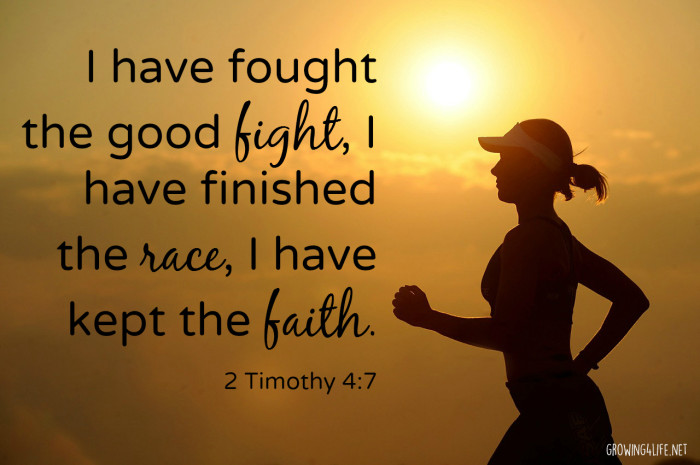
For I am already being poured out as a drink offering, and the time of my departure is at hand. I have fought the good fight, I have finished the race, I have kept the faith. Finally, there is laid up for me the crown of righteousness, which the Lord, the righteous Judge, will give to me on that Day, and not to me only but also to all who have loved His appearing. I Timothy 4:6-8

May we, too, be able to say this same thing when we have reached the end of our lives.


How Did That Happen?

table-791149_960_720

The other night as I stood over the sink, cleaning up from another big meal I had planned and prepared during this holiday season, I suddenly realized that somehow over the past 25 years I went from being completely incapable in the kitchen to being able to prepare a meal for 10-20 family members and/or close friends and not even be really stressed about it.

When did that happen? Or perhaps a better question is: How did that happen?

First, you have to understand that hospitality would not be my natural gift. Food preparation and serving takes me way outside my comfort zone. Way outside.

I remember the first meal I cooked for my in-laws. I have this vague memory of burning the peas. I was so incredibly stressed. Not because of them–they were more than gracious. It was just so stressful to plan and prepare meals for even two extra people who I wanted to impress. It wasn’t much better the next time I tried to host a couple from our church for Sunday lunch–we arrived home to find that I had never turned the oven on for the roast!

But I survived those embarrassing incidents of hosting guests in that tiny apartment we first called home and just kept trying. And, gradually, over the years, somehow everything changed.

But that change only occurred because I forced myself to have that first meal. And then a second. And then a third. Had I just refused to have people in my home from the beginning or even after those first couple attempts–using my fear and inability as an excuse– I would not be where I am today.

And it’s a great reminder that sometimes we need to step forward in faith to do the good works God has prepared for us despite the fear and the inability. Despite the failures.

We will never change if we don’t start walking in the direction we want to go. We won’t accomplish much if we never even try.

Sure, it took me a really long time to get here. But I did get here. Sure, I still have failures sometimes (like making the pineapple stuffing a little too crispy on Christmas day!) But now I know that I can survive failures without the world coming to an end.

Life is good. But it’s way better if we know we are doing the will of God and living to glorify Him, despite our personal fears and insecurities.

Is there anything that you know God has called you to do that is just way outside your comfort zone? Perhaps it is witnessing to a co-worker or starting to tithe? Maybe it is disciplining your children properly or memorizing scripture? Showing hospitality, getting rid of the TV, getting involved in a ministry at your church or asking someone to forgive you–these are all things that take great courage. But if we never try, we will never change.

As we contemplate this year’s end, may we reflect on what it is that God would like us to change this coming year. Let’s start thinking about how we may be better able to please Him by making a change or two in our lives, taking that first step of faith forward. Let’s show the world around us that we are never satisfied with status quo.


Scroll to Top