
Life

Giving Back

traditional-congregation

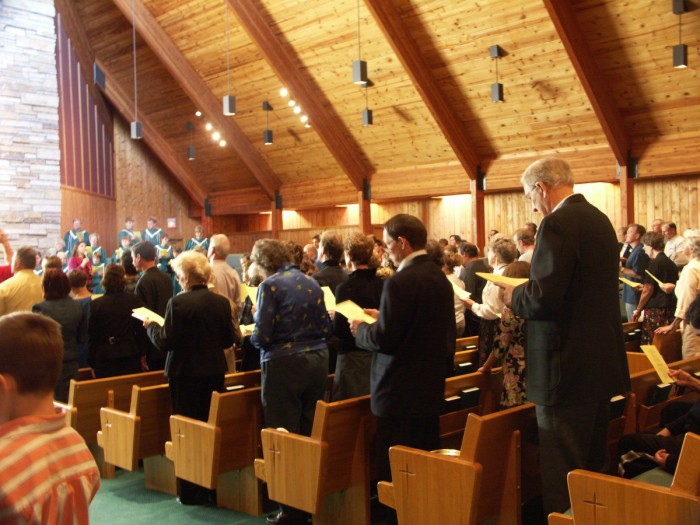
It is often said that 20% of the people do 80% of the work. Whether you are on a project at work or in a church family, this generally holds true. You have a few who lead, a few who serve in the background, and the rest just fill in the chairs.

I thought of this ratio yesterday in Sunday School, as our pastor taught us about spiritual gifts and assured us that every Christian has one (or more than one) and that we are to use them to equip the saints and edify the body (see Ephesians 4).

Being raised in Christian homes, this was something my husband and I had always been taught and as we got married and raised a family, we faithfully put it into practice. And so for years we poured our lives into our church, serving in many capacities, as you are apt to do in a small church.

But one day we realized that we had to leave that church.

And, suddenly, we were confronted with the fact that it was kind of comfortable and really easy to not have to do anything at church–we didn’t have to be there on Sundays or Wednesdays, we didn’t have to go to meetings, or deal with all the drama, or worry about whether the church was staying true to God’s Word. Instead we could just sit. After giving our hearts and souls to a church family for over 25 years, it felt incredibly strange, but also quite nice and we felt ourselves growing used to it after a few months.

And so we’d gather everyone up as late as possible on a Sunday morning and slide into a pew towards the back, way out of the way, where we wouldn’t be noticed.

But somewhere deep inside of us, the conviction was growing that if we were going to commit to a new church, then we needed to also serve at this church. And, so, it was with great trepidation and not a little dragging of the feet, that I signed up to help with our church’s Awana program.

Let me state, first and foremost here, that I did not want to commit to attending Wednesday nights. I was thoroughly enjoying not having to go to church during the week and wasn’t all that anxious to start up again. I also was okay being in the background and not being responsible for anything.

But there is a flip-side to that position, isn’t there?

Because I wasn’t there much or not responsible for anything, I didn’t really know anyone. We’d come and go on Sunday mornings and realized that few people would even notice if we weren’t there or, in fact, if we ever came again.

That was probably the hardest thing about going to a new church for me, personally. We had left what felt like a family and were plopped into a bunch of strangers.

But that old adage came back to me — in order to have a friend you must be a friend. And, so, instead of expecting people to reach out to me, I decided to obey God in this area of serving and  intentionally get involved.

And here is what I found– after my first year of helping, people recognized me, asked me how I was doing, and I started to develop some friendships. I started to feel like I belong. It certainly wasn’t instant but it gradually happened. As is often the case, when we follow God’s commands, we are blessed. In this instance, following God’s command to serve had blessed me tremendously.

So why am I sharing this here?

I believe in this age of “consumerism”, many of us Christians have become rather complacent in our church service. We go on Sundays so we can check it off of our list, but we aren’t really vested in any church body. I know there are several reasons for this. Trust me, I get it. Especially after our experience of being super-involved and then not involved at all. No involvement is definitely easier.

But, if we are a believer, is that option of no involvement really even open to us if we are to live in accordance with God’s will for our lives?

I now fully understand how intimidating and overwhelming it can be to go into a group of strangers as the newbie. I totally get that it’s no fun– and for some of us could even be described as torturous.

So, in a nutshell, why should we take this uncomfortable step? Let me give you a few reasons–

1. You will be following God’s command to use your spiritual gifts and to serve the church body.

2. You will start to feel like you “belong there”.

3. You will begin to recognize the visitors and be able to reach out to them in a special way, because you know just how they feel.

4. You will be setting a good example for your children by making church a priority. Who is going to serve in the church of the future if our children don’t see us using the gifts He has given us to serve the church family?

5. You will develop friendships.

And so, if you are one of those that is totally and completely uninvolved, I hope that you will consider getting involved in a ministry at your church. You can start small– like I did, working with the kids. You don’t have to do anything that’s really out there or up front. Join the kitchen committee, help the janitorial staff, or work in the nursery.

Just do something. Give back to the One who died for you. And you will be blessed!


How To Handle Rumors

gossip

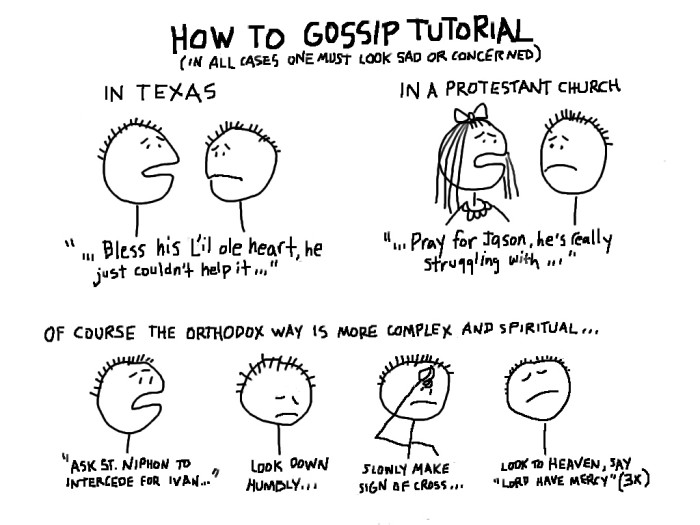
The call came when I least expected it. It was a dear friend who wanted to ask me about a false and ugly rumor she had heard about us. She and her husband loved us enough to ask us outright about what they had heard.

Can I even begin to express the gratitude and overwhelming love I felt for her at that moment? There are few better proofs of true friendship than this.

I know it’s not a normal posting day, but this incident came to my mind as I was reading Chapter 22 of Joshua this morning. The Israelites had heard that the tribes of Reuben, Gad, and the half-tribe of Manasseh had built an altar in rebellion to the Lord. All of the Israelites gathered quickly in preparation for war against these tribes that threatened to bring God’s curse on them.

But before they went to war, they wisely sent Phinehas the priest, along with some other delegates, to confront them about what they did.

When it was all said and done, the tribes had done nothing wrong, but instead had built an altar to signify the peace between the tribes on both sides of the Jordan for generations to come.

How often we just go to war– often with our viperous, vicious words– against someone who may be innocent without even checking on the truth of the matter. Whether it is someone spreading an outright lie or it’s just a truth that has been tainted and twisted through a million re-tellings, don’t our fellow human beings deserve the opportunity to give us the truth before we fall into resentment, hatred, anger, gossip, and bitterness? (Of course, the things I’ve listed should never be practiced to begin with— but that’s a different post for a different day).

As I read Joshua 22, my heart was once again stirred to gratefulness for the couple who had shown us what genuine friendship looks like. If you have a friend like that, consider yourself blessed. Many “friends” choose to spread the rumor further, grow bitter, angry, and finally put distance between themselves and you rather than doing the hard work of confrontation and communication.

Let’s be more like Phinehas and confront directly and without malice, searching for the truth of the matter instead of just believing nasty, ugly rumors.

Have a great Friday!

The Value in Reviewing the Past

countrychurch

Most of us do not really care for history. We are taught little respect for the ways of those who have gone before us and we don’t really spend any time analyzing the mistakes and successes of our forefathers as we plan our own futures.

But as we are reading in Deuteronomy, we can see that Moses does exactly this. He recounts all that Israel has been through since they left Egypt as they now prepare to enter the Promised Land. In giving them hope and courage for the future, he is recounting the past. He talks of God’s faithfulness (Deut. 2:7; 3:3; 4:3)  and their faithlessness (Deut. 1:26, 32; 9:7-14). As he speaks of their past and their future, he keeps coming back this–Obey the Lord’s statutes and commandments if you expect to be blessed.  If you are reading the 2015 Bible Challenge along with me, you will have noticed this.

But why does Moses keep recounting all of their history? What good does that do? Let’s take a look at some reasons why it may be very beneficial to take a look back–

1. We can learn from the mistakes of those who have gone before us.

2. We can trace the hand of God’s faithfulness to those who belong to Him.

3. We can see the cause and effect of bad choices much more clearly– in other words, sin and its consequences.

4. We are strengthened as we read and contemplate the courage and fortitude of those who have gone before us.

In a lot of ways, a study of church history is a lot like what Moses was doing. When we look back at the birth and subsequent life of the church since its beginning in Acts, we can see its shortcomings, its compromise, and its sinful rabbit trails, but we can also see God’s hand protecting the Truth and providing courage and strength to the remnant that is proclaiming it, whether that remnant be great or small.

There is great value in history. I know so many of us have a distaste for this subject– mostly because of boring history teachers. I remember my church history professor in college. He was a nice guy, but he couldn’t have possibly made one of the most exciting subjects more boring. It wasn’t until I was teaching my own kids history as I home-schooled them, that I started understanding just how helpful (and fascinating!) this subject is. There is so much to learn from the past. God demonstrates this to us through Moses’s words in Deuteronomy.

Most of us are so busy that we don’t take the time to read of or think about any history at all– least of all our own. But may I encourage you to take a look back. For there you will see the faithfulness of God, guiding and directing His church and weaving the tapestry of your own life, drawing you to Himself and guiding you through both black tunnels and open field.  We have a heavenly Father who loves His church. And we have a heavenly Father who loves us–despite our shortcomings. We are blessed.


Deuteronomy 6:1-3  Now this is the commandment, and these are the statutes and judgments which the Lord your God has commanded to teach you, that you may observe them in the land which you are crossing over to possess, that you may fear the Lord your God, to keep all His statutes and His commandments which I command you, you and your son and your grandson, all the days of your life, and that your days may be prolonged. Therefore hear, O Israel, and be careful to observe it, that it may be well with you, and that you may multiply greatly as the Lord God of your fathers has promised you—‘a land flowing with milk and honey.’


The Bath House

OLYMPUS DIGITAL CAMERA

I am so ready for Spring! Last week we experienced just a touch of spring warmth, but yesterday it was cold and windy again–giving us the impression that winter just isn’t quite ready to leave. Perhaps a humorous vacation story will remind us of the warmer days ahead.

Last summer we vacationed in the beautiful Blue Ridge mountains. When we arrived at our campground, we realized that my parents’ campsite was much bigger than ours and decided to set up our nightly campfire there. It seemed unfortunate that this site just happened to be next to the bathhouse.

But being next to the bathhouse wasn’t only unfortunate, but it also had the potential to be quite entertaining– for on the first night around the fire we noticed a most curious thing!

The campground staff had put some kind of soffit on the outside wall of the building in about a 2-3 ft area from the top to the bottom of the bath house. This soffit had rather large holes in it,which we assumed were for ventilation.  And, while we could not see a thing during the day, night time was quite a different story! In fact, it gave us a clear view into the bathhouse. Which was not a problem if people got undressed and dressed in the private shower area. However, if they did not–well, let’s just say we saw far more of one old guy than we would have ever wanted.

After that incident, we purposefully and very carefully kept our heads turned away from the bath house when we sat around the campfire.

Obviously, we could only see the people changing when the light was on. If they had decided to get dressed in the dark, we would not have been able to see anything.

Perhaps this is a truth that also applies to our sin. Maybe this is why we like to stay in the dark. For in the inky blackness, our flaws and sins aren’t so glaringly bright.

When the bright light of Christ’s love and biblical truth shines its bright light into our hearts and minds, it is with a shocked awareness of our nakedness and shame. Often, at this point, we desire nothing more strongly than to move back into the darkness, where we can hide.

And, yet, only Christ makes standing in the light without any shame possible for us. Without shame. Not because we are so gifted and talented, but because He is so amazing. Not because we are sinless, but because He bore our sins on a cross at Calvary. Not because we are so lovable, but because of His wonderful grace and mercy.

This is why, as believers, we should love standing in the light. We are new creatures, unashamed to stand reconciled before God, because our sins have been exposed, uncovered, and then paid for by the blood of Christ.

I just love how 1 Peter 2:9 puts it: But you are a chosen generation, a royal priesthood, a holy nation, His own special people, that you may proclaim the praises of Him who called you out of darkness into His marvelous light.

We have been called out of darkness into marvelous light! How incredible is this?

One of my favorite worship songs, written by Charlie Hall, expresses this thought. Here is just a small portion of the lyrics–

Sin has lost it’s power
Death has lost it’s sting
From the grave You’ve risen
Victoriously

Into marvelous light I’m running
Out of darkness, out of shame
By the cross You are the truth
You are the life, You are the way

 So let’s keep away from the darkness and stand with firm steadfastness in the light–not on our own merit, but by the grace of God; not because of our good deeds but because of the cross.

Into marvelous light we’re running! Out of darkness, out of shame!


p.s. And for any who are wondering– we were sure to notify the camp staff of their very odd issue with the upper bath house :)


To Obey or To Disobey? (that is the question)

To Obey

Every person needs to answer this question early on in his or her life–

Will I obey (submit to) God’s commands or will I disobey (rebel)?

Therein lies the whole dilemma of man. Oh, many of us don’t even really think about it in these terms, but when we remove all of the “stuff” and the “dialogue” this is the crux of the matter. This is why some are so zealous to deny God’s existence. And why some are so passionate about discrediting His Word.

And, yet, deep within each of us is knowledge of the ultimate Truth (Romans 1:19-20). And we have a choice to make.

If this is the first time you are reading through the Old Testament, it can be a little overwhelming. There is so much about offerings and sacrifices and laws. It seems like not one area of daily life remains uncovered in the books of Leviticus, Numbers, and Deuteronomy. Along with the laws, we have been reading of Israelite censuses and their battles, idolatry, and travels from place to place. But right in the middle of it all is an amazing chapter. Leviticus 26. In our Bibles the words of this chapter appear to be more poetic and Psalm-like than the chapters before and after it, and yet, it reads like an explanation of perhaps the most basic law of all–

–If the Israelites will walk in God’s statutes and obey His commandments, He will bless them (verse 3).

BUT

–If they do not obey Him and do not observe the commandments, despising His statutes and abhorring His judgments, God will set His face against them and they shall be defeated (verses 14-17).

If you read the whole chapter, you will read even further details about what happens to the nation when it obeys and when it disobeys. As we continue our journey in the Old Testament, we will find out that, while God continues to have incredible love and mercy for this special group of people, the children of Israel experience much pain and turmoil because of their disobedience and idolatry.

So that leads to a rather natural question–

Is this a principal only for the Israelites or does it apply today? Does obedience have any correlation to blessing from God? And disobedience to struggles and hard times?

What do you think?

Personally, I tend to think so. No, we don’t have God speaking to us as we journey through the wilderness, but if we think about some of the lives around us, we can still see this law in place.

Think of someone who is not saved but lives a very moral life. They may be very religious or they may just have grown up with very moral, good parents. Whatever the reason, they actually follow many of God’s laws, even though they are not doing so for the same reason we would (to please our Savior). And yet, many of these good, moral people avoid so much heartache because they are following the commands God sets forth in His Word.

These people honor their parents, don’t lie or cheat or steal; they stay clear of debt and are committed to their marriages.

In doing so, they often reap the benefits of following God’s laws. God has set up our lives to work much better when we obey His commandments and we reap the benefits in the here and now — whether we are saved or unsaved. Of course, if we are saved, we reap even greater rewards for our obedience in the future.

Now think of someone who has made poor choices. They make a habit of lying. Or stealing. They drink too much or they run around on their spouse. Do you envy that person’s life? I doubt it. We can see clearly that most of the time, people reap terrible fruit when they make terrible choices.

This chapter 26 is really interesting to me. God shows very plainly that obedience brings blessing and disobedience brings His wrath. It seems so clear.

So why do we act so surprised when we shake our fist at God and tell Him that we are going to do things our own way and then reap the terrible consequences of our selfish, ungodly choices?

Until we make the choice to follow God whole-heartedly, committed to obeying His commands, we are going to struggle continuously and be defeated over and over again. And, as believers, we don’t have any valid reason or excuse to continue to live in sin, bearing the pain and unpleasantness that is eventually reaped from this choice, because God has provided everything we need to lead a godly life (2 Peter 1:2-4).

Let’s bring this a little closer to home. Most of you are not having affairs or getting drunk. Many of our sinful choices we Christians make are considered “non-sins”, especially when we compare our lives to the lives of the ungodly. But let’s talk about an example that is very familiar to many of us— our bodies.

We have the responsibility to take care of our bodies and yet, over and over again, many of us feed our body the wrong things or way more than we need. Some of us abuse our bodies by working too long and hard or not sleeping enough. Many of us are too busy or lazy for proper exercise. And a few of us may even struggle with abusive substances that are really bad for our bodies like cigarettes, alcohol, or prescription drugs.

However, I think we can all agree that until we treat our bodies in a way that honors God (Romans 12:1-2; I Corinthians 6:19-20), we will be in a continuous struggle. But if we submit our bodies– what we eat, how much we sleep, how many hours we work, etc.– completely to God, digging in His Word and praying for guidance, then this particular battle will wane and we will be able to rest easy knowing we have done our part in obeying God in this area of our lives. Along with that will often come a healthier body and mind, as this is the usual outcome of treating our bodies well.

Certainly, the blessings of obedience are not always tangible. We aren’t promised health and wealth. While in this Leviticus passage, we actually see that God’s promises the Israelites good harvests (vs. 4-5), safety and peace (vs. 5-7), victory in battles with their enemies (vs. 7-8), lots of descendants (vs. 9), to be their God and to walk with them (vs. 12), we must recognize that this was a very special group of people at a very special time.

We do not find the same specific promises given to us in the New Testament. Instead we find the context of keeping God’s commands wrapped up in the offering of our love. We obey because we love God. Over and over again, this is what we read in the New Testament. Check out John 14:15, 21; John 15:10; I John 5:3; and 2 John 1:6.

There are promised rewards, of course. We read of the imperishable crown or wreath (I Corinthians 9:25), the crown of righteousness (2 Timothy 4:8), that we will be bearers of much fruit (John 15:5), have mansions in heaven (John 14:2) and enjoy a deep, abiding fellowship with our Savior (I John 3:22-25).

And so we are left with our most basic decision–

Will we show our love by obeying God’s commands or will we choose to disobey?

Whatever we decide, we can be sure there will be consequences.


When You Feel Like a Loser

LoserSmiley

Failure. Loser. Unimportant. Irrelevant.

A couple of weekends ago, all of these words came to my mind and I was using them to describe myself. It was just one of those weekends, if you know what I mean.

I made a lot of mistakes and also realized that I had made some pretty serious mistakes in the past that I am fairly powerless to fix. I questioned my purpose and the reason for my existence. Who even cares?

Sure, these are pretty serious questions and no, I am not looking for anyone to fill the comment section below with praises and compliments.

Instead, I want to know what the biblical response should be when I feel like a loser. I know what the world says–Love Yourself. Be Kind to You. You are Beautiful. You Can Do Anything.

But is this what the Bible teaches me?

When I search the Bible for a command to love myself, I can only find verses that assume that I already do–

Leviticus 19:18; Matthew 19:19; Matthew 22:39; Mark 12:31; Luke 10:27; Romans 13:9; Galatians 5:14; James 2:8.

These verses all–without exception– say the same thing: To love my neighbor as myself. This shows us that we already love ourselves.

And I recognize that when I fall into self-pity, it is because I love myself, not that I need to love myself more.

But Paul tells us in Philippians 1:21 that to live is Christ.

And further on in Philippians (3:8) we read Indeed, I count everything as loss because of the surpassing worth of knowing Christ Jesus my Lord. For his sake I have suffered the loss of all things and count them as rubbish, in order that I may gain Christ.

Usually, when I feel like a loser it is because my focus isn’t on Christ, but it’s on me. I have started worrying about my glory, my popularity, my feelings, and, mostly, my hurt pride.

So I have to make the difficult effort to turn my eyes from me and put them back on Jesus. I have to very purposefully remove my focus from my hurt, humility, shame, and mistakes and instead remember my true purpose as taught in God’s Word– to glorify God and to make Him known.

This can be very difficult, can it not?

And, yet, when we do so, it changes everything.

How can we practically do this?

I had a friend show me a really good example. She was feeling down and depressed. She wasn’t sure how to get out of the familiar cycle. I rather offhandedly suggested that she do something nice for someone else. And did she ever! She organized a drive to raise funds to encourage and bless a struggling family. By the time she had finished this project her blues had left and she was feeling stronger again.

Doing things for others naturally removes our focus from self.

I guess Philippians 2:3-4 says it best–

Let nothing be done through selfish ambition or conceit, but in lowliness of mind let each esteem others better than himself. Let each of you look out not only for his own interests, but also for the interests of others.

I know that the world is telling us differently. It is telling us to focus more on ourselves. But this is not what the Bible teaches. Instead, we are to be, with great effort, removing our eyes from ourselves and placing them purposefully on Christ, so that we can be used for His purposes and His glory.

And, ironically, when we actually do this, we become filled with incomparable joy and peace. It really is amazing, isn’t it? God receives His glory and at the same time gives us the peace and joy we long for so much.

A Journey Through the Wilderness

wilderness

Wilderness– an uncultivated, uninhabited, and inhospitable region.

Sometimes I think we forget just how amazing the Israelites’ trek through the wilderness really was–

God provided direction.

God provided food.

God provided water.

God provided the necessary laws to keep the people unified.

God protected them.

This is a good reminder, isn’t it? Because sometimes we find ourselves in our own wilderness and we feel so abandoned.

Traveling through a wilderness is difficult. Whatever your trial may be, grieving, longing, fighting, hopelessness are all part of the process.

Is there anything we can learn from the Israelites about traveling through the wilderness?

1. Complaining not only doesn’t accomplish anything, it also displeases God. In fact, so much so that some people were put to death for it. (Numbers 11:1-3) Were you as shocked as I was that God dealt with complaining so harshly?? And, yet, so often we complain without a second thought. This passage certainly gives us cause to pause before opening our mouth to voice our displeasure, does it not?

2. We need to keep our deepest affection placed on God alone. God kept Moses on a mountain and the people grew restless. Finally, they begged Aaron to build them a golden calf to worship. After the way they had seen God work to bring them out of Egypt, they so quickly turned to worship an idol. Seems impossible, doesn’t it? And yet, how quickly we turn our affections to other things– trying to medicate ourselves from the pain of the trial we are experiencing. Alcohol, gluttony, materialism, entertainment, gambling, and love affairs are all ways we try to escape our pain, aren’t they? And sometimes we even turn to a legitimate, really good thing, such as our children or our church work or ministry and they capture our affections and provide the much needed escape from reality, giving us the security and self-esteem that we long for so desperately.

The really interesting thing is that when we love God first and foremost, we actually live such a fuller, more meaningful life. The good things of life and work God has called us to do become more productive, there is peace knowing we are in His will, and our lives glorify God.

But giving up the idols that capture our soul is a painful process. One that is so very worth it, but so very difficult.

3. We must follow God’s direction. The Israelites had it easy, didn’t they? They followed the cloud by day and the pillar of fire by night. It was so obvious when they should pack up and go and when they should stay. Sometimes I wish my life could be directed so plainly. But, alas, it’s not.

But maybe it is.

All the direction we need can be found in God’s Word. There is such an insatiable desire for  supernatural experiences and visions, but are they really necessary? Personally, I believe more than ever that all of this “hearing from God” is counterfeit. I believe scripture clearly teaches this and we can see that the supernatural experiences people are having are leading them away from the Bible rather than towards it. But these experiences provide an easy way to feel close to God without obedience. God’s Word holds so much about His will for our lives and most of us just don’t want to follow what it says.

We are to forgive (Matthew 6:15). But we just don’t want to.

We are to love our enemies (Matthew 5:44). But that’s too hard, Lord.

We are to think of others before ourselves (Philippians 2:3-4). But that’s not what the world says.

We are to be holy and separate from the world (I John 2:15-16). But that’s no fun!

We are to be share the gospel (Matthew 28:19-20). But then people might think I am strange.

We are to exercise self-control and temperance. (I Corinthians 6:19-20) But I just want to follow how I feel today. I don’t want to feel guilty about this. I’ll try to do better tomorrow…

We are to keep our hearts focused on eternity, instead of the here and now (Matthew 6:20-21). But I really want to drive a car that’s just a little better than my neighbor’s…

And, so, because we don’t want to follow the plain will of God, we instead turn towards the vague, supernatural feelings and “words” we hear. They are so much more pleasant and easy to swallow.

But that’s not how Christianity works. And so, following God’s direction and living in the center of His will is doable and certainly not dependent on any special revelation from God. Of course, it is not always what we want to do.

But avoiding dire consequences as we travel through the wilderness is very much dependent on us doing things God’s way.

4. We must trust God to provide. Multiple times through their journey in the wilderness, the Israelites panicked about their situation. Where are we going to get water? What are we going to eat? What are doing to do? And yet, each and every time, God provided. It may not have been in the way they wanted, but He did provide. Have you seen God do the same in your life? I know I have. Just when I think I can’t take one more step in my personal wilderness, He provides an encouraging word or makes the next step very clear. These moments are like an oasis for our souls, aren’t they? Just as God remained faithful to the Israelites, so He will do for us. God will not desert us.

And so we keep reading. I won’t deny that some of these Old Testament books are challenging for me. All of those names and laws. Wow. But God’s teaching us, isn’t He? This week, one of the things He has been teaching us is how not to respond as we take our own journey through the wilderness.

About Love

I Corinthians 1313

When I was a kid, life was a lot different. I can remember when Dad brought home our first microwave, our first VCR, and our first Video Game Console. I remember the Christmas as a young married woman when I received my first CD player. I was so excited! I didn’t know it at the time, but just like life had changed so drastically with the development of machines in the late 1800s, so would life change again in the late 1900s with the development of the computer.

One of those changes — a seemingly very minor one — is that instead of buying the whole album of our favorite artist to get the song we love, we can now just buy that one song. This option means we don’t have to buy the songs we don’t like. But I wonder if it doesn’t also mean that we miss a few we would really like?

Sometimes I think we approach love a little like that. We want to just experience the easy, good parts of love. Let me explain–

If we are a parent, the easy, fun parts are the hugs & kisses, the snuggling up at night and the “I love yous” and the proud moments when you get to say “I’m that kid’s parent!”

If we are a spouse, some of the good parts are when we are in complete harmony in purpose, holding hands and talking, looking across a room and knowing exactly what the other person is thinking.

If we are a son or a daughter, the good parts are the cool ways your parents take care of you even as an adult, or the friendship that has grown deeper with your older parents.

If we are a friend, the easy part is the connection we feel, the support we know we have, no matter what befalls us.

These are some of the best things about love. The joy that comes from interpersonal relationships.

But I wonder if, with the advent of all of this technology, we have become a little unrealistic in our expectations of love, thinking we can just pick the good times. Trying to hang on to “perfect”– just getting the pleasant experiences and bypassing the unpleasant ones.

It doesn’t take long to figure out that sometimes there are far more unpleasant ones than pleasant ones. We are all sinful human beings and life is hard–

As parents, we need to discipline and provide consequences for sinful behavior. We need to have hard conversations. We need to endure a few “I hate you!”s and quite a few seemingly hopeless moments that just aren’t any fun at all and certainly not easy. But that is love.

As spouses, we don’t always jive, we disagree, and we have periods of crazy, busy times where we hardly see each other. We argue, we fight, we lay in bed not talking. But this is just the hard part of love.

As adult children, we see our parents growing weaker, they need us to do things for them that they used to be able to do for themselves, we take them to dr appts, or do their finances, or change their diaper. But we remember how hard it must have been to raise us, and we do it because we genuinely love them with all our heart.

As friends, we disagree– sometimes on major things, our kids may fight or not get along, or we may move far away from each other, but if true love abounds, the friendship remains, because that is what true love does.

I just wonder if we have become so used to pulling only the good things and avoiding the bad things, that we have not experienced love in its fullest, most satisfying way. For when we walk away (physically or emotionally) from a tough situation, we are in essence saying that we don’t want the hard stuff.

Now, please don’t take this to the extreme. There are a few very legitimate reasons to walk away from certain relationships, at least for a time. But this is not the norm. Most relationships are broken because they just weren’t easy or fun anymore.

Many of those who walk away go on to start a new relationship that sours faster than the first one.

But true love accepts the bad stuff along with the good stuff. Rejection isn’t even an option. Divorce or abandonment aren’t even a passing thought in our brain. True love means commitment and work but, oh, the rewards are tremendous.

I have no idea if you are struggling in a relationship today. Many of us are. Don’t give in to the thoughts that tell you to quit and move on. Keep loving. Keep doing what’s right. Do what you can do and then pray. Hard. We can’t change the other person, but we can surely do all that we possibly can to salvage the troubling relationships in our lives.

 And now abide faith, hope, love, these three; but the greatest of these is love. (I Corinthians 13:13)


Seven Things to Learn from Job

job3

If you are still reading the Bible Challenge, you are now in the book of Job. We are reading together as a family and if I may be honest, we had a conversation yesterday about the difficulty of reading this book. It is not really a narrative (aside from the first couple of chapters) and the style makes it hard to read. So I wanted to encourage you to keep going. And I was thinking about some lessons we can learn from this book, despite its flowery, hard-to-understand language–

1. God may allow trials in our lives to prove (or test) our faithfulness. At first, it’s tempting to wonder why God would let Satan torture Job is such a manner, isn’t it? And, yet, God had confidence in Job’s response to his trials and, through it all, Job’s understanding of God was deepened considerably.

2. There is a whole drama playing out which we cannot see or hear. Satan hasn’t stopped torturing and tempting believers and there is a spiritual battle that we are always fighting! Paul even talks about it in Ephesians 6, encouraging us to keep all pieces of armor firmly in place so we can stand and fight effectively!

3. God may use the trials in our lives to encourage others.  I was thinking about the fact that here we are — in the year 2015– reading the true story of Job. Many Christians are comforted and gain great insight into their own difficult trials through this book. Job’s experience was not in vain.

4. Trials show us our true friends. Job’s friends certainly seemed judgmental and unkind. They did come to sit with him for seven days (Job 2:13) which I am sure was a cultural (but pretty cool) thing to do. So that’s good. But when they open their mouths, instead of comforting him, they accuse Job of great sin and tell him he needs to repent. His friends were short-sighted and arrogant, weren’t they? They had no idea the drama that was playing out above their heads. But if Job had sinned (which he didn’t) true friends don’t respond this way in a trial, do they? And, honestly, many of our trials are a direct result of a sinful choice or action. And it does need to be addressed. But it’s so much about timing and the great love with which we would choose to share such information that shows if we are a true friend. Job’s friends just didn’t seem all that loving to me. Like Job didn’t have enough problems without having to defend himself to his “friends”.

5. The book of Job shows us how not to respond to someone going through a trial. This piggy-backs off of number 3, so I won’t say anything else about his friends. But we also have his unsupportive wife (Job 2:9) who gives a great example of what not to do. For she tells Job to “curse God and die.” Doesn’t seem to be a great thing to say to someone who has lost everything.

6. Don’t judge too quickly. I can tend to judge Job’s wife pretty harshly for her words and wonder how a wife could be so unsupportive–until I remember that she had suffered terrible, terrible losses as well. She lost all of her children and her total way of life. In a day. There isn’t mention of grandchildren here but if all of the children were adults, there is even that possibility. Her pain must have been unbearable. And then her husband gets deathly sick on top of it all. I don’t know about you, but trials and tribulations and stressful times cause me to say things I don’t mean. I hope that these lone recorded words of Job’s wife just indicate a bad day. I think, given her situation, we should give her the benefit of the doubt and not be too hard on her. I think this is a good lesson to think about in our own here and now. People always do things or say thing for a reason. I have said many a foolish thing before thinking and hope for great grace in those situations. I desire to extend that same grace to those around me.

7. We need to keep reading, even when we don’t get it. Some of you by now are probably contemplating giving up reading through the Bible. You just didn’t realize it would be this hard. You may even be thinking it’s rather uninteresting. Please don’t give up. Remember the Bible Study Trap I wrote about? Go re-read this post if you don’t remember what it says. It’s important. We are reading to know more about God, not to entertain ourselves. And don’t underestimate the power of prayer. Pray for insight and keep going. I promise you that you will be glad you did!

This is certainly not an exhaustive list of things to be learned from the book of Job but just a few things I thought of as I have been reading. Have a great day and keep reading!


Unfinished Houses

IMG_3010rev

As we traveled through the Ukrainian countryside, I took in the scenery with amazement. For there, dotting the countryside in great numbers, were unfinished houses. Some of these brick structures were only half-built, but most looked almost finished, slowly fading in the Ukrainian sunlight as they waited for owners to fill them with life.

When I expressed my wonderment at this unusual sight– for there were many of these houses, not just a few– whoever I asked just shrugged their shoulders and said that the owners ran out of money. Apparently, after the Soviet Union broke apart, these bricks and other building supplies were available at deeply discounted prices and so lots of people started building these beautiful homes. But a functioning house is much more than the lumber and bricks of its shell. And so funds ran out and the owners walked away.

Because they did not count the cost.

I was reminded of this incident a few weeks ago in our Sunday School class. We are doing the Radical series by David Platt and he was talking about Christianity as Jesus defines it in the Bible.  It is very different from the cultural Christianity that demands nothing– that requires no sacrifice– that only needs a prayer to declare oneself as officially in the Lamb’s Book of Life. He used the following quote by John Stott. Actually, this is a bigger portion than he used, but it’s all so good, I wasn’t sure what to eliminate–

Jesus never concealed the fact that his religion included a demand as well as an offer. Indeed, the demand was as total as the offer was free. If he offered men his salvation, he also demanded their submission. He gave no encouragement whatever to thoughtless applicants for discipleship. He brought no pressure to bear on any inquirer. He sent irresponsible enthusiasts away empty. Luke tells of three men who either volunteered, or were invited, to follow Jesus; but no one passed the Lord’s test. The rich young ruler, too, moral, earnest and attractive, who wanted eternal life on his own terms, went away sorrowful, with his riches intact but with neither life nor Christ as his possession…The Christian landscape is strewn with the wreckage of derelict, half built towers—the ruins of those who began to build and were unable to finish. For thousands of people still ignore Christ’s warning and undertake to follow him without first pausing to reflect on the cost of doing so. The result is the great scandal of Christendom today, so called “nominal Christianity.” In countries to which Christian civilization has spread, large numbers of people have covered themselves with a decent, but thin, veneer of Christianity. They have allowed themselves to become somewhat involved, enough to be respectable but not enough to be uncomfortable. Their religion is a great, soft cushion. It protects them from the hard unpleasantness of life, while changing its place and shape to suit their convenience. No wonder the cynics speak of hypocrites in the church and dismiss religion as escapism…The message of Jesus was very different. He never lowered his standards or modified his conditions to make his call more readily acceptable. He asked his first disciples, and he has asked every disciple since, to give him their thoughtful and total commitment. Nothing less than this will do”
John R.W. Stott, Basic Christianity

I guess the deeper my relationship grows with Jesus Christ, the more I realize that much of what passes today as Christianity isn’t really true Christianity. This is such an unpopular message. And I can understand why! Because true Christianity costs us something. Yes, it’s a free gift, but it costs everything. But when our hearts are changed by the power of the Holy Spirit, our lives are transformed. This isn’t a begrudging obedience to God’s laws — a list of do’s and don’t’s that plague us and keep us from having any fun.

Instead our stone hearts start beating with love for the Father and following His will not only becomes a pleasure, but our main priority.

This brand of Christianity sounds so foreign to most of us. Even as I write, I realize this. And I wonder– what does this mean for all of us in this day and age? How does this kind of Christianity look in a Western culture where indulgence and comfort reign supreme?

All I know is that I am not walking away from an unfinished house. I will keep working and building until I die or my Lord returns. Yes, it’s hard. And yes, there is sacrifice required. Great sacrifice. There is turning away from the world, being unpopular with people, doing what’s right at all costs. It means we love and forgive even when we don’t feel like it. It means we stand alone if we have to. And that our time and resources are no longer our own. This does not sound all that appealing, does it? But when we read in the New Testament, we can’t help but conclude that this is what it’s all about.This is what Jesus demands of His disciples.

And, honestly, the costs for us are really nothing compared to so many of our Christian brothers and sisters. I can’t help but think of them as they give up homes, loved ones, and even their lives for the sake of Christ. I can’t help but wonder how comfortable, indulged America would respond in the same situation. Oh, may we be found faithful if (or shall I say when?) that happens to us!

If you have started your house of faith but are ready to walk away, please don’t. If the enemy of your soul is throwing arrows and you are just so tired, hang in there. Open your Bible and read Ephesians 6, put on your armor, and beg the Lord for strength to keep going. Let’s keep our eyes focused on eternity instead of the here and now. And, remember, God’s great power is shown best through our great weakness. You aren’t alone. Don’t give up. Keep building.


Scroll to Top