
Life

Liberty to Love

Galatians 5 has always been a favorite chapter of mine. Paul has spent the preceding four chapters explaining that we can never be justified by the law and that Jesus Christ is enough. And then in chapter five, he starts off with—

Stand fast therefore in the liberty wherewith Christ hath made us free, and be not entangled again with the yoke of bondage.

We are to stand fast in the liberty that we are given through Christ. Paul then spends the rest of the book showing us what that looks like.

Does it mean we can immerse ourselves in worldliness and sinful behavior, knowing we are forgiven?

He answers this clearly in verse 13–

For, brethren, ye have been called unto liberty; only use not liberty for an occasion to the flesh, but by love serve one another.

Clearly the answer to that question is no. We are not saved so that we have the liberty to sin and embrace the world.

We are saved and given the liberty to love. To love and serve God. To love and serve one another.

Our new life in Christ has changed our WHY.

We don’t do the right things because we “have” to. We don’t do them to merit favor with God.

We do them because we have finally been given the liberty to love.

Most of us are very familiar with verses 22-23 of chapter 5, where we are given a list of the fruits of the Spirit. Can you remember what they are?

But the fruit of the Spirit is love, joy, peace, longsuffering, gentleness, goodness, faith, meekness, temperance: against such there is no law.

But the next verse is probably not as familiar to us—

And they that are Christ’s have crucified the flesh with the affections and lusts. (Vs 24)

Those that are Christ’s have crucified the flesh with its affections and lusts. This is a description of every believer. It should describe us. We have crucified (or are actively trying to crucify) our flesh.

Crucify— to subdue (conquer; bring into subjection; overcome; repress)

Flesh—our old man; our human nature

So, rather than fulfilling our desires for the world and to sin, we are to live with intention and be turning away from them. Crucifying them.

Crucify is such a strong word, isn’t it? We see Paul has used it earlier in this book, when he says in chapter 2:20–

I am crucified with Christ: nevertheless I live; yet not I, but Christ liveth in me: and the life which I now live in the flesh I live by the faith of the Son of God, who loved me, and gave himself for me.

So we aren’t crucifying our flesh for no purpose. As we crucify our flesh more and more, we make more and more room for Christ to live in us. As we live for Christ, we, through Him, love God and others.

This is reflected in our lives in all areas. It’s not just about “being nice” to people. It goes far deeper…it is reflected in how we love others when no one is watching—how we treat our spouses every day; how we respond when someone irritates us; it is reflected in how freely we forgive and the amount of grace we offer to others. It’s also reflected in how much we love God—shown clearly by what we put before our eyes on the tv, the Internet, or books (do we love Him enough to turn our eyes from the things He hates?) It is reflected in how we spend our money and time (do we consider His will as we make these decisions?) And it is reflected in how we respond when we face a trial, large or small (do we really trust Him?)

This topic is probably one of the most difficult things to navigate as a believer in our current culture. As soon as we raise the topic, cries of legalism rent the air.

But the liberty to love and then to live our lives in response to that love (for God and for others) is in direct opposition to legalism.

This verse has really been on my mind and so I thought I’d share what I’ve been thinking about. Hope it encourages you to also ponder our liberty to love and instills in you the same desire it has in me: To love God more and to love myself less. To turn from my fleshly desires and to fill the void with Christ.

May I seek God’s glory instead of my own. May I seek God’s approval rather than man’s. May I seek to submit and to obey God rather than to fulfill the desires and lusts of my flesh that insistently (and sometimes so very LOUDLY) call out to me each and every day.

We will never do this perfectly, but, by His grace, we will do it more and more with each passing day.

Older and Wiser

Life is designed in such a way that the older we get, the wiser we become. Our experiences teach us more than any teacher ever could. And so, hopefully, as believers, we are learning not to be so hasty; when to speak and when to keep quiet; we are growing less angry and more forgiving. And the list could go on and on.

This not only should inform our daily living in a good way by changing our choices and decisions and even our thought processes but it also gives us insight for those that come behind us.

As I was reading in II Chronicles 10 last week, I came across this interesting passage. It’s regarding Rehoboam, who asked two groups of men—old men and young men— how he should respond to a question the people have asked him—

𝘈𝘯𝘥 𝘬𝘪𝘯𝘨 𝘙𝘦𝘩𝘰𝘣𝘰𝘢𝘮 𝘵𝘰𝘰𝘬 𝘤𝘰𝘶𝘯𝘴𝘦𝘭 𝘸𝘪𝘵𝘩 𝘵𝘩𝘦 𝘰𝘭𝘥 𝘮𝘦𝘯 𝘵𝘩𝘢𝘵 𝘩𝘢𝘥 𝘴𝘵𝘰𝘰𝘥 𝘣𝘦𝘧𝘰𝘳𝘦 𝘚𝘰𝘭𝘰𝘮𝘰𝘯 𝘩𝘪𝘴 𝘧𝘢𝘵𝘩𝘦𝘳 𝘸𝘩𝘪𝘭𝘦 𝘩𝘦 𝘺𝘦𝘵 𝘭𝘪𝘷𝘦𝘥, 𝘴𝘢𝘺𝘪𝘯𝘨, 𝘞𝘩𝘢𝘵 𝘤𝘰𝘶𝘯𝘴𝘦𝘭 𝘨𝘪𝘷𝘦 𝘺𝘦 𝘮𝘦 𝘵𝘰 𝘳𝘦𝘵𝘶𝘳𝘯 𝘢𝘯𝘴𝘸𝘦𝘳 𝘵𝘰 𝘵𝘩𝘪𝘴 𝘱𝘦𝘰𝘱𝘭𝘦? 𝘈𝘯𝘥 𝘵𝘩𝘦𝘺 𝘴𝘱𝘢𝘬𝘦 𝘶𝘯𝘵𝘰 𝘩𝘪𝘮, 𝘴𝘢𝘺𝘪𝘯𝘨, 𝘐𝘧 𝘵𝘩𝘰𝘶 𝘣𝘦 𝘬𝘪𝘯𝘥 𝘵𝘰 𝘵𝘩𝘪𝘴 𝘱𝘦𝘰𝘱𝘭𝘦, 𝘢𝘯𝘥 𝘱𝘭𝘦𝘢𝘴𝘦 𝘵𝘩𝘦𝘮, 𝘢𝘯𝘥 𝘴𝘱𝘦𝘢𝘬 𝘨𝘰𝘰𝘥 𝘸𝘰𝘳𝘥𝘴 𝘵𝘰 𝘵𝘩𝘦𝘮, 𝘵𝘩𝘦𝘺 𝘸𝘪𝘭𝘭 𝘣𝘦 𝘵𝘩𝘺 𝘴𝘦𝘳𝘷𝘢𝘯𝘵𝘴 𝘧𝘰𝘳 𝘦𝘷𝘦𝘳. 𝘉𝘶𝘵 𝘩𝘦 𝘧𝘰𝘳𝘴𝘰𝘰𝘬 𝘵𝘩𝘦 𝘤𝘰𝘶𝘯𝘴𝘦𝘭 𝘸𝘩𝘪𝘤𝘩 𝘵𝘩𝘦 𝘰𝘭𝘥 𝘮𝘦𝘯 𝘨𝘢𝘷𝘦 𝘩𝘪𝘮, 𝘢𝘯𝘥 𝘵𝘰𝘰𝘬 𝘤𝘰𝘶𝘯𝘴𝘦𝘭 𝘸𝘪𝘵𝘩 𝘵𝘩𝘦 𝘺𝘰𝘶𝘯𝘨 𝘮𝘦𝘯 𝘵𝘩𝘢𝘵 𝘸𝘦𝘳𝘦 𝘣𝘳𝘰𝘶𝘨𝘩𝘵 𝘶𝘱 𝘸𝘪𝘵𝘩 𝘩𝘪𝘮, 𝘵𝘩𝘢𝘵 𝘴𝘵𝘰𝘰𝘥 𝘣𝘦𝘧𝘰𝘳𝘦 𝘩𝘪𝘮. (II Chronicles 10:6-8)

Instead of heeding the wiser, older men, he decided to go with what the young men had said (which was to be harsh with the people).

In this case, the older men had a much wiser answer for Rehoboam and had he followed it, his kingdom would have had a very different ending. Following the wrong advice can change everything, just as it did for Rehoboam.

Of course, older men do not always give the best advice—especially in a culture where so many older men and women spend the last twenty years of their lives playing and selfishly pursuing their own desires.

But there is still a principle to be found in this story from the Bible. We spend almost the entirety of our lives younger than some and older than some, so what are principles we need to consider from this story as a younger person and as an older person?

We live in a culture that is a bit upside down. In the past, the wisdom of old age was valued and elderly men and women were respected. In the world we find ourselves in, it is youth that people listen to and it is the young people that are respected.

It wasn’t until the mid-1900s that youth culture took on a life all its own and became a force to be reckoned with. There were no “youth groups” in the 1800s. No Botox or plastic surgery so we could look “younger”.

While growing older always has had its challenges, there was no shame in it back in the day. It was just a part of life. No one was trying to be younger. They just were taking life as it came.

But we live in this culture where youth is admired and old age is despised. How do we live in this culture but not be “of it”? Since we are all both “younger” and “older” for most of our lives we need to ask—according to scripture—what are things we need to consider as a younger person and what do we need to think about as an older person?

First, it’s important that we consider what those older than us have to say. Particularly, those who are walking with God.

There are lots of foolish old men and women in this materialistic, self-centered culture. But there are also many wise men and women who love the Lord and have so much to offer those of us who are younger than they are. May we be humble enough to listen to what they have to say and take time to reflect on it.

Some of my dearest friends have been women considerably older than me. One was thirty years older and one was twenty-two years older than me. Both were incredible blessings in that they had so much wisdom to offer me, because they loved the Lord and had lived longer than me. If we still have our parents and they love the Lord, we will find that they are also a wonderful resource for godly counsel.

Older people just think about things we never even considered. They understand dynamics we can have no clue about. They have been through what we are going through and can look back and see what they did right and what they did wrong. Hind sight is 20/20 and they have the blessing of having the hind sight we can’t possibly have.

And so may we be humble and teachable and willing to learn from those who are a bit ahead of us on this path called life.

Second, may we be worthy counselors.

We are all older than someone. May we be studying the Word and growing more like Christ through our life experiences, so that we may be a counselor of value as we get older.

As I mentioned above, many older men and women live selfishly. But as believers, we not only must turn away from that, we must realize the absolute privilege it is to build into the lives that are around us. Many of us have children (and their spouses), grandchildren, and even great-grandchildren whom we can support and encourage. We have nieces and nephews, Sunday School children, young parents, co-workers, and our church families. There is always someone younger than us that can use some support and encouragement to honor and obey the Lord.

But before we offer any counsel…

It is critical that we are an excellent listener. Spewing unwanted and condescending advice will be never be a blessing to anyone.

Compassionate listening with a well-spoken word of advice as God gives opportunity is what we are after.


We can’t change the world, but we can change our own hearts and attitudes, can’t we? May we be willing to listen and consider the counsel of those who are ahead of us and may we be willing encourage and build up in the Word those who are behind us.

And, in doing these things, we will be obeying scripture and be living out the pattern that God established for His people.

Judgements, the Bible, and Incomplete Information

We all make judgments. We make judgments about what is beautiful and what isn’t. And about what is “normal” and what “isn’t normal”. We make judgments about whether someone is doing something right or something wrong; And about whether someone is doing something wise or something foolish. We all do it. And we all do this quite naturally, whether we speak our judgments aloud or not.

But there are two things that we believers really should consider before we pass judgment. Before I go on I’d like to mention that this is something God has been teaching me, oh so gradually, over the course of my lifetime and I am definitely not the same person I used to be. But I am still growing in this area. It’s so easy to write about something the Bible teaches, but learning to live it out takes a lifetime.

The FIRST thing for our consideration is this: Is my judgment based on God’s Holy Word or is it based on my opinion?

If it’s based on my opinion then does it really matter? What makes one opinion better than another?

Here’s a silly example (albeit a practical one). Let’s consider a woman’s shirt. Let’s say I notice a co-worker’s new shirt and I just don’t like it. It’s bright and loud in a color I do not care for and I find it very unappealing. Why is my opinion about that shirt better than the wearer’s opinion? And does it really matter?

Now, let’s take that same shirt and let’s say that it is cut very low and is very immodest. The Bible tells us to dress modestly (I Timothy 2:9-10). So now I am making a judgment between right and wrong which, in fact, we are supposed to do (Matthew 7, I Thess. 5:21-22, and others).

Judgments that are based on our opinions don’t always need to be said. But sometimes they do need to be shared. For example, in committee meetings or family gatherings, when a plan is being developed or a vacation planned. At that point, we speak up with the understanding that there is really no “right” or “wrong” in the situation but that our opinion is simply based on preference.

But what we do with our biblical judgments? Are we to speak each one? This is probably worth a post all its own but, for the sake of time and space here today, let’s just nutshell it in this way: True love discerns, through prayer, when speaking truth is appropriate and is willing to confront when necessary. A lot of harm has been done by parents, pastors, teachers, and others who were simply unwilling to speak biblical truth into the lives of others because they were worried about offending.

This leads to the SECOND thing which we must consider: Are we are aware that we may have incomplete information as to why someone made a choice?

This is not regarding the actual making of judgments but, rather, about our attitudes that accompany our judgments.

When we make biblical judgments, we make them based on our own life experiences. This leads many of us to give no grace, no mercy, no lee-way for other life experiences.

So, for example, someone growing up in a Christian home will naturally know the Bible better than a baby Christian who just got saved as an adult and is learning. Do we have grace for the baby Christian who is just learning?

Or another example is that perhaps someone made a decision for a very good reason but you, looking from the outside, are not privy to the reason for that decision and are judging them for doing something unwise based on your incomplete information. We don’t always know the facts and perhaps they didn’t do anything unwise at all.

Do we give people the benefit of the doubt? Or do we fall prey to having a “holier than thou” attitude?

We only have our life experience from which to form judgements. But it’s so important to recognize that our life experiences are not the gold standard. Only the Bible can and should inform all of our judgments.

And this should lead us to grace and mercy as we remember our life is not their life. And they may have challenges about which we have no idea at all. This doesn’t mean we don’t talk with them when we see sin or worldliness. It just means we have a humble, loving attitude that acknowledges we may not know everything.


So… what if a judgment is based on scripture and you find yourself concerned about someone you love? What to do?

Our natural response is to gossip or to make sarcastic, passive-aggressive remarks letting others know how we feel. The godly response is to keep quiet and go to that person personally and find out the whole story; find out why they made the choice they did and lovingly and kindly point to the scripture that shows that it is wrong.

Can you see why correct interpretation and honest hermeneutics of God’s Word are so critical to life? There are so many manmade “rules” and “laws”—rules and laws that man has created that are simply not in scripture. And there are also so many principles and commands that go completely ignored and neglected by professing Christians who love the world.

And can you see why it’s so important to be able to recognize an opinion-based judgment from a scripture-based judgement?


I have been judged for many things throughout my life. One that sticks out in my memory is being judged for drinking orange juice with my pop-tart instead of milk. Someone made me feel like a fool because of this decision.

As I reflect on that experience, which is over twenty years ago now, I find it such an unnecessary judgement. It’s a silly example but there are so many just like it that happen every day.

Judgments like this build walls instead of building unity. They create division instead of creating a loving, safe place to grow together.

Oh, that we may recognize the difference between our subjective, opinion-based judgments and objective, scripture-based judgments. May we handle any judgment in a loving, biblical manner that will support and encourage God’s family, rather than tear it down.

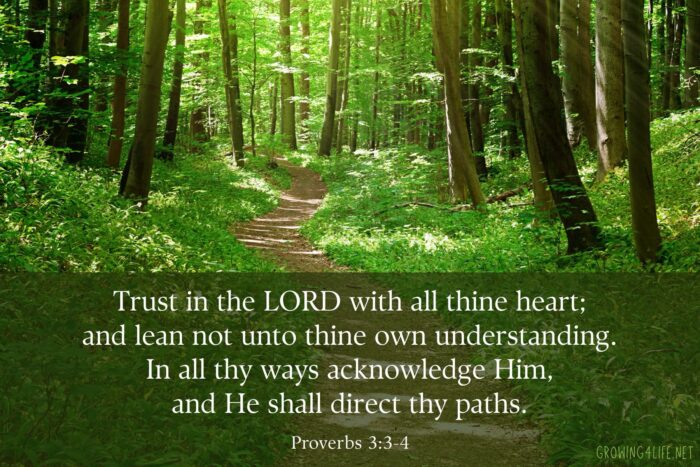
He Shall Direct Thy Paths

Proverbs 3:5-6 are probably two of the most-loved verses in all of scripture. They remind us to trust the Lord, to lean not on our own understanding, and promise us God’s direction. But as I was reading this chapter this morning, I realized that these two little verses must be taken in context. They are surrounded by some other pretty important nuggets of wisdom that can’t be overlooked if we long to trust the Lord and have Him direct our paths.

Such as…

(Vs. 1-2) we dare not forget God’s law and we must work diligently to keep His commandments. We are even told that, as a rule, doing this will give us a long life and peace. Of course, there are legitimate exceptions to this due to God’s sovereign will, but we can see how living a moral, upright life will keep us from a lot of harm.

(Vs. 3) Do not forsake mercy and truth. Can we overestimate the value of mercy and truth in the life of a believer?

Truth keeps us on the straight and narrow path and keeps us from deception. Our only hope of protection and a victorious Christian life is to love the truth of God’s Word more than we love anything else. This is easy to write but hard to live. We all have areas in which we are tempted to ignore, bypass, or outright reject the truth of scripture because the cost is so much higher than we are willing to pay. It is so important that we ask the Lord to give us courage and steadfastness and the willingness to submit to and obey His Word, no matter the cost.

Mercy is what will keep us humble as we seek to follow the truth. My grandfather used to say that “pride is a handle that fits any tool” and there is no tool that it fits better than trying to do what’s morally right and obeying God’s commands. But mercy will keep us from turning up our noses at others and will fill us with humility as we recognize that all genuine believers have victories and we all struggle—just in different ways. Mercy and grace abound in humility of heart and live in perfect harmony with Truth.

(Vs. 7) And then this most important verse after verse 6. This verse explains how we are practically able to execute verses 5 and 6.

First, we are not to be wise in our own eyes. Here we go back to pride again. Pride will keep us from submission to the Lord, it will keep us leaning on our own understanding instead of the Lord’s, it will cause us to stray from the narrow path, AND it will destroy our relationships.

Second, we are to fear the Lord. What does this mean? That we are “scared” of Him? No, of course not. The fear of the Lord means having the proper, reverential, submissive attitude towards the Lord. It means we live our lives with God at the center, instead of ourselves, holding Him in awe and recognizing His greatness, omnipotence, and glory. Earlier in this book, we read that the fear of the Lord is the beginning of wisdom (Prov. 1:7). That’s how important it is that we fear the Lord.

Third, we are to depart from evil. We cannot expect the Lord to direct our paths if we are purposely walking outside His will in sin or worldliness. Evil comes in all shapes and sizes and, through our study of God’s Word, we soon begin to understand that we have far too narrow view of this word. It goes far beyond the “awful stuff” we tend to put in its category and encompasses but is not limited to: Wicked entertainment that goes against God both morally and philosophically; immodest dress and other ways we draw attention to ourselves; an unforgiving and unloving spirit; selfishness; rebellion against God’s laws; and passion for the world’s wealth and status (just to name a few!) If we are honest with ourselves, we all have something that tempts us to do evil. This is why it is so important that we be examining our hearts and our lives on a regular basis.

(Vs. 8) Doing these three things will not only help us to trust the Lord, lean not our understanding, and help us discern God’s direction for our path; but they will also make us healthy spiritually. They will enable us to live a victorious Christian life.

Sometimes we can oversimplify the words of God. And, while loving just two verses we pull out of scripture isn’t necessarily bad, it is so important that we study our favorite passages in the context which they are given. We will get so much more from God’s Word when we take the time to meditate upon our favorite verses in their proper context.

𝘔𝘺 𝘴𝘰𝘯, 𝘧𝘰𝘳𝘨𝘦𝘵 𝘯𝘰𝘵 𝘮𝘺 𝘭𝘢𝘸;
𝘣𝘶𝘵 𝘭𝘦𝘵 𝘵𝘩𝘪𝘯𝘦 𝘩𝘦𝘢𝘳𝘵 𝘬𝘦𝘦𝘱 𝘮𝘺 𝘤𝘰𝘮𝘮𝘢𝘯𝘥𝘮𝘦𝘯𝘵𝘴:
𝘍𝘰𝘳 𝘭𝘦𝘯𝘨𝘵𝘩 𝘰𝘧 𝘥𝘢𝘺𝘴, 𝘢𝘯𝘥 𝘭𝘰𝘯𝘨 𝘭𝘪𝘧𝘦,
𝘢𝘯𝘥 𝘱𝘦𝘢𝘤𝘦, 𝘴𝘩𝘢𝘭𝘭 𝘵𝘩𝘦𝘺 𝘢𝘥𝘥 𝘵𝘰 𝘵𝘩𝘦𝘦.
𝘓𝘦𝘵 𝘯𝘰𝘵 𝘮𝘦𝘳𝘤𝘺 𝘢𝘯𝘥 𝘵𝘳𝘶𝘵𝘩 𝘧𝘰𝘳𝘴𝘢𝘬𝘦 𝘵𝘩𝘦𝘦:
𝘣𝘪𝘯𝘥 𝘵𝘩𝘦𝘮 𝘢𝘣𝘰𝘶𝘵 𝘵𝘩𝘺 𝘯𝘦𝘤𝘬;
𝘸𝘳𝘪𝘵𝘦 𝘵𝘩𝘦𝘮 𝘶𝘱𝘰𝘯 𝘵𝘩𝘦 𝘵𝘢𝘣𝘭𝘦 𝘰𝘧 𝘵𝘩𝘪𝘯𝘦 𝘩𝘦𝘢𝘳𝘵:
𝘚𝘰 𝘴𝘩𝘢𝘭𝘵 𝘵𝘩𝘰𝘶 𝘧𝘪𝘯𝘥 𝘧𝘢𝘷𝘰𝘶𝘳 𝘢𝘯𝘥 𝘨𝘰𝘰𝘥 𝘶𝘯𝘥𝘦𝘳𝘴𝘵𝘢𝘯𝘥𝘪𝘯𝘨
𝘪𝘯 𝘵𝘩𝘦 𝘴𝘪𝘨𝘩𝘵 𝘰𝘧 𝘎𝘰𝘥 𝘢𝘯𝘥 𝘮𝘢𝘯.
𝘛𝘳𝘶𝘴𝘵 𝘪𝘯 𝘵𝘩𝘦 𝘓𝘖𝘙𝘋 𝘸𝘪𝘵𝘩 𝘢𝘭𝘭 𝘵𝘩𝘪𝘯𝘦 𝘩𝘦𝘢𝘳𝘵;
𝘢𝘯𝘥 𝘭𝘦𝘢𝘯 𝘯𝘰𝘵 𝘶𝘯𝘵𝘰 𝘵𝘩𝘪𝘯𝘦 𝘰𝘸𝘯 𝘶𝘯𝘥𝘦𝘳𝘴𝘵𝘢𝘯𝘥𝘪𝘯𝘨.
𝘐𝘯 𝘢𝘭𝘭 𝘵𝘩𝘺 𝘸𝘢𝘺𝘴 𝘢𝘤𝘬𝘯𝘰𝘸𝘭𝘦𝘥𝘨𝘦 𝘩𝘪𝘮,
𝘢𝘯𝘥 𝘩𝘦 𝘴𝘩𝘢𝘭𝘭 𝘥𝘪𝘳𝘦𝘤𝘵 𝘵𝘩𝘺 𝘱𝘢𝘵𝘩𝘴.
𝘉𝘦 𝘯𝘰𝘵 𝘸𝘪𝘴𝘦 𝘪𝘯 𝘵𝘩𝘪𝘯𝘦 𝘰𝘸𝘯 𝘦𝘺𝘦𝘴:
𝘧𝘦𝘢𝘳 𝘵𝘩𝘦 𝘓𝘖𝘙𝘋, 𝘢𝘯𝘥 𝘥𝘦𝘱𝘢𝘳𝘵 𝘧𝘳𝘰𝘮 𝘦𝘷𝘪𝘭.
𝘐𝘵 𝘴𝘩𝘢𝘭𝘭 𝘣𝘦 𝘩𝘦𝘢𝘭𝘵𝘩 𝘵𝘰 𝘵𝘩𝘺 𝘯𝘢𝘷𝘦𝘭,
𝘢𝘯𝘥 𝘮𝘢𝘳𝘳𝘰𝘸 𝘵𝘰 𝘵𝘩𝘺 𝘣𝘰𝘯𝘦𝘴.
* Proverbs 3:1-8 *

A Different Perspective on Trials

In a few days, one of my grandbabies will be having minor surgery. His mama called me yesterday and shared that, as she has been reading through Deuteronomy, she was struck by the comparison that is made between earthly parents with their children and God’s relationship with His children. (Hebrews 12 also expresses this idea very clearly.)

As she contemplates this surgery, she realized that she can’t make her son understand that this is both necessary and in his best interest. He is a baby and there is no possible way he can understand that the pain he must endure is for his own good. It is hurting her, for she hates to see one she loves so much suffer in any way. She wishes she could spare him but she cannot. She knows she needs to choose what is best for him in the long-term, despite her own feelings.

She will walk with him through the upcoming days, loving him and meeting his needs but he must go through the surgery. She loves him too much not to do what is best for him.

What a wonderful comparison as we consider our own trials. God will do what is best for us and we must walk through whatever is our lot in life. But He will not forsake us. He will walk with us and He will meet our needs as we walk through the trial.

So easy to write but so hard to live, right?

We can be like spoiled children, petulantly demanding relief from the pain. And, yet, just as my grandson cannot understand why he must go through his upcoming surgery because his mama is older and wiser than he, so we, too, cannot understand God’s purposes and reasons for our own sufferings.

God, in His infinite wisdom, knows what is best. He is infinitely higher and greater than we are. I think there is a fundamental lack of understanding of the great gulf that lies between God and man.

God is Creator. Man is created.

God knows all and has unlimited knowledge. Man knows so little and is so very limited.

God is unchanging. Man changes his mind all the time.

God is omnipotent over all. Man has power over just about nothing.

When we demand to know and shake our fist at God because of what we are going through, we are demonstrating a fundamental lack of understanding about who God is and who we are.

Now, let me add here that I do think it’s our natural response. It is so hard to think outside our own pain and hurt. It takes time to journey through a trial and end up with right and biblical thinking. And it takes some longer than others.

(Parenthetically, we must consider this same understanding about who God is and who we are in light of the doctrines we don’t understand or simply do not like. Sometimes, things we read in scripture do not seem loving or fair to our finite minds; we don’t like them; and so many simply reject them. And, yet if these things are clearly in scripture we cannot—we must not—reject God’s clear Word. Here again, we must surrender our pride and bow our knee to God and accept what He says without the need to understand.)

The key is to take the journey we are given and not land in a mire of pride and bitterness because we feel like we got a “raw deal”.

Life is hard. But, for God’s redeemed children, one day it will not be hard. Instead, it will be glorious.

Someone reminded me yesterday that God didn’t say “if” the Israelites reached the Promised Land, He said “when”. They then went on to remind me that it is the same for us. As we walk through this life, Heaven isn’t an “if”, it is a “when”.

Colossians 3:1-2 reminds us that we must keep our minds on things above and not on things below as we journey through this life. Having this perspective will strengthen us with God’s truth as we suffer through the mundane, daily troubles as well as the life-altering, overwhelming trials…and every trial in between.

As we travel the path that God has us on today, I hope this will be an encouragement to you. I can’t understand what you are going through today. But scripture teaches us that God not only knows exactly how you feel but it also teaches that He loves you and He has allowed what is in your life for your good and His purposes (Romans 8:28). He will not forsake you but has promised to be with you every step of the way.

This is what His Word says and this is what has been experienced by thousands—millions—of believers before us. May we all keep trusting that our Heavenly Father knows best as we experience His tender mercies and loving care through it all as we journey in this life.

A Crooked Flower

Early this month, my husband and I had the wonderful privilege of keeping our four grandsons (ages one, four, six, and eight) while their parents went on an anniversary celebration trip. Now, just to be clear— we didn’t do it alone but had lots of help from other family members, for which we are immensely grateful. I wanted to take a few moments to talk about my weekend because I was reminded of something so very important.

On Saturday afternoon, my husband was with the four-year-old outside digging up potatoes and doing other various things that needed done. At one point, they came inside and my grandson came traipsing over to me in his muddy rain boots, holding out a flower. It was the broken, crooked piece of a fall mum but I thought it the loveliest thing in the world.

As I reflected on this moment (and on the whole weekend, actually), I was reminded of what a precious gift children are.

I was so dismayed recently to hear the dialogue of a TV show where a woman stated something like this: “I want to do something more important with my life than stay home and raise children”.

Oh, what a deception! Is there anything more important than raising the precious children that God gave to us?

Children, left to devices, tvs, and a school system that hates God, have been easy targets for those who seek to change a society. Especially in families that never talk about what little eyes are seeing and little ears are hearing.

So many moms and dads, busy and exhausted from their own commitments, have little time left over for their own children. What time they do have is taken up with sports and lessons and other activities. There is little time left for pointing little ones to scripture and teaching them the things of God. Little time left to counteract and rectify the wrong lessons and errant viewpoints they are absorbing from the world. Oh, how vulnerable these little children are to Satan’s subtle tricks and to the enticement of the world.

And what a valuable commodity. For children become adults who will either be for or against God’s Kingdom. What they learn as little ones is what they carry on into their lives. But for the grace of God, most will follow the examples given to them as children.

Oh, may we make make our children (and grandchildren, too) our priority. For all too soon (so soon!) they will be grown and raising kids of their own. The love and lessons given in the few short years they are at home will impact the generations coming after us for many years. How important it is that we do not let temporal good things keep us from the eternal best thing.

A crooked flower is one of the most beautiful things in the world, if we but choose to see. The glitter and gold of this world will fade away, but the things done for the Lord will never fade away.


That they may teach the young women to be sober, to love their husbands, to love their children, To be discreet, chaste, keepers at home, good, obedient to their own husbands, that the word of God be not blasphemed. (Titus 2:4-5)


I have no greater joy than to hear that my children walk in truth. (3 John 4)

What Does My Heart Treasure?

The events of the current day are bringing out interesting responses in all of us who would call ourselves “Christians”. We say we believe and trust God’s Word, but do we, really? What are our hearts really treasuring?

Some of us get caught up in the “news”. We see the inconsistencies, the lies, the web of deceit and we move our whole attention to what is going on in the world. Even if we are doing this in light of what scripture prophesies about the future, it is not a good or spiritually healthy idea at all to spend all of our time focused on this world.

Some of us are getting caught up in fixing and changing what is wrong. Whether it be to “make America great again” or some other temporal problem of this world; we are caught up in fixing this world. Also not good and very detrimental to our spiritual health.

In some, the current events reveal fear and anxiety that was hidden in the heart. In others, it reveals selfishness or self-centeredness. In some it brings on an obsession with the things of this life. And yet in others, it brings out the desire to escape and distract oneself from reality through all sorts of means.

No matter what is happening in our own hearts, I think it’s fair to say that we have all had our responses to the Current Events of the last few years. And, if you are like me, you have had to work through the things you see in your own heart that you didn’t even know were there.

And it really all comes down to this: What does my heart treasure? What really matters to me?

We can say we love God and that we are focused on the eternal. But until uncertainty and unsettledness hits us personally, we don’t really know if that’s true.

Honestly, while I don’t love all of the changes and uncertainty, I am thankful that the events of these past few years have revealed the state of my own heart and have caused me to really evaluate myself. And, while I certainly haven’t gotten to a place where I can say to you as Paul said to his readers “follow me as I follow Christ”, I have seen Christ work in me.

May God give us the desire to do what’s right.

May He help us in our unbelief.

May He give us the strength and fortitude to follow Christ and do what’s right, no matter the cost.

May He help us to discern what is TRUE.

And may He help us to set our affections on our treasure above, rather than on the things of the earth.

We just can’t fix what is wrong with our hearts, discern what is right and true, or remember where our treasure really lies without Him.

We just can’t do this alone.


Lay not up for yourselves treasures upon earth, where moth and rust doth corrupt, and where thieves break through and steal: But lay up for yourselves treasures in heaven, where neither moth nor rust doth corrupt, and where thieves do not break through nor steal: For where your treasure is, there will your heart be also. (Matthew 6:19-21)

Strength for What? (Life Lessons from Philippians)

I remember years ago seeing a photo on Instagram that showed someone working out at the gym with a verse from Philippians 4 written below it. I also remember being vaguely affronted about this. I didn’t think this was quite what that verse meant. But I never really went to the Bible to study the context and life continued on.

But this week, I find myself in Philippians, chapter four (and you do, too, if you are participating in the Growing4Life 2024 Bible Reading Challenge) and I am finding out that this specific verse does have some context we should consider.

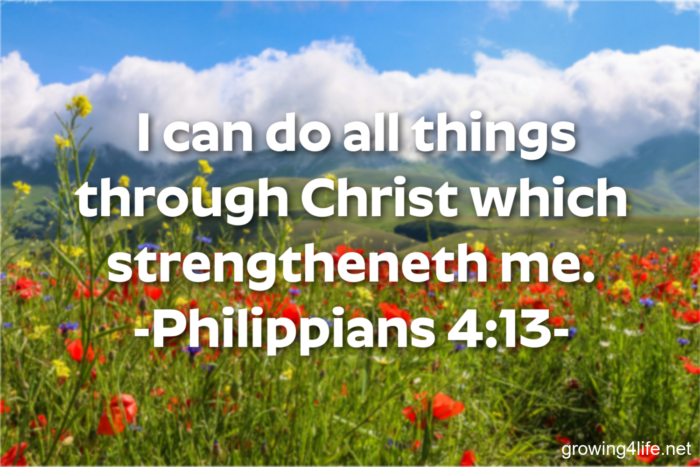
The verse was Philippians 4:13. Let’s be reminded of what this says–

 I can do all things through Christ which strengtheneth me.

Before writing this specific verse, Paul fills us in a bit on what has happened in his life and how He has been learning to be content, no matter what state he is in. He is able to be content in difficult circumstances because Christ gives him what he needs. And he is able to be content in wonderful circumstances because Christ gives him what he needs. Whether the need be material or it be an attitude–such as patience or humility–Christ supplies it. This is why Paul concludes this section with “I can do all things through Christ“. It is Christ who enables us to be content and to do the good works He has planned for us (Ephesians 2:10), no matter our circumstances.

Lehman Strauss, in his commentary on Philippians, puts it like this–

This is no idle boast nor is it the voice of one telling us that he always gets his own way. Rather it is the testimony of a godly man to the power of the indwelling Christ.

This verse is not a self-centered life verse that will enable us to do what we want. This seems to be where so many end up when they pull this verse out of its context. Instead, we must realize that this is about being able to do all that Christ has for us to do.

Again, Lehman Strauss, puts it so well–

But what does Paul mean by “all things”? Not all things we might like to do, but all the things we ought to do. If you have never taken lessons in flying an airplane, do not get into the cockpit and take off. I doubt very much if you would have a right to expect the Lord to give you a happy landing. I refuse to jump into water that is over my head, simply because I cannot swim. But in those things we know are required of us, we must learn to tackle them in Christ’s strength. Whatever we need, we must turn to Christ for its supply, and He will be in us the Power to do and be. To the weak He is Strength; to the ignorant He is Wisdom; to those lacking courage He is their courage; to the proud He is their Humility. Paul could be wanting for food and shelter without bitterness or complaint, but only through Christ. On the other hand he could be abounding in an oversupply of this world’s goods and not be conceited or proud, but only through Christ. The ability of Christ knows no inability; why not trust Him?

I’ve been thinking quite a bit about this self-centered “Christianity” that makes everything about US. No matter what subject we are discussing or what good work we are doing, we somehow almost always end up with “How will this affect me”? (Make me feel valued, give me self esteem, fulfill my dream, bring me glory or popularity).

One of the best things we can do for our Christian walk is to move from that kind of thinking and, instead, ask ourselves “How will this affect God”? (Will this bring Him praise and glory? Will it show His value? Will it esteem Him? Is this His will?)

God makes some really special promises to those who desire to live a life that is God-centered rather than self-centered. Philippians 4:13 is one of these promises. He will enable us to do what He desires us to do. He will enable us to live the way He wants us to live.

But this promise is not for the one who lives a self-centered life who treats God like a genie in the sky, believing He can be manipulated to give them their own way. This kind of life will only lead to heartache.

And, therein lies the beauty and uniqueness of the true and dedicated Christian life. When God is placed at the center, we are our happiest and most joyful selves. Serving God is what we were created to do. And, as Paul shows us in this chapter, this fills us with a contentment as no other thing can do. God has abundant promises and blessings for the one who seeks Him. These promises are throughout scripture and they are amazing and TRUE.

But these promises are only for those who want to live out the Christian life as God has laid down clearly in His Word. He desires we live a life of submission to His will and obedience to His commands. And, if we long to do this (although we will never do this perfectly), then we can be confident that God will give us the strength from day to day through Christ for all He has for us to do. It’s a beautiful promise and it will not go unfulfilled, for those that seek the Lord.

Choices

Every time my dog, Dixie, eats anything but a very specific type of dog food (and just a few very specific snacks) she gets sick. It’s inevitable. I’ve had many different dogs throughout my life but I have never had a dog with such a sensitive stomach. It’s so frustrating. She loves to eat…is obsessed even (as is typical for most Labrador Retrievers). And so before we can stop her, she scarfs down food left on plates on the kids’ table or scraps that fall to the floor from the high chair.

Last night Dixie ran to our basement apartment where my husband’s sister and family have been staying for a few days. Unbeknownst to us, she ate the dog food that was in a bowl on the floor for their dog. My sister-in-law mentioned this and my heart sank. When, in answer to my question, she assured me that it wasn’t the Purina brand of dog food I breathed a sigh of relief. Maybe she wouldn’t get sick. (Dixie seems to get especially sick with any food labeled Purina for some reason. My other dog lived a good long and healthy life eating Purina so no knocks on Purina. )

But, no, this morning I was rudely awakened by… well, you can only imagine. She got through the whole night but somehow couldn’t wait that extra few minutes for one of us to let her out. Ugh.

She made a choice to eat food that she shouldn’t have and, as always, she bore the consequences. And so did we. The consequences are never just hers alone.

But she loves, loves, loves to eat and so if food is available she will take it without care for the consequences.

Dixie is a dog. Of course, she has no process of logic or ability to think through what she is doing. She just does it.

But we humans–who do have this ability and can think logically– too often do this same thing, don’t we?

I ran into a friend recently who works for a charity organization. One thing she said has stuck with me: The people that need help are mostly in their situations because of their own bad choices. They are reaping the consequences of wrong choices.

And so are we all at some level.

Some kind of instant gratification comes from our choice to eat too much, yell at our spouse or kids, fill our minds with the things God hates, go places we know we shouldn’t go, buy that thing on credit that we can’t afford, or letting our kids spend hours and hours on tablets so they don’t bother us.

The problem is we’ve talked ourselves into the belief that there are no consequences for these choices. But that’s just not true.

An unkind word to our spouse or yelling at our children weakens our relationship; choosing to overeat on a regular basis yields an unhealthy life; filling our minds with the things God hates hardens our consciences and increases our love for the world that God says we are to turn from; lazily handing our kids a tablet instead of interacting with them will yield kids who are hampered relationally; and on and on this list goes. And these consequences often spill out on to others, making them pay for our bad choices.

Thankfully, God, in His awesome grace and abundant mercy, graciously keeps us from experiencing many of the potential consequences of our daily sinful choices. And so we don’t always experience the consequences we fully deserve. His faithfulness, despite our failures, is…well, it’s hard to express our gratitude for this, isn’t it?

But consequences are something we should always think about when we are making any choice, whether it be something that takes us weeks to deliberate (a new home or a career change) or it’s small (what we will watch tonight or how we will respond when someone in our family annoys us).

What is the potential consequence of my choice?

If you are like me, you are just not thinking about this question when faced with the daily choice of what to put in your mouth OR when you are feeling frustrated by someone and the words just come pouring out (or if you are the quiet type, the ungenerous and unkind thoughts fill your mind) OR when you feel exhausted and you just want to veg in front of the TV.

But as we mature in Christ, this should become something we ponder more and more. Particularly the aspect of how our choice will please God. Will my choice strengthen or weaken my relationship with my heavenly Father?

So much is clarified when we ask this particular question because I know that God hates when I treat my family unkindly or when I watch, read, or listen to something filled with the things He hates (and this is NOT just the things that are obvious but includes themes and ideology that are in direct opposition to scripture.)

As we head into a new year, I want to be more cognizant of my sinful choices and intentional about confessing them and asking God to help me. It is so very easy to fall into a status quo Christian life. This life is easy and demands nothing from us. But this isn’t really the Christian life that is in the Bible, where we are told to examine ourselves (2 Corinthians 13:5) and to prove or test all things (I Thessalonians 5:21).

This is not easy. Especially in a Christian culture that does not teach this. But, as Christians who want to live a life to please God, we must be intentional about these things. For they won’t just happen.

May we grow together in faith in 2024. Thanks for reading and being here for another year at Growing4Life!

So Quickly Forgotten

A few months ago, I was reading an old commentary on the pastoral epistles by an author with the name of Homer Kent. When I turned to the back of the book, I saw a photo of a middle-aged man that looked a bit familiar. You see, by the time I was acquainted with who this man was, he was president of the college I was attending. I thought he was old and, if I am blatantly honest…pretty irrelevant. As a naive college student, I had zero appreciation for all he had accomplished (and written). And yet, here he had made this really helpful contribution to the Christian world long before I was even born.

But, my guess is that very few of you have ever heard his name. He lived, he worked for Jesus, and then he died. Some of his works live on, but they aren’t popular or considered classics. I doubt most of you have heard of them, either.

A few weeks back, we attended an event at the Christian school where our kids had attended high school. When our kids were there we were actively involved and knew lots and lots of faces. But five years after our youngest had graduated, we knew few people. And even fewer people cared if we were there or not. We had gone from being an active part of the school family to being completely irrelevant.

Around the time of these two happenings, I saw an Instagram reel that talked about how we won’t be remembered in a hundred years. We are all so quickly forgotten. Even celebrities aren’t really remembered all that much. Do you know or care who was a movie star in the 1940s? Fame and popularity are just so fleeting, on whatever level we have it (national, community, church, school).

And, in fact, even our descendants will probably know very little about us. I know so little about my great-grandparents and next to nothing about my great-great grandparents other than their names. And I’d even have to think hard about that.

We live and we die and we are quickly forgotten.

And while this Instagram reel was focused on the joy of the daily life and encouraged it’s listeners to stop worrying about the things that are so temporary (“If it’s not going to matter in five years, don’t spend more than five minutes worrying about it”), I want to take a moment and consider this beyond even that wise advice.

What I write here today won’t matter to most people in the world. And, in fact, even few Christians will read this or care about it. And if the Lord tarries for another hundred years, this will have probably gone the way of many other written words through the centuries. With this in mind, it changes my perspective and my priorities.

And, yet the fruit of my labors may live on. The fruit of your labors, as well. If a person turns to Christ, it changes their legacy for forever. If a person’s life is changed through their study of the Word, they have an eternal impact on their families and co-workers and whoever God brings into their lives.

And I am, once again, reminded of Matthew 6:19-21 and Colossians 3:1-4. These verses remind us that we want to think on things above and build up our treasures there. If we can stay focused on this, then we can weather disappointing responses or hurtful remarks. We can handle rejection or just being ignored. We can stand strong through the antagonism and the hatred. Because these things are so temporary.

But as soon as we move our eyes to ourselves, we are so vulnerable. We get so entangled in our feelings and it strangles us and our effectiveness for Christ.

So let’s remember today what really matters and let’s encourage one another to love and good works (Hebrews 10:24). While the world may so quickly forget us, the impact of our work for Christ will live on. May we keep doing the good works the Lord has prepared for us and embrace the opportunities He has given us to share the Gospel and support and encourage fellow believers.

Let’s point people to Christ. Let’s direct them to the Word. And let’s work through those unpleasant and very temporary feelings we may experience as we work, through keeping our eyes on things eternal.

And, may we remember: While our names may be quickly forgotten on earth, the impact of our works for Christ will leave a lasting legacy on the families that turn to Christ and walk with Him because of our courage to speak up and our obedience to serve Christ instead of self.

To God be the Glory!


For by grace you have been saved through faith, and that not of yourselves; it is the gift of God, not of works, lest anyone should boast. For we are His workmanship, created in Christ Jesus for good works, which God prepared beforehand that we should walk in them. (Ephesians 2:8-10)

Scroll to Top