Family

25 Ways to Make 2012 a Great Year

As we anticipate the new year, we often make lofty resolutions or set impossible goals.  But sometimes small, thoughtful actions can reap wonderful rewards.  Here are a few simple ideas on how to make next year a great one:

1.  Smile.  A lot.

2.  Ask someone a question about their life.  Be genuinely interested.

3.  Don’t waste time or energy thinking about things you can’t change.

4.  So everyone has a bad day.  Find perspective and choose joy.

5.  Study God’s Word.  Simply reading it isn’t enough.

6.  Open your mind to a different type of music.  Try classical, jazz, or hymns.

7.  Try something new and interesting this year.  How about painting, photography, ice skating, gardening, camping, baking, running, or learning to play an instrument?  The ideas are endless.  And, for goodness’ sake, stop telling yourself you are too old to try something new!

8.  Read a book that goes beyond boy meets girl.  Read something that will deepen your understanding of humanity.

9.  Find ways to serve others.  Don’t waste your time, energy, or money trying to impress them.

10. Turn the TV off.  Only turn it on if you know specifically what you are going to watch.  Make a rule never to turn it on while your family is sharing a meal together.

11. When someone says something hurtful, don’t defend yourself.  Just walk away.

12. Listen to someone’s point before jumping in with your own opinion.

13. Make a budget and stick to it.

14. Only eat when you are hungry.

15. Pick one area you would like to see changed in your life and pray about it daily.  Watch God work.  He may change the circumstances or He may change your attitude.

16. Don’t try to change people.  Instead inspire them.

17. Stop hedging and tell the truth.

18. Visit a museum and take the time to read the displays and increase your knowledge of the world around you.

19. Appreciate the ordinary moments. Life can change in a heartbeat.

20. Train your mind to gloss over real (or imagined) offenses of the past, whether they happened 5 years ago or 5 minutes ago.  Grudges aren’t beneficial to anyone.

21.  Develop a relationship with an elderly person.  We can learn so much from their experiences.  Don’t be so arrogant to think  they couldn’t possibly understand you or your predicament.  Life hasn’t changed that much.

22.  Remember that every choice has a consequence.

23. Think before you talk.

24. Think before you act.

25. While you are thinking, ask yourself these questions:  Will this glorify God?  Will it encourage someone? Is it necessary? What will be the consequences of these words or this action?

As I was writing this list, I realized that there are some changes that I would really like to implement.  However, it almost feels impossible to make a permanent change.  But perhaps, instead of seeing the looming, overwhelming need for a permanent change, we just think about the next 24 hours?  Which of these can we work on today?  And then do the same thing again tomorrow.  Before you know it, a year has gone by and we have changed.

Can you think of other ideas I should have added to this list?   I would love to have your input on other changes we can all make that would make 2012 a great year – for ourselves and, more importantly, for those around us.


The law of imperfection


portable-03

The other night we had the blessing of going to our daughter’s Christmas Concert at school.  She was only in two numbers during the whole two hours, so we had kind of psyched ourselves up to get through the evening.  When we arrived, we found some good friends to sit by and proceeded to move to our chairs.  Except when we went to sit down, we found ourselves bumping elbows and hips.  The seats were so closely put together that it was almost impossible to sit comfortably.

I started to complain almost immediately.  “Who set up these chairs?  What were they thinking?”  I tried in vain to wiggle my chair to the left and then to the right.  It was so uncomfortable.  I turned my head to the end of the row.  Could we possibly inch the chairs to the left or right?  Nope.  No chance.  They would obviously be out of line with the rest of the rows and there was not an inch of space between any of them.  I sat back and resigned myself to sitting diagonally on my seat to get through what was going to be a very long evening.  My husband (whom I nicknamed “MacGyver” a long time ago)  came up with a great solution.  We folded up an unused chair.  Aahhh.  Space to sit comfortably.  We adjusted our chairs and actually enjoyed the rest of the evening, which was filled with the songs of Christmas.

But as I pondered on my reaction, I realized something.  I complained when the chairs weren’t set up correctly, but I wouldn’t have even thought about the chairs if they would have been set up in a comfortable way.  I would never have entered the row and exclaimed how lovely it was that the chairs were positioned so comfortably.  We could just have easily solved that problem (i.e. fold up an extra chair) without my unnecessary complaining.  Are complaining and negative words necessary for solving an uncomfortable or difficult dilemma?

So why this human tendency to focus on imperfection?  Why do we so often notice the bad stuff but tend to ignore the good stuff?  Why do we feel the need to complain and criticize when something doesn’t suit us?  Why don’t we notice how wonderful something is?  Why don’t we appreciate when something goes as planned?

We find this law at play in our company.  We have several hundred customers we service regularly.  I bet you can guess who we hear from most often. Yep- you guessed it!  The ones who are dissatisfied.  We are always so very thankful for those customers who take the time to write a note thanking us or to pick up the phone and call just to tell us how pleased they are with the work we did for them.   What a blessing to us and to the employees who did the work.

Let’s take this thought and apply it to our homes, shall we?  When was the last time we thanked our husband or wife for doing something good- or even something very routine- that we expected them to do?  On the other hand, when is the last time we scolded, criticized, or even yelled at that same person for doing something we didn’t like?  Play the same scenario out in your head with your children, your friends, your parents, your pastor, and your co-workers.  You see, it is applicable in almost every area we find ourselves in.

Sure, sometimes the negative has to be addressed.  I am not talking about the unhealthy choice of ignoring serious problems.   What I am referring to are the things we say that just do not need to be said.  It’s the unnecessary comment I made about the chairs.  It’s the negative comments we make about our favorite sports team, our children’s schools, the restaurant, or the store where we shop.  It includes the unkind comments we make to our close friend about someone’s hair…or clothes…or choice of dog…or how they use their money.  Unless it is a biblical issue and against a commandment we find there, does it really matter?

The Christmas season is upon us.  What a great time to encourage others and set a good example with our language.  Let’s edify one another with our words and comments as we gather together for Christmas celebrations.

Proverbs 10: 19 In the multitude of words sin is not lacking, but he who restrains his lips is wise. 

Colossians 4:6 Let your speech always be with grace, seasoned with salt, that you may know how you ought to answer each one.

Proverbs 25:11 A word fitly spoken is like apples of gold in settings of silver.

The blessing of a gift

Around this time of year, the choruses of “I don’t need anything” start to ring out across the nation.   Gift-giving becomes a burden.  Gift cards sell like hotcakes because we just don’t know what else to get that person who has everything.  When so many people are in need across the world, why do we buy anything for each other, anyway?   And, in a lot of ways, I agree with that statement.  But I think we need to take a brief look at a different point of view.

For several years in a row, someone at church gave us a hand-crocheted heart with a card thanking us for our service in the church.  I want to tell you about what that gift meant.   You see, serving in any capacity, whether as a parent, a teacher, a church worker, or an employer is a pretty thankless job.   The fact that someone took the time to write a note and crochet a heart meant a lot.  It meant that what we did mattered.

And what about gift-giving as a way to express our appreciation and love for someone?   We seem to have lost sight of that, as well.   Some of us have stopped giving gifts, period.   And some of us become so overwhelmed with our Christmas to-do list that we  just start buying whatever is convenient or perhaps we just end up stuffing some money or a gift card inside an envelope.  We do this instead of really thinking about the person and what kind of gift they would enjoy most.

I know a couple of people who literally suck all of the joy out of gift-giving.  Do you know anyone like that?  If they are around, they take all of the joy out of giving.  They tend to make you feel guilty for buying gifts, for giving gifts, for receiving gifts.

But they are missing the point.  Gifts aren’t necessarily about what we need.  Gifts are to show love, appreciation, and care.  I think we have this gift-giving thing all mixed up.  We rush around and feel burdened to “buy” a gift, instead of enjoying it.  Gift giving should be a blessing.

Think with me for a moment about your closest family and friends.  Have you expressed your love for them recently?  Think about those who serve you in some capacity…perhaps it is a mailman or a babysitter…a teacher or a crossing guard.  Do they know you appreciate them and what they do for you?  Think with me about your neighbors.  Do these people know you care?  (Do you care??)  Gifts do not have to be elaborate or expensive to make a statement.  They just need to be heartfelt and sincere.

And so it would be correct to say that many of us do not need anything.  But is that really the only thing that matters when it comes to giving gifts?  Perhaps it is time to start putting our hearts and some of our time into thoughtful gift-giving.   Let’s choose to bless someone this holiday season!


On purses and bad decisions


“Mom, can you cancel my bank card right now?” The distressed voice said quietly in my ear.  My mind quickly thought of a few scenarios that may have triggered this request, but I wasn’t expecting to hear that my daughter’s car was broken into while she and her boyfriend were delivering turkey dinners to the needy for Thanksgiving.

After a long and drawn out conversation with my bank to deactivate the card, I called my daughter back to get the longer version of what happened.  She had hidden and locked her purse in the car around 10am, when they had joined a group to deliver the dinners.  About five hours later she returned to a broken car window and a missing purse (along with a few other items).  Thankfully, she still had her iPhone and the car key.  But her favorite purse- a loss in and of itself- had contained a special key chain with all of her other keys, her glasses, her camera, her bankcard (with $300 stolen in a matter of hours), her license, and a number of other items hidden within the depths of that purse.

When she returned home, we had a long conversation about why it isn’t ever wise to leave your purse in a locked car in the city.  It wasn’t wrong–it just wasn’t wise.  If she had asked me (the older and wiser person in this case) I could have steered her in a different direction…at the very least I would have suggested she put it in the trunk.  While it caused some major inconvenience and expense, we all make mistakes and thankfully it wasn’t the end of her world.  You can get a new license.  You can get new glasses. You can buy a new camera.  And supposedly the bank is even going to return her money.

But it did make me wonder–how often could we spare ourselves consequences if we listened to someone wiser than ourselves?  Not only on the black and white issues that are clearly stated in God’s Word, but on the gray issues, too.

Some mistakes aren’t just inconvenient and expensive.  Some mistakes cost a lifetime…or a relationship…or your life savings.  Why are we so slow to ask for…and then follow…advice from someone older and wiser than ourselves?  Perhaps we don’t always need to learn the hard way.  What if there are people who learned through some very difficult circumstances and can tell us where our current path will probably lead?

That lady who married an unbeliever may tell you marrying an unbeliever is like playing Russian roulette.

The workaholic, now aware of his mistakes, may tell you that what he gained financially wasn’t worth what he lost in relationships.

The recovering alcoholic may tell you that it all started with a weekly trip to the bar.

The nagging wife may tell you that all her nagging got her was an unhappy marriage.

The recovering gambler may tell you that he would give anything to never have walked into a casino.

Oh, the wisdom that can be gained from listening to those who are older and wiser than ourselves.  But, no, we think it won’t happen to us.  We won’t become the alcoholic who destroys our family or the gambler that puts our family into financial jeopardy.  We think the person we marry will become saved… eventually.  We believe that “nagging is just my personality”.  Oh, we come up with all kinds of rationalizations, moving full speed ahead.

But do we have to always learn things the hard way?  Or does a wise person learn from the mistakes of others?  In fact, God’s Word, in Proverbs 19:20, instructs us to “listen to counsel and receive instruction, that you may be wise in your latter days.”   The person who shuts his eyes and proceeds to travel a dangerous path is going to fall.  It is not a matter of if…it is when.

Pride and stubbornness lead to heartache.  An unwillingness to listen to wise counsel leads to heartache.  And do you know what is the most heart-wrenching thing about this principle? It is that nine times out of ten–if the person would have just listened– they could have saved themselves such dreadful consequences.

As I write this, I think of a girl who just made this statement.  She has found herself in a terrible, awful mess.  About the worst you could find yourself in as a 22 year old.  And as she ended up tumbling down to the bottom of a very deep emotional chasm, she said to the person who had counseled her wisely several months before: “I should have listened to you.”  She wishes she would have listened to the wise counsel given to her.  But, for her, it is too late.  She has a long, dreary, difficult road ahead of her now.

We have one opportunity to live this life.  Only one.  And there is no guarantee on how long it  will last.  May we be wise and teachable.  May we learn from our elders.  May we not be so arrogant and naive to think we will be spared the obvious consequences of unwise behavior.  May we never think we are too old and wise to learn from the experiences of others. And most of all–may we desire to please the Lord in all that we do.


What’s It Like to Be Married to Me?

The title of this book caught my eye as I perused Amazon.  I can’t even remember what I was looking for…but it wasn’t a book on marriage.  But that title…it was a sermon in and of itself.  And I found myself really contemplating it.  What is it truly like for my husband to be married to me?  I have spent so many thoughts on what it is like to be married to him that I forgot the other side of the equation.

As I read Colossians 3 this morning, and then the similar passage in Ephesians 5, I realized something.  Oh, it was not a new thought to me, but God brought it to my attention this morning once again.   You want to hear my big insight?  Here it is:  I can only control me.  I can only control my actions, my thoughts, my words, my reactions, my heart, my mind, my body.  I am the only one who can control me and I am incapable of controlling anyone else.  This especially hits home in a marriage.

Whether my husband treats me wonderfully or badly…I still have a responsibility to respond in a way that pleases the Lord.  Whether my husband gets me roses or a vacuum for Valentine’s Day….I still have a responsibility to respond in a way that pleases the Lord.  Whether my husband gives me a back rub or a bag of laundry…I still have a responsibility to respond in a way that pleases the Lord.  You get the idea.

What is it like to be married to me?  I am not sure it is all that it should be.  In fact, I am sure it could be a much better experience for my dear husband.   May I continue to ask that question throughout the rest of my marriage.   It is my hope to be a blessing to my husband.  Sometimes we get so caught up in the busyness of life we forget to love and respect our husbands the way God instructs us in His Word.

And we could actually take a similar question and apply it to almost any of our relationships:

What’s it like to be my child?

What is it like to work with me at the office?

What is it like to be my parent? my sibling? my friend?

What is it like to go to church with me?

What if I was my neighbor?

What if I was on a committee with me?

If we find ourselves in a difficult relationship that is full of hurt and anger or just a stilted, uncomfortable relationship, perhaps this is a good place to start.  Let’s “put the shoe on the other foot”.  Let’s think about how we present ourselves–what kind of tone we use, our body language, our facial expressions. Let’s think for a moment what we may have said, how we may have acted or reacted, the expression or lack of expression that may have been hurtful or unkind.

I think, so often–at least in my life–I spend most of my time thinking about how the other person did something, said something, hurt me, etc.  instead of the reverse question.  Because, after all, it is much easier to think about the faults of others than my own faults.

And so, God continues to use His Word to teach me.   And sometimes He uses wise authors who, even by the title of their book, can speak to me.  I haven’t read the book yet (see link below) but I did buy it.  Because you are never too old to work on your marriage!

http://www.amazon.com/Whats-Like-Married-Dangerous-Questions/dp/1434700569/ref=tmm_pap_title_0?ie=UTF8&qid=1322698701&sr=1-1

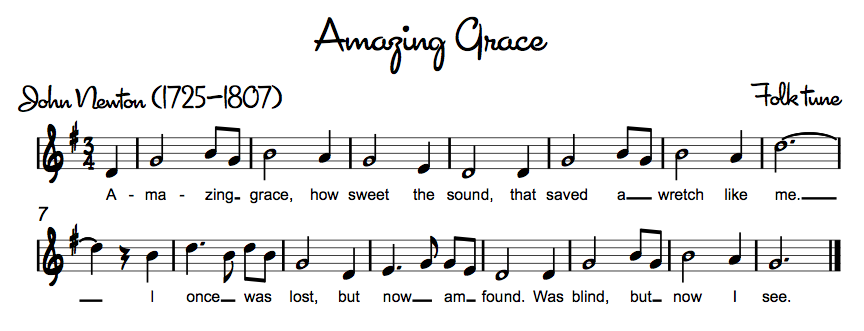
If I am so beautiful, then God’s grace isn’t that amazing

Amazing Grace recorder

We are taught in schools, songs, magazines, and on TV about how amazing and incredible we are. How we are worth it. How we deserve the best. Sadly, this lie has even infiltrated the church. We find this worldly philosophy peppering Christian bookstore shelves. I especially notice it on Christian radio stations. Accomplished vocalists crooning these love songs dedicated to ourselves. They tell me how beautiful I am. How important to God. How incredible and worthy of His love.

Can I shout it from the housetops? NO, I AM NOT. And neither are you. That is the absolutely incredible and amazing beauty of His love for us. We are wicked (Jeremiah 17:9), we are sinners (Romans 3:23), and we are blind (2 Corinthians 4:4). Who would want a wicked, sinful, blind person on their side? Who would sacrifice their Son for such a person? Who would love that person with a love so deep it can’t be fathomed?

And, yet, God’s Word tells me that He does. He loves me…not for who I am but in spite of who I am. We can only fully appreciate God’s amazing grace when we fully understand that we are truly and totally unworthy.

And, so, during this Thanksgiving season, I am deeply and especially grateful for a God who loves me in spite of who I am. I am thankful that He chose to redeem me. I am nothing without Him. It is only by His love and grace that I am able to be reconciled to God. It is of no merit of my own. I am thankful that He is changing me. I am thankful that His power enables me to do what He has called me to do.

And, so, I will continue to turn off the radio when I hear a love song to myself. I will continue to listen for this lie and make sure to teach my family to be on the look-out for it, as well. For there is nothing that cheapens grace more than raising ourselves up on some kind of platform thinking we have amazing talents and beauty that God longs for—and even needs.

Now, just in case, there is someone out there who says: “Wait a minute! I am not sure I agree with you,” I do want to say this: God loves us (John 3:16). He designed us (Psalm 139). He gave us each different gifts (Romans 12). We are to use them to glorify Him. We have to come to an understanding of who we are in Christ. If we have been abused or treated badly, this will be more difficult for us. It is still important that we realize that our worth comes from God alone.

And so I want to wish you a Happy Thanksgiving!  May we thank the Lord for His many blessings. But most importantly, may we thank the Lord today for saving us out of our lost and hopeless state, in which we had nothing of worth to offer. All praise be to Him alone!

O, to be Like a Crossing Guard

Each morning I pass by a busy intersection near our local middle school.  And every morning, I see the same lady faithfully directing traffic and protecting children. She stands with confidence and is dressed appropriately for the conditions, whether there is sunshine, rain, wind, or the dangerous fog.  She is observant and always on her guard because any lapse of judgment would put the children she protects in great peril.  And, given it is middle school children she directs, I can imagine that the “thank yous” are few and far between. She has also probably put up with a couple of obscene gestures and angry drivers, as well.  But she keeps doing her job. Because she is dedicated to that job and takes it seriously.

There are a few lessons we Christians can learn from crossing guards–

1. We, too, should know what our job is and do it with confidence. God’s Word tells us the “job” description of a true believer in Jesus Christ. We should know what that is according to scripture and then go about it with confidence. There is such an emphasis on tolerance in this culture, that many of us, while being and looking like true believers in our hearts and homes, are not so confident out in the middle of the intersection. Fearfully, we “kind of” tell those who don’t know Christ to slow down and consider their eternity, but we are afraid to offend anyone by saying “Stop! Do you know where you are spending eternity?”

2. We should stand strong in all types of weather. It is hard to do our job when tough times come. And tough times are not just the big stuff, like job change, death, or divorce. Sometimes tough times can be a long week of being unable to sleep at night. Or they may come with a child who is simply downright difficult. For some, it is related to children leaving the home or perhaps intrusive in-laws. We all have different weather conditions we face. But I think it is safe to say, we all experience different types of weather. Just like the crossing guard shows up and does her job, no matter what the weather, so we, too, should be standing strong with Jesus, no matter what the weather.

3.  We should be dressed appropriately. Ephesians 6: 10-20 gives a vivid description of the armor of a Christian. Paul describes how we should be covered from our heads to our toes. And, yet, so many of us are missing a piece of armor. Perhaps it is Truth that is to be girded around our waist, or maybe the Breastplate of Righteousness. It could even be the Shield of Faith. But no matter what it is, when we are missing our armor, we become very vulnerable to our enemy. Any chink in our armor becomes a target, where we can be attacked and destroyed. We need to make sure we have on the whole armor of God, as Paul teaches us in this passage.

4.  Apathy puts our children in peril. If the crossing guard was not paying close attention to what she was doing, the children would be in great danger. If she stood on the corner lazily smoking a cigarette, the intersection would become a difficult and very hazardous place for the children she has pledged to protect. Why is it any less important for us as we guard the hearts and minds of our children (and also for the baby Christians that are watching us)? We can never let our guards down. We can never stop striving to discern, protect, and make decisions that please the Lord both within our family lives and in our public spheres. There is no time this is tested more than when you have teenagers. Oh, the many times I have been tempted to throw my hands up in the air and shout, “I am tired! Do what you want! I don’t care!” At those moments, it is my husband who tells me, “we have to care! We cannot grow tired!” How thankful I am for his perseverance. It is critical to have this perseverance when raising children. To not have it is to put their souls in great danger. We need to parent with a purpose. We are responsible for these children God has entrusted to us. We can never grow apathetic or lazy in this duty! But this perseverance and purpose can’t disappear when our children are grown, it has to continue on as we strive to set a godly example for all those who come after us.

5.  We can’t care too much about what people think of us. As most of us have already learned, there is very little thanks that comes for standing what is right. More often, we are attacked. But if we are standing on God and what His Word says, then we can stand with courage and confidence. What would happen if that crossing guard walked dejectedly out of the intersection every time an angry driver made an obscene gesture? And, yet, so many of us walk dejectedly away when we are criticized or someone disagrees with us. While we are to be at peace with all men to the best of our ability (Romans 12:18), we are never instructed to compromise. So, while we need to go about standing for truth with love and grace, it is important that we stand. Not saying anything when God’s Word is being compromised is sinful. We can never afford to back down when Truth is attacked. May we stand strong even when the heat of the fire starts to burn us!

As Christians, we have been called to be salt and light. God gives us everything we need to know in His Word. May we be like that crossing guard, standing in all types of weather, dressed appropriately, and always persevering. May we give little heed to those who criticize us unjustly. And may we hear “well done, good and faithful servant,” when we meet God face to face.


The faith of a child

When I was around 9 years old, we had a miniature dachshund named Romeo that I loved dearly.  I don’t really think he loved me that terribly much.  But he was very patient with me, as I played with him, dressed him up, and basically tortured him.   If any dog, no matter what size, dared to cross our property line, he would run towards it, ferociously barking, and then back away and let our Labrador do the real work of keeping us safe.

For some reason I don’t remember, my parents decided it wasn’t going to work to keep him and they needed to find him a good home somewhere else.

I was heartbroken.  He left and we all moved on.  But I prayed that he would return.  I was 9.  I didn’t know that God “doesn’t care” about such things.  And so I prayed.

And then came that day, a few months later, when the phone rang.  It was the family who had taken him.  He was a great dog but some circumstance in their life prevented them from keeping him.  They wondered–do we want him back?  They wanted to check with us before they found him a different home.

As my mom and dad discussed this at the dinner table, they pondered what they should do.  About that time, I piped up in my childish voice, “I have been praying that he would come back!”

At that point what choice did they have?–as my mom laughingly points out when she retells the story.  And so, Romeo came back to live with us.

But I think we all learned a lesson that day, even my parents.   I had been innocently “casting all my care upon Him” (I Peter 5:7) and He was building the faith of a little child and her family by the unlikely and amazing return of a dog to its previous owners.  And when I think back upon that, even all of these years later, I view that event as a building block in the ever-increasing faith and trust in my loving Heavenly Father that has continued to develop over the years.

Do not ever think that God doesn’t care about the little stuff.  Oh, we don’t always get what we want and, often, those seemingly unimportant prayers will go unanswered.  But every now and then God will give us an answer so clear and so specific that we realize that it could have only been by His intervention and, once again, we are reminded that He knows all and He truly does care.

And so we thank Him for those obvious answers to prayer and realize that He is working, as only He knows how, even when we do not get the answer we want.  And we continue to trust and to cast our cares upon Him.  How thankful I am that He has shown me how much he cares, not only in my own life, but in the lives of others; not only about the important issues of life, but sometimes about the insignificant “stuff”.  If we have put our faith and trust in the God of the Bible and the message within its pages, then we serve a Living God! Praise be to Him.

Figuring out the alarm clock

SO…the other night I was trying to set the alarm on my new alarm clock.  I had finally splurged on an alarm clock that could play my ipod.  I don’t usually set my alarm and just get up when I hear everyone stirring.  But it was Saturday night and I needed to be the first one up the following morning.   I had been enjoying my alarm clock’s music capabilities for awhile, but I had no idea what I was doing when it came to setting the alarm.  At first, I half-heartedly turned around and started pushing buttons.  I quickly realized that I was going to need to put more effort into it.  At this point, I turned on the light and tried to figure it out.  When that didn’t work, I got out of my warm, cozy bed to hunt for the instruction manual.   I had intentionally put it somewhere that I wouldn’t lose it.   Now, understand, I am famous in my house for this.  Putting something somewhere so that it won’t get lost…and then not remembering where that place is!  As I searched through every possible drawer, cabinet, and cubby-hole that it could possibly be, I became more discouraged.   It was late and I obviously wasn’t finding the directions anytime soon.   So I did the obvious thing–I asked my husband to help me figure it out!

He spent some time looking at it and between the two of us, we tried to figure it out.  I am not really sure we ever did.  I think we set his alarm as back-up.  At any rate, I woke up on time.

But, it got me thinking…setting that alarm clock without the instruction manual is a little like living life without the Bible.  You try all kinds of stuff on your own power and intellect.  And you may figure it out…at least occasionally.  And you might get it mostly right…at least from the outside looking in..but you won’t really know what you are doing.

I have a lot of gadgets with instruction manuals.   I doubt I use any of them to their full power.  Why?  Because I have never sat down with the instruction manual to see what they can really do.  I do put the manual somewhere safe (usually!) where I can find it when I run into a specific problem…like setting an alarm!  I guess we can be a little like that, can’t we?  Putting our Bibles  on a shelf, where they can be found in case of an emergency.  And for church, of course.  And when we run into a problem, after exhausting all of our human resources, we may run to the shelf and find a verse that matches our situation and encourages us.  All of this–instead of abiding and walking with the Lord always.  May our Bibles be well-read, well-marked, and used every day!

Amazing what you can learn from a silly little thing like an alarm clock, isn’t it?

Ignorance Can Be Costly

pap airport

Our family observed the goings-on in the Port-Au-Prince airport around us with wide-eyed wonder. We stepped into the main building to hear a cacophony of voices in an unfamiliar language. We joined the mob waiting to go through customs.

As we looked around us, we saw black and white mingled together in one great mass of humanity. The place was hot and dirty and disorganized–nothing like any airport we had ever seen. We saw groups of matching t-shirts, signifying missionary or human aid groups coming to help the needy of that land. We saw Haitians coming home for a visit or perhaps returning from a trip to see a relative in America.

After what seemed like a very long time, we approached the customs officer. He took one look at our forms and handed them back to us. As we tried to understand the issue he was having with our paperwork, we were finally able to figure out that the problem was our daughter’s form, which she had completed in pink ink. He deemed the pink ink unacceptable, handed us a new form and a black pen, and shooed us off into a corner to re-do it.

Eventually, all six of us made it through customs and stepped into the area where we would find our luggage. Here, we found ourselves surrounded by pure chaos. Dark-skinned men moved with purpose, shouting to each other in Creole. The stench of body odor filled the air. We saw some travelers knowingly push through the pandemonium.  But other faces mirrored our own–lost and bewildered.

A man came and grabbed my husband by the arm. He steered him through the crowd to an area where he had all of our pieces of luggage gathered together. He clearly expected to be paid for this service. While it was a relief to find our luggage had all arrived safely, we would have preferred to find it ourselves in the good ole’ American way. But here we were.

My husband looked at me with a question mark in his eyes. I just shrugged my shoulders. I didn’t know how to handle this, either. The man who had gathered our bags took the $20 bill Eric held in his hand and then promptly turned it over to another man standing close by. He explained that this was his helper and he would split that among his other helpers. He then asked for money for himself. At that point, we just wanted to get out of there, so Eric gave him a $10 bill he quickly found. The man grabbed it and then took us outside to be handed over to more luggage handlers (or shall we call them money-grabbers?)

Do you know that by the time we reached the doors, the word had spread that quickly that rich, dumb Americans were on their way, that we were absolutely mobbed?! Like bees on a hive, we were swarmed by men of dark color, all grabbing at pieces of our luggage. There are some things you will never forget in life and this would be one of them. We had a vague notion of where we were supposed to meet our contact and so we clung tightly to our luggage as we walked uncertainly in the most likely direction. If it wouldn’t have been so frightening, it would have been quite comical.

By the time we were walking through a shade-tarped tunnel on the sidewalk, the money-grabbers had succeeded in taking the handles of some of our luggage. They would hold on to it for a short bit and then pass the luggage on to another man who would grab it. We were in shock–and, if I am honest, quite fearful, too. Finally, about half-way through this tunnel to the parking lot, a man told us that he knew “Jim”, the man we were supposed to meet. What a relief! Here was someone who could take us to the man we were looking for! We gladly surrendered our bags to him and he, quite characteristically, demanded money for the privilege of doing so. By that time, my husband had had enough. He handed him $10. The man argued that he had many men helping him and would have to split this teeny amount among them. After handing him $3 more, Eric looked at him and said “Enough!”  with a firm determination. I think the man knew he wasn’t getting more and turned around and started pushing our luggage to the end of the tunnel where we met Jim.

We left that airport $43 poorer. We found out later that the Haitians make a fraction of that amount after working a whole month! No wonder everyone wanted the privilege of handling our luggage!

Our ignorance had left us at a serious disadvantage. We left that airport poorer but quite a bit wiser. I guess that happens to all of us. But it is important we learn from these life lessons. I don’t think we will ever return to the Haitian airport and spend $43 again. But, if we ever go again, we will be prepared for the chaos of the airport and also have small bills in our hand instead of $20s and $10s.

We have to learn from life’s lessons or we are bound to repeat them.

But it is even better if we can learn lessons before it costs us. This can often be done by observing and talking with those around us.

I think this is especially true for young people. Older folks have learned so many costly lessons in life. There is great wisdom in old age. Life’s experiences teach us so much. Instead of scoffing and belittling those of old age, we should, with great respect, learn from them, so as to avoid the mistakes they made. Many parents and grandparents would appreciate the privilege of sharing some of their life lessons, if simply given the opportunity.

Let’s stay humble and teachable, no matter what our age, and in doing so, spare ourselves much pain and anguish. We will never be able to totally avoid trouble, of course, but in learning from others along the way, we can make our lives so much easier.

On this particular occasion, we learned our lesson the hard way.  Of course, in the process, we made some Haitians very happy!

Scroll to Top