Faith

The Value in Reviewing the Past
countrychurch

Most of us do not really care for history. We are taught little respect for the ways of those who have gone before us and we don’t really spend any time analyzing the mistakes and successes of our forefathers as we plan our own futures.

But as we are reading in Deuteronomy, we can see that Moses does exactly this. He recounts all that Israel has been through since they left Egypt as they now prepare to enter the Promised Land. In giving them hope and courage for the future, he is recounting the past. He talks of God’s faithfulness (Deut. 2:7; 3:3; 4:3)  and their faithlessness (Deut. 1:26, 32; 9:7-14). As he speaks of their past and their future, he keeps coming back this–Obey the Lord’s statutes and commandments if you expect to be blessed.  If you are reading the 2015 Bible Challenge along with me, you will have noticed this.

But why does Moses keep recounting all of their history? What good does that do? Let’s take a look at some reasons why it may be very beneficial to take a look back–

1. We can learn from the mistakes of those who have gone before us.

2. We can trace the hand of God’s faithfulness to those who belong to Him.

3. We can see the cause and effect of bad choices much more clearly– in other words, sin and its consequences.

4. We are strengthened as we read and contemplate the courage and fortitude of those who have gone before us.

In a lot of ways, a study of church history is a lot like what Moses was doing. When we look back at the birth and subsequent life of the church since its beginning in Acts, we can see its shortcomings, its compromise, and its sinful rabbit trails, but we can also see God’s hand protecting the Truth and providing courage and strength to the remnant that is proclaiming it, whether that remnant be great or small.

There is great value in history. I know so many of us have a distaste for this subject– mostly because of boring history teachers. I remember my church history professor in college. He was a nice guy, but he couldn’t have possibly made one of the most exciting subjects more boring. It wasn’t until I was teaching my own kids history as I home-schooled them, that I started understanding just how helpful (and fascinating!) this subject is. There is so much to learn from the past. God demonstrates this to us through Moses’s words in Deuteronomy.

Most of us are so busy that we don’t take the time to read of or think about any history at all– least of all our own. But may I encourage you to take a look back. For there you will see the faithfulness of God, guiding and directing His church and weaving the tapestry of your own life, drawing you to Himself and guiding you through both black tunnels and open field.  We have a heavenly Father who loves His church. And we have a heavenly Father who loves us–despite our shortcomings. We are blessed.


Deuteronomy 6:1-3  Now this is the commandment, and these are the statutes and judgments which the Lord your God has commanded to teach you, that you may observe them in the land which you are crossing over to possess, that you may fear the Lord your God, to keep all His statutes and His commandments which I command you, you and your son and your grandson, all the days of your life, and that your days may be prolonged. Therefore hear, O Israel, and be careful to observe it, that it may be well with you, and that you may multiply greatly as the Lord God of your fathers has promised you—‘a land flowing with milk and honey.’

 

The Bath House

OLYMPUS DIGITAL CAMERA

I am so ready for Spring! Last week we experienced just a touch of spring warmth, but yesterday it was cold and windy again–giving us the impression that winter just isn’t quite ready to leave. Perhaps a humorous vacation story will remind us of the warmer days ahead.

Last summer we vacationed in the beautiful Blue Ridge mountains. When we arrived at our campground, we realized that my parents’ campsite was much bigger than ours and decided to set up our nightly campfire there. It seemed unfortunate that this site just happened to be next to the bathhouse.

But being next to the bathhouse wasn’t only unfortunate, but it also had the potential to be quite entertaining– for on the first night around the fire we noticed a most curious thing!

The campground staff had put some kind of soffit on the outside wall of the building in about a 2-3 ft area from the top to the bottom of the bath house. This soffit had rather large holes in it,which we assumed were for ventilation.  And, while we could not see a thing during the day, night time was quite a different story! In fact, it gave us a clear view into the bathhouse. Which was not a problem if people got undressed and dressed in the private shower area. However, if they did not–well, let’s just say we saw far more of one old guy than we would have ever wanted.

After that incident, we purposefully and very carefully kept our heads turned away from the bath house when we sat around the campfire.

Obviously, we could only see the people changing when the light was on. If they had decided to get dressed in the dark, we would not have been able to see anything.

Perhaps this is a truth that also applies to our sin. Maybe this is why we like to stay in the dark. For in the inky blackness, our flaws and sins aren’t so glaringly bright.

When the bright light of Christ’s love and biblical truth shines its bright light into our hearts and minds, it is with a shocked awareness of our nakedness and shame. Often, at this point, we desire nothing more strongly than to move back into the darkness, where we can hide.

And, yet, only Christ makes standing in the light without any shame possible for us. Without shame. Not because we are so gifted and talented, but because He is so amazing. Not because we are sinless, but because He bore our sins on a cross at Calvary. Not because we are so lovable, but because of His wonderful grace and mercy.

This is why, as believers, we should love standing in the light. We are new creatures, unashamed to stand reconciled before God, because our sins have been exposed, uncovered, and then paid for by the blood of Christ.

I just love how 1 Peter 2:9 puts it: But you are a chosen generation, a royal priesthood, a holy nation, His own special people, that you may proclaim the praises of Him who called you out of darkness into His marvelous light.

We have been called out of darkness into marvelous light! How incredible is this?

One of my favorite worship songs, written by Charlie Hall, expresses this thought. Here is just a small portion of the lyrics–

Sin has lost it’s power
Death has lost it’s sting
From the grave You’ve risen
Victoriously

Into marvelous light I’m running
Out of darkness, out of shame
By the cross You are the truth
You are the life, You are the way

 So let’s keep away from the darkness and stand with firm steadfastness in the light–not on our own merit, but by the grace of God; not because of our good deeds but because of the cross.

Into marvelous light we’re running! Out of darkness, out of shame!


p.s. And for any who are wondering– we were sure to notify the camp staff of their very odd issue with the upper bath house :)


To Obey or To Disobey? (that is the question)

To Obey

Every person needs to answer this question early on in his or her life–

Will I obey (submit to) God’s commands or will I disobey (rebel)?

Therein lies the whole dilemma of man. Oh, many of us don’t even really think about it in these terms, but when we remove all of the “stuff” and the “dialogue” this is the crux of the matter. This is why some are so zealous to deny God’s existence. And why some are so passionate about discrediting His Word.

And, yet, deep within each of us is knowledge of the ultimate Truth (Romans 1:19-20). And we have a choice to make.

If this is the first time you are reading through the Old Testament, it can be a little overwhelming. There is so much about offerings and sacrifices and laws. It seems like not one area of daily life remains uncovered in the books of Leviticus, Numbers, and Deuteronomy. Along with the laws, we have been reading of Israelite censuses and their battles, idolatry, and travels from place to place. But right in the middle of it all is an amazing chapter. Leviticus 26. In our Bibles the words of this chapter appear to be more poetic and Psalm-like than the chapters before and after it, and yet, it reads like an explanation of perhaps the most basic law of all–

–If the Israelites will walk in God’s statutes and obey His commandments, He will bless them (verse 3).

BUT

–If they do not obey Him and do not observe the commandments, despising His statutes and abhorring His judgments, God will set His face against them and they shall be defeated (verses 14-17).

If you read the whole chapter, you will read even further details about what happens to the nation when it obeys and when it disobeys. As we continue our journey in the Old Testament, we will find out that, while God continues to have incredible love and mercy for this special group of people, the children of Israel experience much pain and turmoil because of their disobedience and idolatry.

So that leads to a rather natural question–

Is this a principal only for the Israelites or does it apply today? Does obedience have any correlation to blessing from God? And disobedience to struggles and hard times?

What do you think?

Personally, I tend to think so. No, we don’t have God speaking to us as we journey through the wilderness, but if we think about some of the lives around us, we can still see this law in place.

Think of someone who is not saved but lives a very moral life. They may be very religious or they may just have grown up with very moral, good parents. Whatever the reason, they actually follow many of God’s laws, even though they are not doing so for the same reason we would (to please our Savior). And yet, many of these good, moral people avoid so much heartache because they are following the commands God sets forth in His Word.

These people honor their parents, don’t lie or cheat or steal; they stay clear of debt and are committed to their marriages.

In doing so, they often reap the benefits of following God’s laws. God has set up our lives to work much better when we obey His commandments and we reap the benefits in the here and now — whether we are saved or unsaved. Of course, if we are saved, we reap even greater rewards for our obedience in the future.

Now think of someone who has made poor choices. They make a habit of lying. Or stealing. They drink too much or they run around on their spouse. Do you envy that person’s life? I doubt it. We can see clearly that most of the time, people reap terrible fruit when they make terrible choices.

This chapter 26 is really interesting to me. God shows very plainly that obedience brings blessing and disobedience brings His wrath. It seems so clear.

So why do we act so surprised when we shake our fist at God and tell Him that we are going to do things our own way and then reap the terrible consequences of our selfish, ungodly choices?

Until we make the choice to follow God whole-heartedly, committed to obeying His commands, we are going to struggle continuously and be defeated over and over again. And, as believers, we don’t have any valid reason or excuse to continue to live in sin, bearing the pain and unpleasantness that is eventually reaped from this choice, because God has provided everything we need to lead a godly life (2 Peter 1:2-4).

Let’s bring this a little closer to home. Most of you are not having affairs or getting drunk. Many of our sinful choices we Christians make are considered “non-sins”, especially when we compare our lives to the lives of the ungodly. But let’s talk about an example that is very familiar to many of us— our bodies.

We have the responsibility to take care of our bodies and yet, over and over again, many of us feed our body the wrong things or way more than we need. Some of us abuse our bodies by working too long and hard or not sleeping enough. Many of us are too busy or lazy for proper exercise. And a few of us may even struggle with abusive substances that are really bad for our bodies like cigarettes, alcohol, or prescription drugs.

However, I think we can all agree that until we treat our bodies in a way that honors God (Romans 12:1-2; I Corinthians 6:19-20), we will be in a continuous struggle. But if we submit our bodies– what we eat, how much we sleep, how many hours we work, etc.– completely to God, digging in His Word and praying for guidance, then this particular battle will wane and we will be able to rest easy knowing we have done our part in obeying God in this area of our lives. Along with that will often come a healthier body and mind, as this is the usual outcome of treating our bodies well.

Certainly, the blessings of obedience are not always tangible. We aren’t promised health and wealth. While in this Leviticus passage, we actually see that God’s promises the Israelites good harvests (vs. 4-5), safety and peace (vs. 5-7), victory in battles with their enemies (vs. 7-8), lots of descendants (vs. 9), to be their God and to walk with them (vs. 12), we must recognize that this was a very special group of people at a very special time.

We do not find the same specific promises given to us in the New Testament. Instead we find the context of keeping God’s commands wrapped up in the offering of our love. We obey because we love God. Over and over again, this is what we read in the New Testament. Check out John 14:15, 21; John 15:10; I John 5:3; and 2 John 1:6.

There are promised rewards, of course. We read of the imperishable crown or wreath (I Corinthians 9:25), the crown of righteousness (2 Timothy 4:8), that we will be bearers of much fruit (John 15:5), have mansions in heaven (John 14:2) and enjoy a deep, abiding fellowship with our Savior (I John 3:22-25).

And so we are left with our most basic decision–

Will we show our love by obeying God’s commands or will we choose to disobey?

Whatever we decide, we can be sure there will be consequences.


The Problem with Predictions

snow

It was 2:30am when my husband got home last night. Snow does that to his schedule. The problem with yesterday is that this one wasn’t really predicted. At least not in the way it turned out.

The predictions started out by calling for 1-3″ and then turning to rain with rising temps. A couple of hours later it was supposed to be less than 1″ before changing over. What ended up happening was over 3″ followed by some freezing rain and sleet with temperatures that never did really rise above the freezing mark.

That changes everything for a snow removal guy.

The night before this snow event, my husband was scanning through all of the weather forecasts — on tv, online, and using apps on his iPhone, trying to discern which one was correct. He usually goes with the one that is most popular. After all, if three or four weather forecasters are saying the same thing, they must be right, right?

Wrong.

Because no one really knows.

I often have to laugh about weather forecasts. Doesn’t it sometimes seem as if God is showing us how really out of control we still are? We are busy building our modern day technological Tower of Babel and He keeps knocking it down. We will never reach Him–at least not in that way.

But eventually, if you watch a lot of weather forecasts, you realize that they really are only educated guesses about what a certain weather pattern is going to do.

Because no one really knows.

The same could be said of what happens after we die. Where do we go?

There are a lot of theories about this. Some more popular than others. The most popular — at least here in the states is that we all go to heaven. That is, by far, the most pleasant option, isn’t it?

But the problem with predictions is that–

No one really knows.

And there’s another, much bigger, problem–

Truth is rarely found in the majority.

So how do we know what’s coming? What should we base it on?

As you probably already know, I base my answers on a Book. God’s Book. Sure, I don’t always like everything I read there. I would love to believe in a world where heaven is the final resting place for everyone and love is all that matters. But if that’s not the Truth, then it doesn’t really matter what I believe, does it?

Just because I believe it doesn’t make it true. I have to confess that this view on truth is really one of the strangest phenomenons in today’s world. Well, if you believe it, then it’s true for you. No, it isn’t! Just because you believe 2+2=5 doesn’t make it true. (Sometimes when I listen to people talk about truth I almost feel like I’ve landed in a parallel universe. This surely can’t be the same world I grew up in? It has changed that much.)

Truth isn’t subjective. It never has been and it never will be. What is true is true and what is false is false. You can be surrounded by a whole world telling you it doesn’t matter what you believe, but the fact remains that it absolutely does matter what you believe.

So why the Bible? How do I know that the Bible is true?

I could give you a lot of reasons (and will list a few articles after this post to get you thinking) but at the end of the day, I have chosen to believe that the Bible is God’s Word. Period. And, oh, how it has been confirmed for me in a myriad of ways– from how I see the end times scene coming together to how I’ve seen Him work in my life and in lives around me. It all makes so much sense.

From this, I base my whole belief system with confidence. It doesn’t really matter what other people think or believe, because I am standing on the Word of God. People can ridicule and mock me, but I cling to the Bible. I am standing on a foundation that will not move. As that old, beloved, hymn says–


How firm a foundation, ye saints of the Lord,
Is laid for your faith in His excellent Word!
What more can He say than to you He hath said,
You, who unto Jesus for refuge have fled?


In the end, it really just doesn’t matter what you believe or what I believe, does it? It doesn’t matter what has been predicted or what the majority says. The only thing left will be the Truth.

And that changes everything for all of us.


Here are some helpful and reliable resources–

How Do We Know that the Bible Is True?

How Do You Prove the Bible is True?

What evidence is there that the Bible is in fact God’s Word?

Can You Prove the Bible is True?

What must I do to be saved?


A Deeper Appreciation for Grace

117_0882r

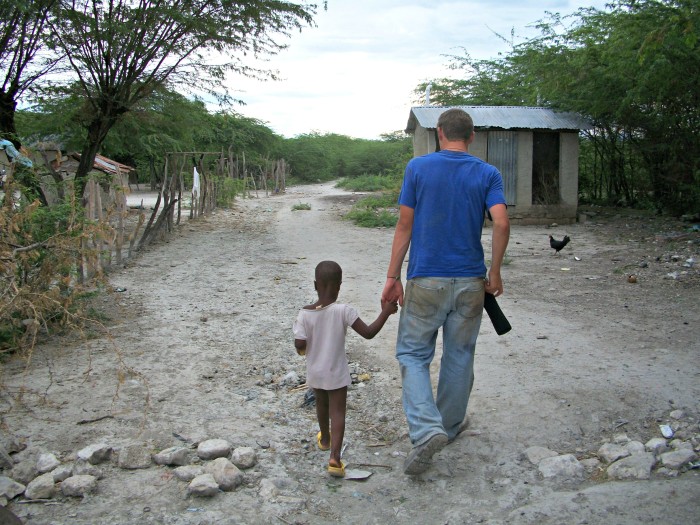
As we left the sounds and smells of Port-Au-Prince, we drove off into a dusty, drab landscape. I think I saw less than five wildflowers on our trip to the compound — not five plants filled with flowers–but five actual flowers. I counted. There was some green brush and weeds covering some areas and a few low-growing trees but that was about it.

When we arrived at the compound, it was to find out that we had no hot water, no soft place to sit, and the water tasted…thick. It had this weird texture from the chemicals needed to sterilize it. Our meals consisted of cereal with warm powdered milk for breakfast and rice and beans for lunch.

Be sure you understand that I am not complaining. It was an extremely nice place to stay in this needy, third world country and we were very well taken care of. And I am also well aware that there are some areas in Haiti that are quite lovely.

But through that week, I realized just how much I love my hot showers, sitting on my comfortable sofa after a long day, and the wonderful abundance of options I have when choosing what I want to eat or drink. I realized the precious blessing of going to the sink and being able to turn on a tap for clean, drinkable cold water and {almost} instant hot water. Do you really realize how amazing this is?? So many do not have this luxury.

I also realized that week just how much my soul is fed by the colorful landscape of my home state. Trees of all shades of greens abound and flowers in every color of the rainbow can be spotted simply on a trip across town in the summer. A trip to my local grocery store, nursery, or florist makes flowers and plants available all year round. Within a few hours in any direction, we can go to various lakes, rivers, streams, mountains, and even the beach for a weekend away. In fact, we even have the money to afford an occasional weekend vacationing in one of these spots. How blessed can I be??

The funny thing is that I am not sure I truly understood how blessed I was until I left my personal comfort zone and thought outside of myself. While a trip to another culture can help you see this very clearly, you don’t necessarily have to leave the country to discover this — a trip to your nearest inner-city, a good missionary biography, or a conversation with an older person who went through the depression or the war can also help you understand just a bit.

But it’s really hard to fully appreciate our blessings until we realize what life looks like without those blessings.

My experience in Haiti seems akin to how reading the Old Testament works in our lives as a believer. I know many people are quite satisfied to just ignore the Old Testament. They are quite comfortable in the New Testament and believe that all they need to know for the Christian life is held there. And I can honestly admit that I used to be a bit like that myself. After all, the Old Testament is filled with so much we don’t really understand and what we learn about God in those books can make us squirm. But as I was reading in Leviticus this past week, I realized that perhaps–

We can’t truly appreciate grace until we truly understand what life without grace looks like.

Of course, God has always provided a certain amount of grace to His people and provided a way to be reconciled to Him, but all of the sacrifices, and laws, and the specifics of the Tabernacle are so much to take in. This style of life is so foreign to us now. Interestingly enough, I recently watched a Frontline film (DVDs that show how the gospel is spreading in hard-to-reach places) that featured an animal sacrifice in Bangladesh. I found that especially interesting in light of what I have been reading. Some people are still sacrificing animals today to appease their god.

As I read all of the seemingly unimportant and very specific rules and laws, I ponder at their inclusion in scripture and yet God included them in His inspired, inerrant Word. There must be a reason. So what could that reason be?

I don’t presume to know God’s reasons, but what I do know is that the Old Testament is teaching me so much about God–who He is and what He’s like. I’m learning of His omnipotence, His love, His desire for my humility and obedience. I am learning the meanings of holiness and justice.

But, most of all, I’m learning what life looked like before Jesus died on the cross and provided a sacrifice for our sins.

As I read the Books of the law, *hymns like Amazing Grace, Wonderful Grace of Jesus, and Marvelous Grace take on a whole new meaning. I hope that, as you read through the Bible this year, you will notice that God doesn’t change, but through His incredible grace, He provided a way for us to be reconciled to Himself that doesn’t require animal sacrifices and obedience to detailed laws. This is amazing! This knowledge of life before Jesus’s sacrifice and resurrection leads us to a deeper and fuller appreciation of grace.

So let’s keep reading through the hard passages. It will not be in vain.


*Hymns are a wonderful way to grow in our faith.  Much doctrine and depth of thought lies within their lyrics. I hope that you will consider listening to them sometimes with your children or grandchildren. While I love all kinds of music, it pains me to see beloved hymns being removed from churches. They are more than “old-fashioned” songs. They are wonderful songs of testimony and doctrine. Few worship songs (and I have nothing against worship songs) hold a candle to a hymn’s depth of lyrics. Try turning your Pandora station to hymns occasionally or read some hymn lyrics as an addition to your devotional time.


Divisions Are Not Always Bad

cliff-ideas-sheep

As believers, we have seen great effort in these recent years to unite all religions that use the name of Jesus. We are told that if we do not agree with this, we are divisive and that we are committing perhaps the worst sin of all. Of course, it doesn’t seem to matter if the religion is based off the Bible alone or not, as long as they use the name of Jesus. This has been a struggle these past twenty years or so as we listen to popular pastors encourage us to partner with faiths that aren’t truly Christian.

In fact, the other day I even heard Rick Warren recommend we partner with Muslims, since we serve the same God. His mouth spoke those words. On the radio. Really?! And, yet, many people still look to this man as a godly leader. Let me state first that we, unequivocally, do not serve the same God as the Islam faith. Just because they serve one God and so do we, does not mean it is the same one.

So why this push for unity? Personally, I believe it is a puzzle piece that fits right into the end times scenario. The future power of the Antichrist will come much more easily with a global, one-world religion and we are seeing this take place right before our very eyes quite literally. Fifty or a hundred years ago, believers couldn’t have ever imagined joining with all different religions while ignoring major differences. And, yet, here we are today, being encouraged to join with other religions that don’t even use the Bible as the foundation of their faith. I wrote a post a little while ago about how easy it is for us to discern if a religion is true or false, so If you are wondering about that, you can find that post here.

Paul tells us in in 2 Corinthians 6:14–

Do not be unequally yoked together with unbelievers. For what fellowship has righteousness with lawlessness? And what communion has light with darkness?

This seems to make it pretty clear. But, if that isn’t enough convincing for you, I am including this by A.W. Tozer. How discerning he was way back when and how appropriate this is for us today–

Divisions Are Not Always Bad, A.W. Tozer

{italics are mine for emphasis. His insight is truly amazing!}

When to unite and when to divide, that is the question, and a right answer requires the wisdom of a Solomon.

Some settle the problem by rule of thumb: All union is good and all division bad. It’s that easy. But obviously this effortless way of dealing with the matter ignores the lessons of history and overlooks some of the deep spiritual laws by which men live.

If good men were all for union and bad men for division, or vice versa, that would simplify things for us. Or if it could be shown that God always unites and the devil always divides it would be easy to find our way around in this confused and confusing world. But that is not how things are.

To divide what should be divided and unite what should be united is the part of wisdom. Union of dissimilar elements is never good even where it is possible, nor is the arbitrary division of elements that are alike; and this is as certainly true of things moral and religious as of things political or scientific.

The first divider was God who at the creation divided the light from the darkness. This division set the direction for all God’s dealings in nature and in grace. Light and darkness are incompatible; to try to have both in the same place at once is to try the impossible and end by having neither the one nor the other, but dimness rather, and obscurity.

In the world of men there are at present scarcely any sharp outlines. The race is fallen. Sin has brought confusion. The wheat grows with the tares, the sheep and the goats coexist, the farms of the just and the unjust lie side by side in the landscape, the mission is next door to the saloon.

But things will not always be so. The hour is coming when the sheep will be divided from the goats and the tares separated from the wheat. God will again divide the light from the darkness and all things will run to their kind. Tares will go into the fire with tares and wheat into the garner with wheat. The dimness will lift like a fog and all outlines will appear. Hell will be seen to be hell all the way through, and heaven revealed as the one home of all who bear the nature of the one God.

For that time we with patience wait. In the meanwhile for each of us, and for the church wherever she appears in human society, the constantly recurring question must be: What shall we unite with and from what shall we separate? The question of coexistence does not enter here, but the question of union and fellowship does. The wheat grows in the same field with the tares, but shall the two cross-pollinate? The sheep graze near the goats, but shall they seek to interbreed? The unjust and the just enjoy the same rain and sunshine, but shall they forget their deep moral differences and intermarry?

To these questions the popular answer is yes. Union for union’s sake, and men shall brothers be for a’ that. Unity is so devoutly to be desired that no price is too high to pay for it and nothing is important enough to keep us apart. Truth is slain to provide a feast to celebrate the marriage of heaven and hell, and all to support a concept of unity which has no basis in the Word of God.

The Spirit-illuminated church will have none of this. In a fallen world like ours unity is no treasure to be purchased at the price of compromise. Loyalty to God, faithfulness to truth and the preservation of a good conscience are jewels more precious than gold of Ophir or diamonds from the mine. For these jewels men have suffered the loss of property, imprisonment and even death; for them, even in recent times, behind the various curtains, followers of Christ have paid the last full measure of devotion and quietly died, unknown to and unsung by the great world, but known to God and dear to His Father heart. In the day that shall declare the secrets of all souls these shall come forth to receive the deeds done in the body. Surely such as these are wiser philosophers than the religious camp followers of meaningless unity who have not the courage to stand against current vogues and who bleat for brotherhood only because it happens to be for the time popular.

“Divide and conquer” is the cynical slogan of Machiavellian political leaders, but Satan knows also how to unite and conquer. To bring a nation to its knees the aspiring dictator must unite it. By repeated appeals to national pride or to the need to avenge some past or present wrong the demagogue succeeds in uniting the populace behind him. It is easy after that to take control of the military and to beat the legislature into submission. Then follows almost perfect unity indeed, but it is the unity of the stockyards and the concentration camp. We have seen this happen several times in this century, and the world will see it at least once more when the nations of the earth are united under Antichrist.

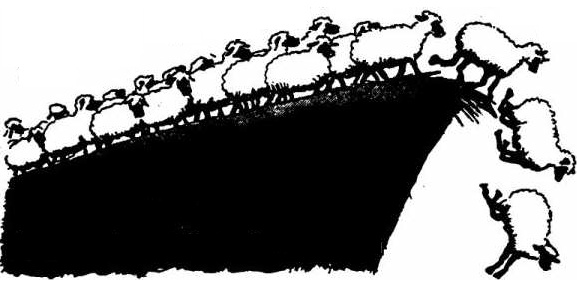
When confused sheep start over a cliff the individual sheep can save himself only by separating from the flock. Perfect unity at such a time can only mean total destruction for all. The wise sheep to save his own hide disaffiliates.

Power lies in the union of things similar and the division of things dissimilar. Maybe what we need in religious circles today is not more union but some wise and courageous division. Everyone desires peace but it could be that revival will follow the sword.

Grace and Introspection

Parting of the Red Sea

Sometimes we approach the stories we read in the Bible with a bit of arrogance, don’t we?

“Well, I would have never done that!”

or

“I can’t believe anyone could have acted {or reacted} like that!”

If you are reading along in the Bible Challenge, we have arrived in one of the most exciting books of the Bible–

Exodus.

In this book we witness God’s power through many different miracles, we see His care and protection for His people, and we read of God’s faithfulness and sinful man’s faithlessness.

It’s the faithless stories that drive me a little crazy. One of these is told in Exodus 14:10-12. Here’s what it says–

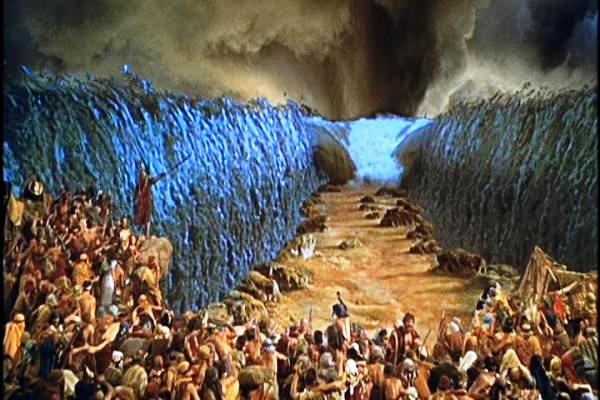
And when Pharaoh drew near, the children of Israel lifted their eyes, and behold, the Egyptians marched after them. So they were very afraid, and the children of Israel cried out to the Lord. 11 Then they said to Moses, “Because there were no graves in Egypt, have you taken us away to die in the wilderness? Why have you so dealt with us, to bring us up out of Egypt? 12 Is this not the word that we told you in Egypt, saying, ‘Let us alone that we may serve the Egyptians’? For it would have been better for us to serve the Egyptians than that we should die in the wilderness.”

My initial reaction when reading this was to condemn the Israelites harshly. For goodness’ sake, they had just lived through the ten plagues where they had witnessed miracle after miracle. They had seen the lives of their firstborn children and livestock spared, while the firstborn sons and livestock of the Egyptians were killed on one dark, dark night. There was only one explanation for how they could even be beside the Red Sea at that very moment and that explanation was God. God had worked miraculously to bring them to this point. They had seen it with their very own eyes!

And yet they doubted.

How could that be?

But then I remember times in my life when I do the same thing. Oh, it may not be in such dramatic fashion. I’ve never had the waters part for me or food fall down from heaven, but I’ve seen the hand of God work in mighty and wondrous ways– ways that defy circumstances and could never be called coincidental. And then, after all that, the impossible scenario comes along and I throw up my hands with questions and doubts, all the while wondering if God really does care for me.

One thing I have learned over the years is that when we are in our lowest, most hopeless place is when we see God work in the most incredible ways.

If we can do it ourselves and fix it ourselves and, through our own effort, solve our own problems then we have no need for God.

But when we reach that hopeless place–when we are smack dab against the Sea with nowhere to run and the enemy is headed towards us at breakneck speed-that’s when God shows His power!

Sure, we can criticize the Israelites’ reaction as they sat in that terribly hopeless place, but I am pretty sure we would have done the same thing. After all, we do do the same thing.

As we read through the Bible and even as we interact with other believers, let’s remember to do so with humility, love, and much grace. We don’t know how we would act in any circumstance, but one thing we can be sure of is that we are sinners, just like everyone else. And that fact alone should keep us humble and full of grace. And let’s keep our eyes open, because our God is still working in our most hopeless situations!


Where Were You?

happy-sunrise-morning-wishes-hd-picture

As a friend recently pointed out to me, Job is not only about suffering but it is also about the very nature of God. If you are still reading along with us in the 2015 Bible Challenge, we are just about at the end of Job. The book is filled with men giving their eloquent (and dare I say long-winded?) interpretation of why Job is suffering and their personal descriptions of God and life.

But finally God speaks. In Chapter 38, we hear God’s response to Job.

I am always put to shame with the words of God. It is such a lesson in submitting to God’s Sovereignty.

Where was I when the foundations of the earth were laid?

Have I commanded the mornings since time began?

Can I loosen the belt of Orion?

When we read God’s response to Job, we can respond two ways: Submission or Rebellion. There is no neutral.

So let’s move ahead many thousands of years. What does this have to do with life today?

As you read Job 38, can you understand why it was so critical to Satan that people stop believing in a 6-day literal biblical creation?

For when the world system undermines our belief in God as Creator and Designer, then it undermines our complete and total understanding of God, as presented in the rest of the scripture. This naturally leads to rebellion towards God, rather than submission.

Many Christians say it doesn’t matter if we believe in a literal creation or not. But it does. Job 38 is one of the reasons. If we don’t believe in creation, then Job becomes a poem to us– something that we can learn from and that sounds beautiful in a literary, symbolic sort of way instead of being the true, inspired Word of God. And when that happens, God’s Word loses its power in our lives.

This is a big deal. As believers, we need to understand the critical nature of believing in a literal 6-day creation. It is the foundation of the rest of the Word of God. And we know what happens when a foundation is destroyed– it isn’t long before the rest of the house comes tumbling down. I think we can already see this playing out in the modern-day church.

But let’s make this even more personal. How we deal with the unanswered questions we have as we read is very important. I have no doubt that you have many, after having read Job. There are just some really puzzling verses within this book of the Bible.

We can get frustrated as we read and start focusing on our questions, rather than on the words themselves.

When I asked my brother, Pastor Dean, a particularly burning question that several people have asked me about this book, he encouraged me to let my readers know that they should not worry too much about the unanswered questions, but instead focus on what we can know.

Last year while I was doing my first read-through of the Bible, I became aware of two things–

1. If I focused on the questions, I would stop reading. There are so many unanswered questions– particularly in the Old Testament. I had to allow God to give me insight into what He chose and stop thinking I needed to understand it all.

2. I also realized –and this is really important–that if I understood it all, I would be God. Do you get what I’m saying here? We live in this culture where we think we have to understand everything. The age of reason has affected us in more ways than we even know. And, while I don’t recommend living a life of ignorance, we do have to come to God’s Holy Word with an attitude of submission and humility, recognizing that we aren’t going to understand everything because He is God. And we are not.

And so let’s move on from Job assured that God is God. He is sovereign and does what is best, even when we don’t understand why. And while God does give us more and more insight, the deeper we dig into His Word, let’s remember that we are never required to understand it all, but only to submit and obey. For therein lies the key to the joy of the Lord and the peace that passeth understanding.


Unfinished Houses

IMG_3010rev

As we traveled through the Ukrainian countryside, I took in the scenery with amazement. For there, dotting the countryside in great numbers, were unfinished houses. Some of these brick structures were only half-built, but most looked almost finished, slowly fading in the Ukrainian sunlight as they waited for owners to fill them with life.

When I expressed my wonderment at this unusual sight– for there were many of these houses, not just a few– whoever I asked just shrugged their shoulders and said that the owners ran out of money. Apparently, after the Soviet Union broke apart, these bricks and other building supplies were available at deeply discounted prices and so lots of people started building these beautiful homes. But a functioning house is much more than the lumber and bricks of its shell. And so funds ran out and the owners walked away.

Because they did not count the cost.

I was reminded of this incident a few weeks ago in our Sunday School class. We are doing the Radical series by David Platt and he was talking about Christianity as Jesus defines it in the Bible.  It is very different from the cultural Christianity that demands nothing– that requires no sacrifice– that only needs a prayer to declare oneself as officially in the Lamb’s Book of Life. He used the following quote by John Stott. Actually, this is a bigger portion than he used, but it’s all so good, I wasn’t sure what to eliminate–

Jesus never concealed the fact that his religion included a demand as well as an offer. Indeed, the demand was as total as the offer was free. If he offered men his salvation, he also demanded their submission. He gave no encouragement whatever to thoughtless applicants for discipleship. He brought no pressure to bear on any inquirer. He sent irresponsible enthusiasts away empty. Luke tells of three men who either volunteered, or were invited, to follow Jesus; but no one passed the Lord’s test. The rich young ruler, too, moral, earnest and attractive, who wanted eternal life on his own terms, went away sorrowful, with his riches intact but with neither life nor Christ as his possession…The Christian landscape is strewn with the wreckage of derelict, half built towers—the ruins of those who began to build and were unable to finish. For thousands of people still ignore Christ’s warning and undertake to follow him without first pausing to reflect on the cost of doing so. The result is the great scandal of Christendom today, so called “nominal Christianity.” In countries to which Christian civilization has spread, large numbers of people have covered themselves with a decent, but thin, veneer of Christianity. They have allowed themselves to become somewhat involved, enough to be respectable but not enough to be uncomfortable. Their religion is a great, soft cushion. It protects them from the hard unpleasantness of life, while changing its place and shape to suit their convenience. No wonder the cynics speak of hypocrites in the church and dismiss religion as escapism…The message of Jesus was very different. He never lowered his standards or modified his conditions to make his call more readily acceptable. He asked his first disciples, and he has asked every disciple since, to give him their thoughtful and total commitment. Nothing less than this will do”
John R.W. Stott, Basic Christianity

I guess the deeper my relationship grows with Jesus Christ, the more I realize that much of what passes today as Christianity isn’t really true Christianity. This is such an unpopular message. And I can understand why! Because true Christianity costs us something. Yes, it’s a free gift, but it costs everything. But when our hearts are changed by the power of the Holy Spirit, our lives are transformed. This isn’t a begrudging obedience to God’s laws — a list of do’s and don’t’s that plague us and keep us from having any fun.

Instead our stone hearts start beating with love for the Father and following His will not only becomes a pleasure, but our main priority.

This brand of Christianity sounds so foreign to most of us. Even as I write, I realize this. And I wonder– what does this mean for all of us in this day and age? How does this kind of Christianity look in a Western culture where indulgence and comfort reign supreme?

All I know is that I am not walking away from an unfinished house. I will keep working and building until I die or my Lord returns. Yes, it’s hard. And yes, there is sacrifice required. Great sacrifice. There is turning away from the world, being unpopular with people, doing what’s right at all costs. It means we love and forgive even when we don’t feel like it. It means we stand alone if we have to. And that our time and resources are no longer our own. This does not sound all that appealing, does it? But when we read in the New Testament, we can’t help but conclude that this is what it’s all about.This is what Jesus demands of His disciples.

And, honestly, the costs for us are really nothing compared to so many of our Christian brothers and sisters. I can’t help but think of them as they give up homes, loved ones, and even their lives for the sake of Christ. I can’t help but wonder how comfortable, indulged America would respond in the same situation. Oh, may we be found faithful if (or shall I say when?) that happens to us!

If you have started your house of faith but are ready to walk away, please don’t. If the enemy of your soul is throwing arrows and you are just so tired, hang in there. Open your Bible and read Ephesians 6, put on your armor, and beg the Lord for strength to keep going. Let’s keep our eyes focused on eternity instead of the here and now. And, remember, God’s great power is shown best through our great weakness. You aren’t alone. Don’t give up. Keep building.


Why didn’t I ever see this before?

31118_000_016_02

I can’t imagine why I never noticed this before. I have read the story of Joseph and his brothers many times. And yet, I had never considered this one thing.

You see, I have always viewed this story from Joseph’s point of view. I have thought of how it would feel to be him—lonely, despised, framed, imprisoned. I have admired and respected his strong stand for God as he suffered many persecutions and rightly so.

But I missed one really important point. Until today.

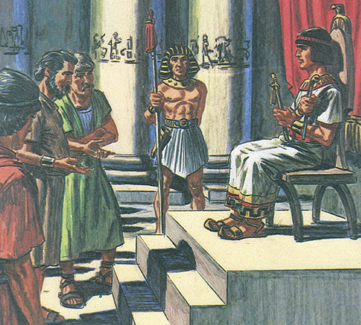
When Joseph’s brothers traveled to Egypt for food they were completely unaware that their brother would be the one giving them food. But we know as we read the story how it ends. And today I realized that God took something completely evil and not only rewarded Joseph but rewarded the evil-doers! God used the brothers’ gross sin against Joseph and actually turned it into something good not only for Joseph but for the brothers, as well.

I just never thought about that before.

I mean we often trust God to use the evil, hurtful things against us for good, but I guess I never thought about the fact that God can take something I did that was sinful to bring about something good for me.

Doesn’t this give us a different perspective about our past?

I guess as I think about this, it does make sense. For some of us have had the same thing happen to us—

-Out of sexual immorality came a beautiful child.

-Out of a broken marriage or a stay in jail came eternal salvation.

-Out of a rebellious youth, where we chose to marry an unbeliever, God drew us to Himself and rescued both for His glory.

We have seen these occur. And we see how God plucks some (not all) from the mire and mess they have made and blesses them.

I don’t know the hearts of the brothers. We know by some of their conversation that selling Joseph has weighed very heavily on their hearts for a very long time. It would seem that they are extremely sorry about what they did. (Genesis 42:21-24)

And so could it be that God will not choose to bless us until we come to a point of repentance, where we admit our guilt?

And, once again, we come upon that word humility. If there is anything I have learned through my Old Testament readings it is how much God hates pride!

And so, let us remember that God can use even our most wicked sin and turn it into something good for us. But, first, we need to have a heart of repentance and humility.

Now, the following is specifically for my Bible Challenge readers–

I hope that you are sticking with me on the Bible Reading Challenge. By now, it may be getting rough. You have read things that don’t make any sense and you are struggling. Or life has happened and you are behind a couple of (or more) days. I want to encourage you to keep going! You will be so glad you did! I promise you this. I also want to encourage you to focus more on what you do understand and the lessons you are learning from these stories than on what you don’t understand. You won’t understand everything but that’s okay. Just keep reading. Remember we are reading to know and understand God better–it’s not about us or our enjoyment of what we are reading! It may be helpful for you to read (or re-read) the most common Bible Study Trap, at this point.

Scroll to Top