
Family

Staying in Our Story

The other day I heard the phrase “stay in your story” and I’ve been reflecting on it ever since.

The phrase was said in reference to a persecuted Christian who spent years in prison and, as a very old man, was able to see his son actually serve as chaplain in that very same prison. Only God, right?

But only by “staying in his story” was he able to see the miraculous way God would work.

Obviously, there are times we must escape our stories. There are lots of reasons we must choose to leave a particular aspect of our story—heretical teaching, abuse, the future for our families, etc.

But, let’s put those very valid reasons aside for a moment and think on the ways we leave/change our stories every single day by walking away from people or situations. How often do we just escape our problems rather than facing them and learning from them?

This phrase has had me thinking about how much easier it is to walk away from a person or a situation than to stay in the thick of it and figure it out.

My husband and I will sometimes watch House Hunters International and, occasionally, there will be a couple who walks away from family and friends to go live on an island somewhere.

Sometimes that looks like a good option, right? Just leave. People are messy. Relationships are hard. Situations are sticky.

I am not implying that it is wrong for a couple to do this. I am sure some have really good reasons. But can I be honest? There are times when escaping to an island looks quite appealing to me and it isn’t for good reasons at all. I’m sure you have felt the same way at times.

Many times we find ourselves in situations we simply can’t escape and we can find ourselves “chomping at the bit” for a nonexistent escape route.

We live in a culture that tells us to run. If someone is “toxic” run. If you don’t have personal peace, run. If you aren’t happy, just…run.

If your spouse isn’t making you happy, run to someone else. If your church doesn’t do something the way that you like, just leave. If someone is annoying, just ignore them. If your friend hurt you, just avoid them.

Run away, leave, ignore, avoid…

But, yet, in doing these things, we don’t leave any room for God to work.

When we choose to stay in our story and have faith that God will work all things for our good and His glory (Romans 8:28) we leave room for God to work in amazing ways.

But, oh, that’s so much harder to live out than it is to type. And, in reflecting back on my life, I will readily admit that I have probably left people and situations that I shouldn’t have. And when I am in a situation I can’t escape, I can become grumpy and anxious. Oh, I have so far to go when I examine my heart regarding this particular subject!

Do you, like me, find yourself laying the same unsolvable puzzle or frustrating situation at the foot of the cross over and over again?

Sometimes—maybe even oftentimes—the way God changes a situation is by changing us. The verse that comes after the very popular Romans 8:28 is Romans 8:29, where we read that God’s purpose is to conform us into the image of His Son.

Frustrating people don’t generally become “un-frustrating” (only by God’s work in their lives is that even possible); Frustrating situations don’t generally disappear overnight.

But…

God will use these people and situations to work in our hearts. Puzzling, unfixable situations and frustrating, difficult people can teach us so much. We learn how to love unconditionally. We learn how to forgive. We learn how to offer undeserved grace to others. These situations release our grip from this world. They teach us to stop trusting in our own strength and help us understand how much we need God. Walking through these valleys will often cause us to evaluate what is important to us and…perhaps…show us what has become an idol in our life without us even realizing it.

When we stop making our comfort and happiness our idol and, instead, surrender our will to God’s and then turn to Him in prayer, seeking His will in His Word as we travel our dark valleys…well, this is when God will work in our own hearts and minds to conform us into His Son’s image.

I don’t know what you are facing today. I only know what I am facing today. May we both consider the value of “staying in our story” before we choose to run away.


Older and Wiser

Life is designed in such a way that the older we get, the wiser we become. Our experiences teach us more than any teacher ever could. And so, hopefully, as believers, we are learning not to be so hasty; when to speak and when to keep quiet; we are growing less angry and more forgiving. And the list could go on and on.

This not only should inform our daily living in a good way by changing our choices and decisions and even our thought processes but it also gives us insight for those that come behind us.

As I was reading in II Chronicles 10 last week, I came across this interesting passage. It’s regarding Rehoboam, who asked two groups of men—old men and young men— how he should respond to a question the people have asked him—

𝘈𝘯𝘥 𝘬𝘪𝘯𝘨 𝘙𝘦𝘩𝘰𝘣𝘰𝘢𝘮 𝘵𝘰𝘰𝘬 𝘤𝘰𝘶𝘯𝘴𝘦𝘭 𝘸𝘪𝘵𝘩 𝘵𝘩𝘦 𝘰𝘭𝘥 𝘮𝘦𝘯 𝘵𝘩𝘢𝘵 𝘩𝘢𝘥 𝘴𝘵𝘰𝘰𝘥 𝘣𝘦𝘧𝘰𝘳𝘦 𝘚𝘰𝘭𝘰𝘮𝘰𝘯 𝘩𝘪𝘴 𝘧𝘢𝘵𝘩𝘦𝘳 𝘸𝘩𝘪𝘭𝘦 𝘩𝘦 𝘺𝘦𝘵 𝘭𝘪𝘷𝘦𝘥, 𝘴𝘢𝘺𝘪𝘯𝘨, 𝘞𝘩𝘢𝘵 𝘤𝘰𝘶𝘯𝘴𝘦𝘭 𝘨𝘪𝘷𝘦 𝘺𝘦 𝘮𝘦 𝘵𝘰 𝘳𝘦𝘵𝘶𝘳𝘯 𝘢𝘯𝘴𝘸𝘦𝘳 𝘵𝘰 𝘵𝘩𝘪𝘴 𝘱𝘦𝘰𝘱𝘭𝘦? 𝘈𝘯𝘥 𝘵𝘩𝘦𝘺 𝘴𝘱𝘢𝘬𝘦 𝘶𝘯𝘵𝘰 𝘩𝘪𝘮, 𝘴𝘢𝘺𝘪𝘯𝘨, 𝘐𝘧 𝘵𝘩𝘰𝘶 𝘣𝘦 𝘬𝘪𝘯𝘥 𝘵𝘰 𝘵𝘩𝘪𝘴 𝘱𝘦𝘰𝘱𝘭𝘦, 𝘢𝘯𝘥 𝘱𝘭𝘦𝘢𝘴𝘦 𝘵𝘩𝘦𝘮, 𝘢𝘯𝘥 𝘴𝘱𝘦𝘢𝘬 𝘨𝘰𝘰𝘥 𝘸𝘰𝘳𝘥𝘴 𝘵𝘰 𝘵𝘩𝘦𝘮, 𝘵𝘩𝘦𝘺 𝘸𝘪𝘭𝘭 𝘣𝘦 𝘵𝘩𝘺 𝘴𝘦𝘳𝘷𝘢𝘯𝘵𝘴 𝘧𝘰𝘳 𝘦𝘷𝘦𝘳. 𝘉𝘶𝘵 𝘩𝘦 𝘧𝘰𝘳𝘴𝘰𝘰𝘬 𝘵𝘩𝘦 𝘤𝘰𝘶𝘯𝘴𝘦𝘭 𝘸𝘩𝘪𝘤𝘩 𝘵𝘩𝘦 𝘰𝘭𝘥 𝘮𝘦𝘯 𝘨𝘢𝘷𝘦 𝘩𝘪𝘮, 𝘢𝘯𝘥 𝘵𝘰𝘰𝘬 𝘤𝘰𝘶𝘯𝘴𝘦𝘭 𝘸𝘪𝘵𝘩 𝘵𝘩𝘦 𝘺𝘰𝘶𝘯𝘨 𝘮𝘦𝘯 𝘵𝘩𝘢𝘵 𝘸𝘦𝘳𝘦 𝘣𝘳𝘰𝘶𝘨𝘩𝘵 𝘶𝘱 𝘸𝘪𝘵𝘩 𝘩𝘪𝘮, 𝘵𝘩𝘢𝘵 𝘴𝘵𝘰𝘰𝘥 𝘣𝘦𝘧𝘰𝘳𝘦 𝘩𝘪𝘮. (II Chronicles 10:6-8)

Instead of heeding the wiser, older men, he decided to go with what the young men had said (which was to be harsh with the people).

In this case, the older men had a much wiser answer for Rehoboam and had he followed it, his kingdom would have had a very different ending. Following the wrong advice can change everything, just as it did for Rehoboam.

Of course, older men do not always give the best advice—especially in a culture where so many older men and women spend the last twenty years of their lives playing and selfishly pursuing their own desires.

But there is still a principle to be found in this story from the Bible. We spend almost the entirety of our lives younger than some and older than some, so what are principles we need to consider from this story as a younger person and as an older person?

We live in a culture that is a bit upside down. In the past, the wisdom of old age was valued and elderly men and women were respected. In the world we find ourselves in, it is youth that people listen to and it is the young people that are respected.

It wasn’t until the mid-1900s that youth culture took on a life all its own and became a force to be reckoned with. There were no “youth groups” in the 1800s. No Botox or plastic surgery so we could look “younger”.

While growing older always has had its challenges, there was no shame in it back in the day. It was just a part of life. No one was trying to be younger. They just were taking life as it came.

But we live in this culture where youth is admired and old age is despised. How do we live in this culture but not be “of it”? Since we are all both “younger” and “older” for most of our lives we need to ask—according to scripture—what are things we need to consider as a younger person and what do we need to think about as an older person?

First, it’s important that we consider what those older than us have to say. Particularly, those who are walking with God.

There are lots of foolish old men and women in this materialistic, self-centered culture. But there are also many wise men and women who love the Lord and have so much to offer those of us who are younger than they are. May we be humble enough to listen to what they have to say and take time to reflect on it.

Some of my dearest friends have been women considerably older than me. One was thirty years older and one was twenty-two years older than me. Both were incredible blessings in that they had so much wisdom to offer me, because they loved the Lord and had lived longer than me. If we still have our parents and they love the Lord, we will find that they are also a wonderful resource for godly counsel.

Older people just think about things we never even considered. They understand dynamics we can have no clue about. They have been through what we are going through and can look back and see what they did right and what they did wrong. Hind sight is 20/20 and they have the blessing of having the hind sight we can’t possibly have.

And so may we be humble and teachable and willing to learn from those who are a bit ahead of us on this path called life.

Second, may we be worthy counselors.

We are all older than someone. May we be studying the Word and growing more like Christ through our life experiences, so that we may be a counselor of value as we get older.

As I mentioned above, many older men and women live selfishly. But as believers, we not only must turn away from that, we must realize the absolute privilege it is to build into the lives that are around us. Many of us have children (and their spouses), grandchildren, and even great-grandchildren whom we can support and encourage. We have nieces and nephews, Sunday School children, young parents, co-workers, and our church families. There is always someone younger than us that can use some support and encouragement to honor and obey the Lord.

But before we offer any counsel…

It is critical that we are an excellent listener. Spewing unwanted and condescending advice will be never be a blessing to anyone.

Compassionate listening with a well-spoken word of advice as God gives opportunity is what we are after.


We can’t change the world, but we can change our own hearts and attitudes, can’t we? May we be willing to listen and consider the counsel of those who are ahead of us and may we be willing encourage and build up in the Word those who are behind us.

And, in doing these things, we will be obeying scripture and be living out the pattern that God established for His people.

Judgements, the Bible, and Incomplete Information

We all make judgments. We make judgments about what is beautiful and what isn’t. And about what is “normal” and what “isn’t normal”. We make judgments about whether someone is doing something right or something wrong; And about whether someone is doing something wise or something foolish. We all do it. And we all do this quite naturally, whether we speak our judgments aloud or not.

But there are two things that we believers really should consider before we pass judgment. Before I go on I’d like to mention that this is something God has been teaching me, oh so gradually, over the course of my lifetime and I am definitely not the same person I used to be. But I am still growing in this area. It’s so easy to write about something the Bible teaches, but learning to live it out takes a lifetime.

The FIRST thing for our consideration is this: Is my judgment based on God’s Holy Word or is it based on my opinion?

If it’s based on my opinion then does it really matter? What makes one opinion better than another?

Here’s a silly example (albeit a practical one). Let’s consider a woman’s shirt. Let’s say I notice a co-worker’s new shirt and I just don’t like it. It’s bright and loud in a color I do not care for and I find it very unappealing. Why is my opinion about that shirt better than the wearer’s opinion? And does it really matter?

Now, let’s take that same shirt and let’s say that it is cut very low and is very immodest. The Bible tells us to dress modestly (I Timothy 2:9-10). So now I am making a judgment between right and wrong which, in fact, we are supposed to do (Matthew 7, I Thess. 5:21-22, and others).

Judgments that are based on our opinions don’t always need to be said. But sometimes they do need to be shared. For example, in committee meetings or family gatherings, when a plan is being developed or a vacation planned. At that point, we speak up with the understanding that there is really no “right” or “wrong” in the situation but that our opinion is simply based on preference.

But what we do with our biblical judgments? Are we to speak each one? This is probably worth a post all its own but, for the sake of time and space here today, let’s just nutshell it in this way: True love discerns, through prayer, when speaking truth is appropriate and is willing to confront when necessary. A lot of harm has been done by parents, pastors, teachers, and others who were simply unwilling to speak biblical truth into the lives of others because they were worried about offending.

This leads to the SECOND thing which we must consider: Are we are aware that we may have incomplete information as to why someone made a choice?

This is not regarding the actual making of judgments but, rather, about our attitudes that accompany our judgments.

When we make biblical judgments, we make them based on our own life experiences. This leads many of us to give no grace, no mercy, no lee-way for other life experiences.

So, for example, someone growing up in a Christian home will naturally know the Bible better than a baby Christian who just got saved as an adult and is learning. Do we have grace for the baby Christian who is just learning?

Or another example is that perhaps someone made a decision for a very good reason but you, looking from the outside, are not privy to the reason for that decision and are judging them for doing something unwise based on your incomplete information. We don’t always know the facts and perhaps they didn’t do anything unwise at all.

Do we give people the benefit of the doubt? Or do we fall prey to having a “holier than thou” attitude?

We only have our life experience from which to form judgements. But it’s so important to recognize that our life experiences are not the gold standard. Only the Bible can and should inform all of our judgments.

And this should lead us to grace and mercy as we remember our life is not their life. And they may have challenges about which we have no idea at all. This doesn’t mean we don’t talk with them when we see sin or worldliness. It just means we have a humble, loving attitude that acknowledges we may not know everything.


So… what if a judgment is based on scripture and you find yourself concerned about someone you love? What to do?

Our natural response is to gossip or to make sarcastic, passive-aggressive remarks letting others know how we feel. The godly response is to keep quiet and go to that person personally and find out the whole story; find out why they made the choice they did and lovingly and kindly point to the scripture that shows that it is wrong.

Can you see why correct interpretation and honest hermeneutics of God’s Word are so critical to life? There are so many manmade “rules” and “laws”—rules and laws that man has created that are simply not in scripture. And there are also so many principles and commands that go completely ignored and neglected by professing Christians who love the world.

And can you see why it’s so important to be able to recognize an opinion-based judgment from a scripture-based judgement?


I have been judged for many things throughout my life. One that sticks out in my memory is being judged for drinking orange juice with my pop-tart instead of milk. Someone made me feel like a fool because of this decision.

As I reflect on that experience, which is over twenty years ago now, I find it such an unnecessary judgement. It’s a silly example but there are so many just like it that happen every day.

Judgments like this build walls instead of building unity. They create division instead of creating a loving, safe place to grow together.

Oh, that we may recognize the difference between our subjective, opinion-based judgments and objective, scripture-based judgments. May we handle any judgment in a loving, biblical manner that will support and encourage God’s family, rather than tear it down.

A Crooked Flower

Early this month, my husband and I had the wonderful privilege of keeping our four grandsons (ages one, four, six, and eight) while their parents went on an anniversary celebration trip. Now, just to be clear— we didn’t do it alone but had lots of help from other family members, for which we are immensely grateful. I wanted to take a few moments to talk about my weekend because I was reminded of something so very important.

On Saturday afternoon, my husband was with the four-year-old outside digging up potatoes and doing other various things that needed done. At one point, they came inside and my grandson came traipsing over to me in his muddy rain boots, holding out a flower. It was the broken, crooked piece of a fall mum but I thought it the loveliest thing in the world.

As I reflected on this moment (and on the whole weekend, actually), I was reminded of what a precious gift children are.

I was so dismayed recently to hear the dialogue of a TV show where a woman stated something like this: “I want to do something more important with my life than stay home and raise children”.

Oh, what a deception! Is there anything more important than raising the precious children that God gave to us?

Children, left to devices, tvs, and a school system that hates God, have been easy targets for those who seek to change a society. Especially in families that never talk about what little eyes are seeing and little ears are hearing.

So many moms and dads, busy and exhausted from their own commitments, have little time left over for their own children. What time they do have is taken up with sports and lessons and other activities. There is little time left for pointing little ones to scripture and teaching them the things of God. Little time left to counteract and rectify the wrong lessons and errant viewpoints they are absorbing from the world. Oh, how vulnerable these little children are to Satan’s subtle tricks and to the enticement of the world.

And what a valuable commodity. For children become adults who will either be for or against God’s Kingdom. What they learn as little ones is what they carry on into their lives. But for the grace of God, most will follow the examples given to them as children.

Oh, may we make make our children (and grandchildren, too) our priority. For all too soon (so soon!) they will be grown and raising kids of their own. The love and lessons given in the few short years they are at home will impact the generations coming after us for many years. How important it is that we do not let temporal good things keep us from the eternal best thing.

A crooked flower is one of the most beautiful things in the world, if we but choose to see. The glitter and gold of this world will fade away, but the things done for the Lord will never fade away.


That they may teach the young women to be sober, to love their husbands, to love their children, To be discreet, chaste, keepers at home, good, obedient to their own husbands, that the word of God be not blasphemed. (Titus 2:4-5)


I have no greater joy than to hear that my children walk in truth. (3 John 4)

Tiny Seeds Yield Lots of Fruit

I noticed an interesting plant springing up in the midst of the impatiens. At the one end of this flower bed next to the garage looked like what would be some type of squash or pumpkin. I remembered that my husband had thrown an old pumpkin there at the end of the season and forgot to remove it until much later. Could it be from that?

Before I could decide what to do, my husband had pulled the plant out. After all, we don’t want a pumpkin growing in the midst of our impatiens!

But when another healthy seedling sprang up, I asked him if we could just leave it grow. I wanted to see what it was and what would happen.

And so this summer we have a giant pumpkin plant at the front corner of our home, growing like…well, “like a weed”. It’s enormous (as you can tell from the photo above). It has a bunch of flowers and early fruit on it and looks like it will yield much.

Isn’t that so amazing when you stop to think about it? A pumpkin was carelessly discarded and spilled out its seeds and then one of those tiny seeds grew into this enormous plant filled with fruit?

What a great reminder! Those little seeds we carelessly toss around will do the same. Whether they be seeds of kindness or seeds of discord; seeds of self-discipline or seeds of laziness or addiction; seeds of anger and grudge-holding or seeds of forgiveness; seeds of doubt or seeds of faith; seeds of gratitude or seeds of complaint; seeds of worldliness or seeds of godliness… whichever seeds we choose to carelessly sow will spring up and turn into a plant that yields lots of fruit.

One of the biggest problems with our current culture is our lackadaisical attitude towards our future. We think only of today. But those seeds we are planting today will yield fruit in our lives and the lives of those we love. It would be best to really examine what seeds we are planting today. If we are going to be stuck with an enormous plant full of fruit, may it be a thriving plant of good fruit.

God tells us in His Word that we will reap what we sow—

Do not be deceived, God is not mocked; for whatever a man sows, that he will also reap. For he who sows to his flesh will of the flesh reap corruption, but he who sows to the Spirit will of the Spirit reap everlasting life. (Galatians 6:7-8)

Our lives and the lives of those around us tell us this truth, don’t they? You can’t escape the sowing of bad fruit. No matter how much we would wish to. Actions always have consequences.

But this principle also works in an opposite and wonderful way. If we sow good seeds, we will reap the fruits of righteousness and blessing.

The time to think about this is when we are young. Oh, we just have no idea how the seeds we sow will affect the rest of our lives and the lives of those we love. Many live with so much regret. But even as we age, it is never too late to start sowing better seed. It is just never too late.

Today is a great day for us to consider the seeds we have been sowing and to make a change. While none of us will ever sow seeds of righteousness always or perfectly, may that be our hope and may we work at this intentionally as we seek to walk with God.

(Update: For those of you who aren’t on Facebook, I just wanted to let you know that my husband’s surgery went very well. We are currently sitting in the hospital and as he sleeps, I decided to take a few moments and write. Thank you so much for your prayers!)

Life and Legos

Have you ever had assumptions made about you? People are really great at assuming. They assume they know your motives, your reasons, your “whys”. They make assumptions about choices and decisions. These assumptions are often fueled by rumors. Rumors that we are all too quick to listen to and pass along.

These rumors and assumptions can really get us down for we are rarely given an opportunity to defend ourselves.

Have you ever been faced with a terrifying bit of news? Of course you have. Whether it’s an unwelcome diagnosis from a doctor or a piece of news that comes to our ears through a news anchor, we have all had those moments.

These terrifying moments can bring on major fear and anxiety for they make us realize that we have zero control over what happens.

Have you ever been accused wrongly or unfairly treated? Whether it is through favoritism, a misunderstanding, or because of standing for what is right, these moments come to us all.

These unfair accusations can make us really angry, because, well…it’s just not fair!

Have you ever been broken-hearted or hopeless? Perhaps through the loss of a loved one, the betrayal of a friend, or the realization that you will have chronic pain for the rest of your life?

These moments of despair can make us depressed and zap all the joy from our lives because we just don’t feel like going on.

__________________________

I just finished reading the *biography of John Bunyan. He dealt with all of these things and more. As a young man, assumptions were made about him because he had been quite the wicked young man. The Lord got a hold of him and radically changed him but people just couldn’t forget the old man. He faced more trouble when his young wife died and left him with four young children to care for. Later on, he received the news of a prison sentence for a crime that wasn’t even a crime by the law of the land. It was totally and utterly wrongful imprisonment. While imprisoned, his precious Mary, his oldest (and blind) daughter passed away. When he was finally released from prison, his rabid opponents tried to stop his ministry through rumors and wrong accusations.

John found himself in a prison cell for twelve years. The religious wars in England at the time were ferocious and the tides turned every which way at any time. But, no matter which way it turned, his young wife (his second wife) found herself up against a brick wall in any effort to get him released.

Now, he could have grown depressed or angry. He could have ended up languishing in bitter disillusionment and unabated fury. But he didn’t.

Instead, he picked up quill and paper and started writing. And kept writing. And then wrote some more. His best known work is called Pilgrim’s Progress and is still a best seller among Christians today!

What was his key? Why could he continue on, despite the ill treatment and the heartbreak in his life?

There’s a small quote of his that shows us how he managed to do this. I have been mulling it over and over in my mind since I have first read it. I believe it is the key for us all–

“If ever I would suffer rightly I must first pass a sentence of death upon everything that can properly be called a thing of this life, even to reckon myself, my wife, my children, my health, my enjoyments, and all as dead to me and myself as dead to them. The second was to live upon God that is invisible.”

You see, he was putting scripture into practice. Paul basically told us this same thing in Philippians 3:8–

Yet indeed I also count all things loss for the excellence of the knowledge of Christ Jesus my Lord, for whom I have suffered the loss of all things, and count them as rubbish, that I may gain Christ.

And so we must realize that it’s only in releasing our grip on the things of this world that we can experience the peace and joy that God has promised. It’s only in surrendering our sense of fairness, our reputations, our family members, our health, our finances, our futures to God and His Sovereign will that we can conquer our fears, worries, anger, and despondency.

This brings to mind an example of this I saw just a few years ago lived out right in front of my eyes. How well I remember the calm acceptance of my brother and his wife as they faced the fact that her journey on this earth was winding down to an end. It is because they were learning to release the things of this life to grasp instead the bright shining eternal gift of Christ.

As believers, the more we die to self and gain Christ, the more we are victorious in our Christian lives.

This isn’t exactly what most want to hear. In our self-obsessed culture, we want God to fulfill our dreams and pour down blessings.

But the actual blessings we receive from God aren’t all that appealing to the carnal soul.

__________________________

The other week, my son came into the house and said, “We have lots of legos!” I was confused and followed him out the door. What I saw sitting in the bed of his truck were 5-6 boxes of varying sizes filled with legos! A customer’s children had grown tired of legos and she didn’t want to bother selling them, so she asked if we wanted them. My son loaded them up and brought them home. Thousands of dollars worth of legos.

When our grandchildren laid eyes on those boxes they grew wide with excitement. As we pulled one off the truck and they saw all of the pieces and parts and potential, they were thrilled. Particularly the oldest, who at six years old, could really appreciate them.

Now, to an adult or a small baby, eh… who cares. Legos are not really their thing, right? Not really considered that big of a blessing. And maybe even a nuisance.

But to a child? Wow.

I think God’s blessings are a bit like that. They don’t look all that attractive to the unbeliever. Forgiveness of sins and peace with the God of the Universe? Eh. Not all that important, as they yearn after the worthless “fool’s gold” of this world. Peace and joy in the midst of trial? But they want promises of NO trials.

It isn’t until we are saved that God’s blessings fill us with awe and appreciation. Because they are specifically for those who have placed their faith and trust in Jesus Christ alone for salvation and eternal life.

And so victory and blessing in the Christian life isn’t going to look all that appealing to the unbeliever or perhaps even to the immature believer.

It isn’t until we give up the temporal for the eternal that we begin to understand.


I wish I could say I am able to live out the truth of John Bunyan’s statement above. I wish I could say that God’s blessings are always enough for me. But, unfortunately, in my battle with my flesh and my {ever-loosening but still tight} grip on this world, I cannot. I can only write about it in hopes to encourage us all towards this ideal, knowing that God will faithfully continue His work in those of us who are His as we journey together towards the eternal city.


for it is God who works in you both to will and to do for His good pleasure.
Philippians 2:13


*A Pilgrim Path: John Bunyan’s Journey by Faith Cook. Highly recommend!


The Titus 2 Woman

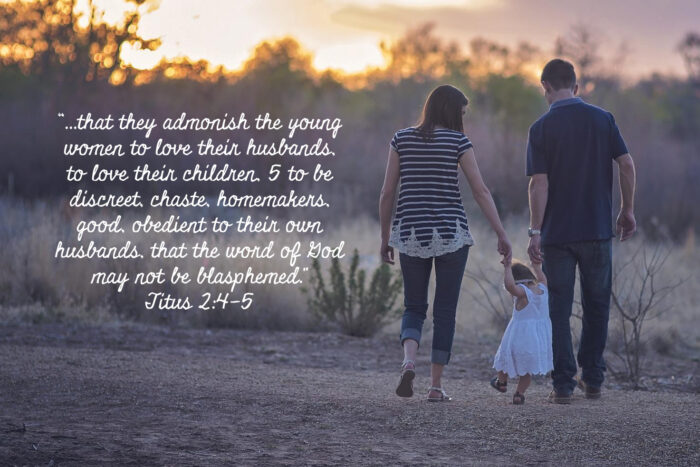
You can’t even read Titus 2:4-5 straight from the Bible without offending someone. Here’s what it says—

“…that they admonish the young women to love their husbands, to love their children, to be discreet, chaste, homemakers, good, obedient to their own husbands, that the word of God may not be blasphemed.”

As an older woman, my calling from God (see verse 3) is to teach these things to younger women. But this is not a popular thing to teach, is it?

“WHAT? Work at home instead of out in the work force? What a waste of my talent and God-given abilities!”

“WHAT? Submit to my husband? I know as much as him. That is absolutely archaic and unfair!”

But God has good reasons for His design for the family and we can see that when a society doesn’t follow them, there is much destruction.

He knows that children need their mothers. He knows that the home quickly falls into chaos if it isn’t the priority for Mom. He knows that women are more gullible and less rational then men (yes, there are exceptions but you know that, for the most part, this is true) and that men often protect us from bad choices. Of course, this works best when the husband is a loving leader who cares about His wife and her opinion, as she also brings much to the table in decision-making. But the husband, as the leader, is accountable before God for his family. I have always been glad I don’t have that role. I don’t envy my husband for it.

I am not here to tell you the “rules” for women working. I know that sometimes it is necessary. And I am no judge. It is a topic for much prayer.

I was tempted to not even bring this controversial topic up. There are strong feelings about this and pretty much no one touches it anymore. But we must take an honest look at what the Bible teaches. We can’t ignore it just because culture—both world and Christian cultures—despise this teaching.

And so I want to encourage you young women to take a look today at your priorities. God never designed a woman to be career-centered instead of family-centered. God never designed for our precious children to be cared for in daycare centers and public school systems, where God is mocked and denigrated. He never designed for the woman to lead the man. It is clearly true, both from scripture and historically, that families will not be the best they can be if they don’t follow the guidelines laid out for us here in Titus 2.

I also want to encourage us older women. Are we teaching the younger women these things in Titus 2:4-5, both by example and by our instruction as we are given opportunity? How much time do we spend talking about the things that matter with those younger women in our lives? Maybe it is time to lovingly and kindly encourage these struggling younger women. It’s a hard time to choose family over career. It is difficult to keep your children home with you and be criticized for it. May they receive much loving support and godly instruction from us as they choose to follow the Lord in this area!

It is FAR PAST time that we look to the world or even the church for the description of a successful woman. Don’t look to me or to anyone else. For the only thing that matters is: What does the BIBLE teach us about this? If we ask this question with a surrendered and sincere heart, God will hear and He will answer. This is true for all questions we have regarding this life. And He will transform our worldly desires into godly desires. It will be a small miracle right within our own heart. God loves us and is so faithful. We must but submit ourselves to His will and His plan and choose to obey His commands as written in His Holy Word to experience the peace and joy that He has promised. And that is the only “success” that truly matters!


Considering Our Legacy

The other day I was paging through an old photo album. I got to the page which held the sepia-toned likenesses of my great grandparents. I took a moment and stared at those eight faces. All but two of them were gone before I was born. The two that were alive died when I was a young child. Those eight people are strangers to me. I have little recollection of them nor did they have any input in my life.

Or did they?

They must have. For they shaped the grandparents that would shape the parents that would shape me.

But two generations later they are simply photos to those who come after them. There aren’t even memories to warm my heart as I look at their photos.

I think of this as I consider the children of my grandchildren. I will most likely not have any great impact in their lives. If God would so bless me then, for sure, that blessing would end by the time the great-great grandchildren came along. You see, we are always just a couple generations from being forgotten.

I was struck by this same brevity and insignificance as I have been reading Daniel. As God gives Daniel prophecies of the things to come, it brings to mind just how small I really am. It is both humbling and important to remember that the world doesn’t revolve around me. Most of us will die less than a hundred years after we are born and the majority of us will go unremembered in the annals of history.

But there is much we can do to bless future generations. We are given this precious opportunity to shape our children who will then shape their children who will then shape their children and on and on it goes.

So often, godly heritage is lost as the following generations go on a downward spiral. Whatever you choose to do, your kids will go just a step further, and on and on, until the future generations are lost to worldliness and immorality.

While we surely can’t stop this from happening, we can do our best to keep it from happening.

And I am reminded once more of the critical nature of following hard after God. We get lazy and we think our choices to not study the Bible or to remain prayerless for weeks on end affect only us. We somehow believe our choices to sin or to compromise are personal choices. But these choices echo into the halls of eternity through those that come after us.

Our daily choices are, by God’s very design, affecting future generations.

In light of this, we are led to a very important question–

Am I living life in a way I want my children and grandchildren to emulate?

So many people are just living for themselves these days. It’s the way of the world. As believers, we need to set a much higher standard. We need to not only live for Christ, we need to strive to be like Him. We must be intentional and single-minded in our submission and obedience to God.

Of course, we are reminded of God’s marvelous grace when we remember that some of you have been plucked right out of your worldly, ungodly families to be saved for God’s glory and His purposes. How awesome is that? You actually get to be the beginning of godly heritage for those future generations that come after you. What a privilege!

And, while setting a great example is of utmost importance, let’s also remember the critical nature of passing on the baton of godly heritage through communication. Let’s talk about the things that are of eternal significance with our kids and grandkids. Let’s point them to the Word, explaining why it is our only true anchor in this life.

We also can’t underestimate the power of prayer as we consider the future generations. Many years ago now, I started praying that the generations after me would grow stronger rather than weaker. It has been an awe-inspiring thing to watch God begin to answer that prayer as my kids grow–and that despite the many weaknesses and sin struggles of their parents. I didn’t realize until recently that my mother has been praying the same thing for her kids and grand-kids for many years. Prayer is an invaluable blessing, given to us by God.

So what if you don’t have kids? Does that give you a free pass in this legacy stuff? We know it doesn’t. There are young people around you that need a godly example. You can support godly parents of children you know by confirming what they are trying to teach their children. You can come alongside a child or teen that sadly lacks a godly example in their lives. How many people have been affected by godly men and women who are unrelated to them because that person reached out and gave them the gift of time and wisdom?

God will give all of us ample opportunity to build our legacies, if we will just look for the opportunities.

I don’t know how long we will be on this old earth but, for however long it is, may it be our deepest hope and ongoing prayer that the generations coming after us desire nothing more than to know Christ and to make Him known. May they stand firmly on the Solid Rock, be full of faith, and be bolder, stronger, and wiser than we are.

Because, as we watch the crumbling world around us, it’s pretty clear they will need to be.

____________________________________

Praise the Lord!

Blessed is the man who fears the Lord,
Who delights greatly in His commandments.

His descendants will be mighty on earth;
The generation of the upright will be blessed.

Psalm 112:1-2


What Do They See?

This past week, when I was at Target, I noticed a line of men about ten or fifteen deep snaking towards the back of the store. Without obviously staring, I assessed that they all seemed to be somewhere in their twenties and thirties.

I looked around to try to figure out what they were waiting for. Finally, my curiosity got the best of me and I asked a store clerk who stood nearby.

“Oh, some new Pokémon cards or something are coming out today.”

Wait. What? Grown men waiting for Pokémon cards? Are you kidding me?

The clerk at the check-out counter elaborated further. Pointing over to the lady who was restocking the shelves, she informed me that the men weren’t allowed to go to the shelves until they were fully restocked.

While I can’t know the story behind why any particular grown man was in that line (maybe it was for his kid?), the fact that there was a line of grown men waiting to purchase something that was designed for children was mind-boggling to me.

These full-grown men who are still interested in the toys of children stand in stark contrast to the three men of Daniel 3. Some commentators estimate that the incident in this chapter happened around 15 years after they were taken as exiles into Babylon. That would put Shadrach, Meshach, and Abed-Nego around thirty years of age.

They had left childish things behind many years before. While only teens, they had had to make the difficult decision not to eat the King’s food out of their loyalty to God. They were already thinking about what is most important and who gets their allegiance.

When, years later, they were faced with the choice to bow down to the golden image as Nebuchadnezzar demanded or to stay true to God, they were prepared.

You have to just absolutely stand in amazement of these men as they answered Nebuchadnezzar’s demand for worship and consequential threat of the fiery furnace—

 If that is the case, our God whom we serve is able to deliver us from the burning fiery furnace, and He will deliver us from your hand, O king. 18 But if not, let it be known to you, O king, that we do not serve your gods, nor will we worship the gold image which you have set up. Daniel 3:17-18

As I reflect on these three young men and the stand they took for the Lord, I can’t help but think of the men who stood in line for… cards.

The world is so obsessed with the things that do not matter.

And the world is teaching men specifically to never grow up. For a man captivated by a world of video games, sports, and children’s toys are men who are rendered ineffective in their families. If they are believers, they are rendered useless for Christ and stand unprepared to face the hard trials ahead.

Instead of digging deep roots of faith through prayer and Bible Study, they squander countless hours on their idols that matter not a bit in the scope of eternity.

Oh, what a sad, sad state this is. While we can expect this kind of thing from the young men of the world, how utterly devastating to see this in the life of Christian young men.

This leads us to consider our own role in creating godly character of the young men (and women, too) in our lives. Are we teaching them to love and serve the Lord above all else? As parents and grandparents, are we teaching them by our words and deeds to reflect and care about the eternal things of life?

Or are we ourselves obsessed with the stuff of life that just doesn’t matter? Education, entertainment, hobbies, popularity, careers, material possessions, recreation, health and fitness…all of these things (and so many more) can so easily become idols in our lives, replacing the eternal with the temporal; replacing what is everlasting with what is short-term; replacing our love for God with our love for ourselves.

Most of the things listed above are not wrong in and of themselves. It’s the obsession that brings the danger.

May we be like those three men in Daniel 3–turning away from those ungodly idols that would demand our time and attention and digging deep roots of faith so that we are fully prepared to take a stand for God and truth when necessary, no matter the cost.

Our kids are watching. Our grandchildren are watching. Our family and friends and co-workers–they are all watching. What will they see?

Will they see that we are sold out for Christ or will they see a person obsessed with something that just doesn’t matter?

What do they see?

It Starts With Us

It seems like we live in a world where everyone is offended by something. They are offended by things you did in the past. Things you are doing now. And even who you innately are. They are offended by your words, by your actions, and by your choices.

And, just like a snowball that grows in force and speed as it rolls down a hill, so, too, this world where everyone is offended is growing quickly in epic proportions. (The snowball actually started a long time ago. We are simply watching it hurl towards the bottom of the hill now.)

But, as the church, are we really any different? It seems like we find the same dynamic there. People are offended because they weren’t asked to be on a committee or invited to a get-together. They are offended because the pastor doesn’t talk to them or didn’t say what they thought he should say. They are offended because something they donated years ago has been replaced. They are offended because the lady in the hat sings too loud.

It’s in families, where offended parties avoid each other. Where criticism reigns freely but grace is in short supply. Where differences of opinions about politics and religion and money cause chasms that can’t seem to be crossed.

It seems like anywhere we turn, people are just offended these days.

So how can we change this? Obviously there is little we can do. But there is a little we can do.

We can start with ourselves.

We can intentionally choose to not be offended. To let things roll. To give people grace. To stop being worried about ourselves and how we feel.

That’s the bottom line, isn’t it? Offended people are often consumed by themselves and how they feel.

Speaking from my own experience, when I feel offended, this is why. My pride or my feelings have been hurt and I am purely focused on myself.

But Christianity calls for the exact opposite of this.

God calls us to cast self aside and to esteem others better than ourselves.

Philippians 2:2-4 Let nothing be done through selfish ambition or conceit, but in lowliness of mind let each esteem others better than himself. Let each of you look out not only for his own interests, but also for the interests of others.

God asks us to treat others like we would want to be treated.

Luke 6:31 And just as you want men to do to you, you also do to them likewise.

God tells us to love our enemies and to pray for those who persecute and use us.

Matthew 5:44-47 But I say to you, love your enemies, bless those who curse you, do good to those who hate you, and pray for those who spitefully use you and persecute you, 45 that you may be sons of your Father in heaven; for He makes His sun rise on the evil and on the good, and sends rain on the just and on the unjust. 46 For if you love those who love you, what reward have you? Do not even the tax collectors do the same? 47 And if you greet your[p]brethren only, what do you do more than others? Do not even the[q]tax collectors do so?

God loved us so much that He sent His son to die for our sins. We are to respond to this gift with love–both for God and for others.

Mark 12:30-31 And you shall love the Lord your God with all your heart, with all your soul, with all your mind, and with all your strength.’ [l]This is the first commandment. 31 And the second, like it, is this: ‘You shall love your neighbor as yourself.’ There is no other commandment greater than these.”

We get a good description of this love in I Corinthians 13, where we read that it is long-suffering, doesn’t seek its own, and is not provoked (ESV version uses the word “resentful”).

I Corinthians 13:4-7 Love suffers long and is kind; love does not envy; love does not parade itself, is not [b]puffed up; does not behave rudely, does not seek its own, is not provoked, [c]thinks no evil; does not rejoice in iniquity, but rejoices in the truth; bears all things, believes all things, hopes all things, endures all things.

In fact, loving our Christian brothers is so important that we are told that we are a liar if we say we love God but hate a brother. Think about the ramifications of that for a moment.

I John 14:20-21 If someone says, “I love God,” and hates his brother, he is a liar; for he who does not love his brother whom he has seen, [d]how can he love God whom he has not seen? 21 And this commandment we have from Him: that he who loves God must love his brother also.

We also find in Matthew that if we don’t forgive those who trespass against us, God won’t forgive us our sins. That is a very indicting statement! This is how critical it is that we forgive others instead of our natural “old man” tendency to hold a grudge. This is an extremely big deal.

Matthew 6:14-15 For if you forgive men their trespasses, your heavenly Father will also forgive you. 15 But if you do not forgive men their trespasses, neither will your Father forgive your trespasses.

As we learn to respond to offenses in a manner worthy of being called a Christian, the wonderful effects of this will ripple out to our children and extended family. It will ripple out to our co-workers and church family. As we choose very intentionally not to be offended about every little thing or even about big things, we set an example that hopefully inspires others to do the same. As we choose to forgive instead of holding grudges, we help to create the warm and loving atmosphere that should be in every Christian home and biblical church.

We get to help instead of hinder.

We help to build our families and churches rather than tear them down.

This isn’t easy. And many are the times that I (personally) have to catch myself. I have to ask myself: Why am I so offended by this or that? When I take a moment to examine, it is always because of selfishness and pride. Oh, how ugly these things are. How much division and dissension they cause in Christian homes and churches.

As we face a world that is so offended all the time, may we true Christians stand out like beacons of light in the darkness as we choose to forgive and extend grace. And may this difference draw people to us and give us abundant opportunities to plant seeds for God’s Kingdom.


__________________________________________________________

Repay no one evil for evil, but give thought to do what is honorable in the sight of all. 18 If possible, so far as it depends on you, live peaceably with all. 19 Beloved, never avenge yourselves, but leave it[i] to the wrath of God, for it is written, “Vengeance is mine, I will repay, says the Lord.” 20 To the contrary, “if your enemy is hungry, feed him; if he is thirsty, give him something to drink; for by so doing you will heap burning coals on his head.” 21 Do not be overcome by evil, but overcome evil with good.

Romans 12:17-21

__________________________________________________________


Scroll to Top